explained comic · 20 pages · your annotated copy
an educational manga explainer
Boot, Cluster, Rethink: A Field Guide to Firmware and Weird Operating Systems
comicexplain
session notes
kept private to your copy — sign in to add notes.
about this comic
Boot, Cluster, Rethink: A Field Guide to Firmware and Weird Operating Systems
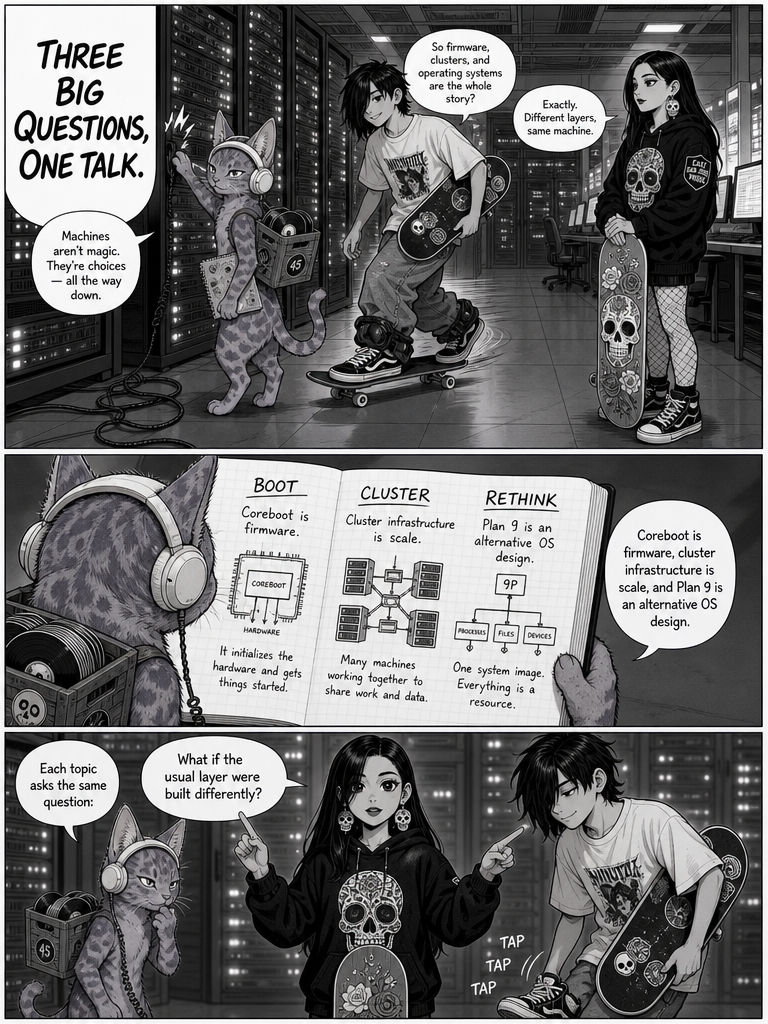
my take on page 1
key idea
The talk links firmware, clusters, and alternative operating systems.
flip ↺
why this matters
Understanding all three layers explains how real machines start and scale.
flip ↺
p. 1 · 20
my take on page 2
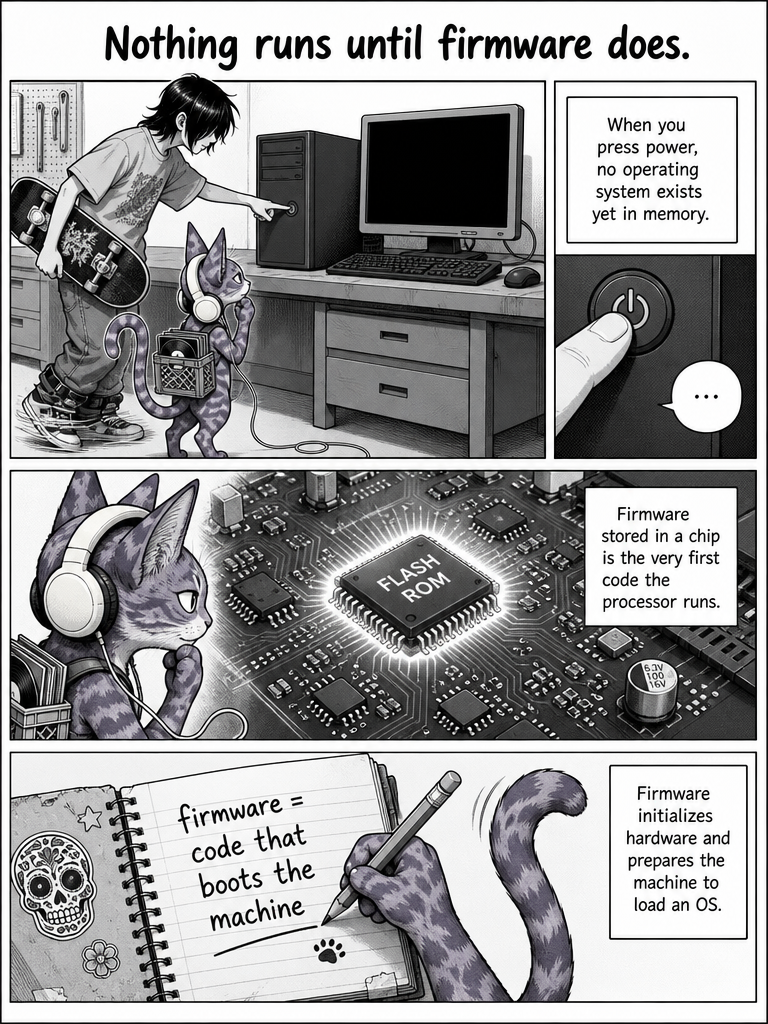
key idea
Firmware is the first code a computer executes at power-on.
flip ↺
why this matters
Nothing else on a computer works until firmware finishes its job.
flip ↺
p. 2 · 20
my take on page 3
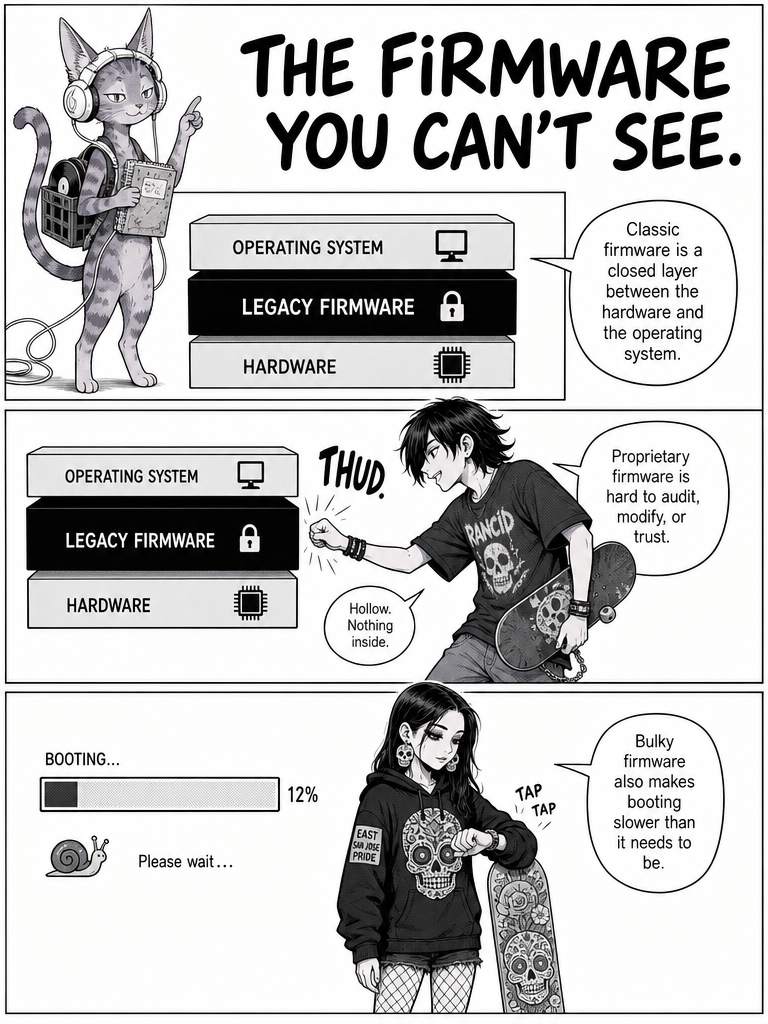
key idea
Legacy firmware is proprietary, slow, and opaque.
flip ↺
why this matters
Opaque firmware means you cannot verify what runs before your OS.
flip ↺
p. 3 · 20
my take on page 4
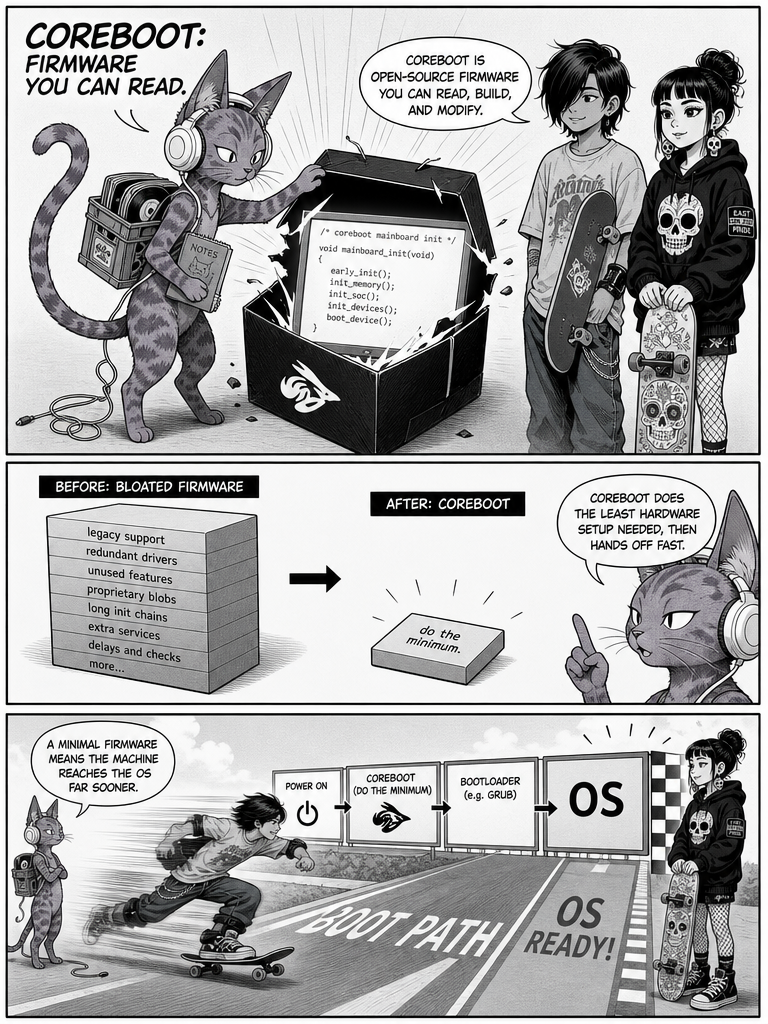
key idea
Coreboot is minimal open-source firmware.
flip ↺
why this matters
Open firmware lets you audit and trust the earliest code on your machine.
flip ↺
p. 4 · 20
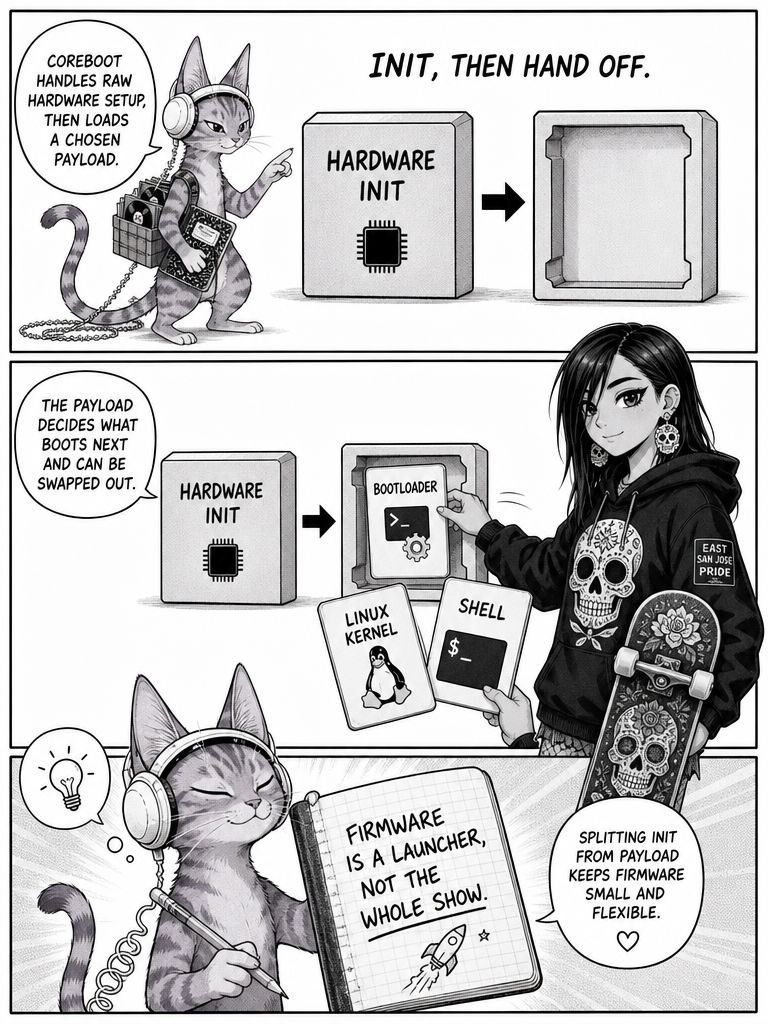
my take on page 5
key idea
Coreboot separates hardware init from a swappable payload.
flip ↺
why this matters
This split lets one firmware base support many boot targets.
flip ↺
p. 5 · 20
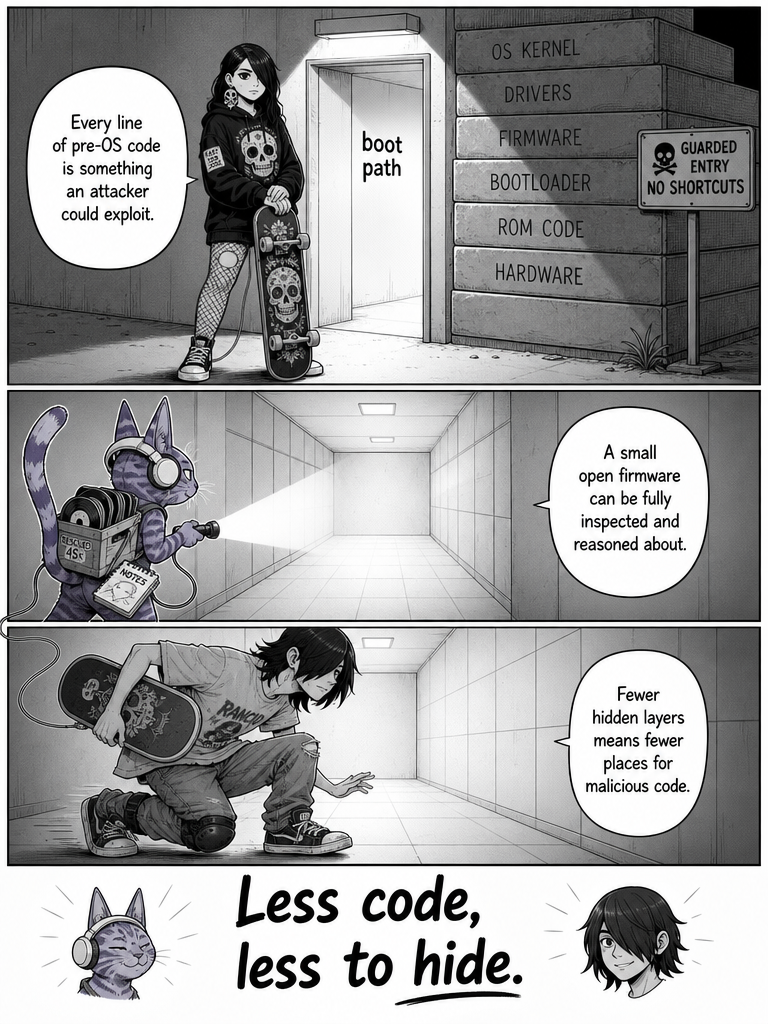
my take on page 6
key idea
Minimal auditable firmware shrinks the attack surface.
flip ↺
why this matters
Attacks that run before the OS are the hardest to detect and remove.
flip ↺
p. 6 · 20
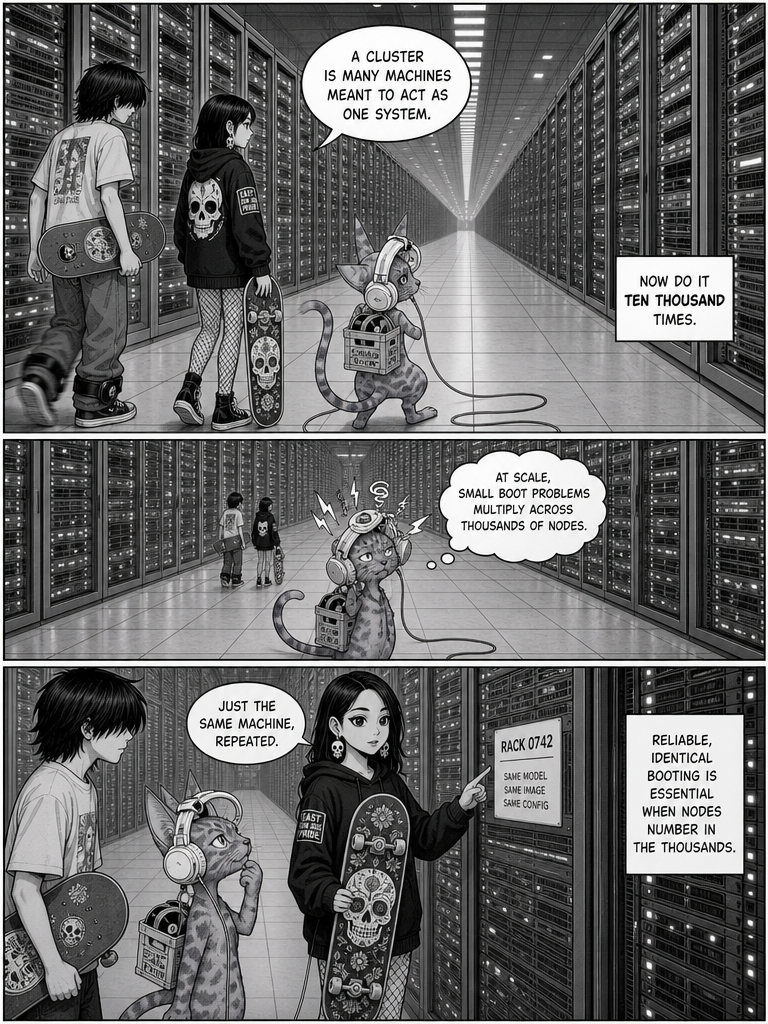
my take on page 7
key idea
Clusters need thousands of machines to boot identically and reliably.
flip ↺
why this matters
A boot flaw that is harmless once becomes catastrophic across ten thousand nodes.
flip ↺
p. 7 · 20
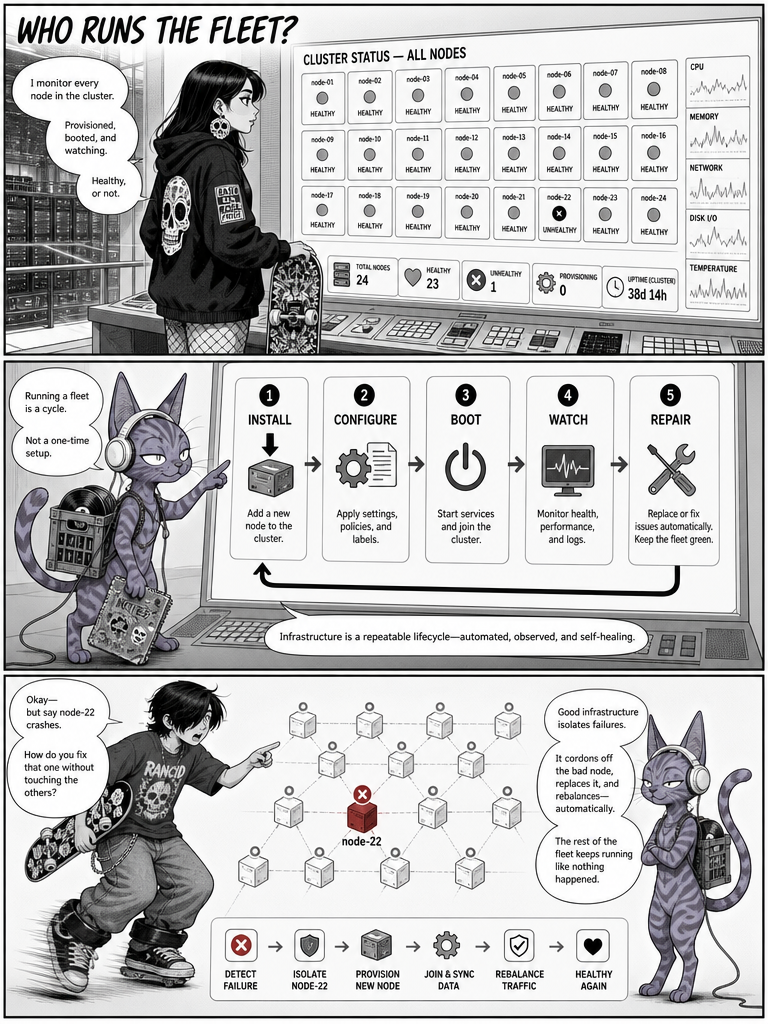
my take on page 8
key idea
Infrastructure automates the full lifecycle of many machines.
flip ↺
why this matters
Manual management does not scale to thousands of servers.
flip ↺
p. 8 · 20
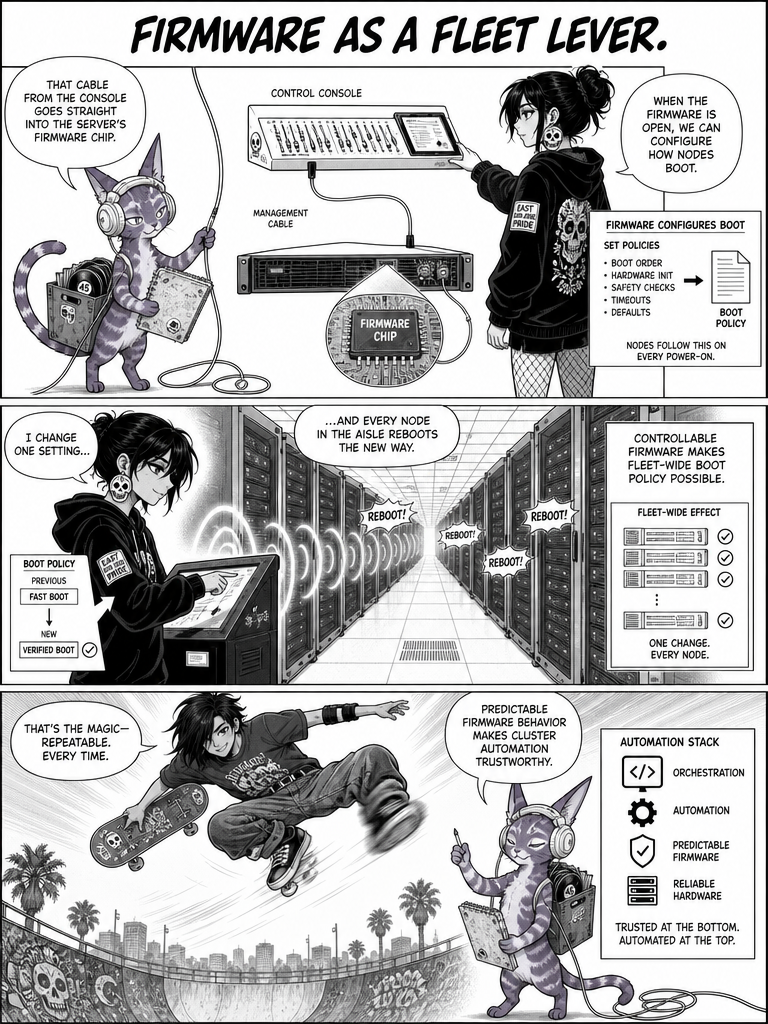
my take on page 9
key idea
Open firmware makes fleet-wide boot control possible.
flip ↺
why this matters
Boot policy you can script is boot policy you can automate and audit.
flip ↺
p. 9 · 20
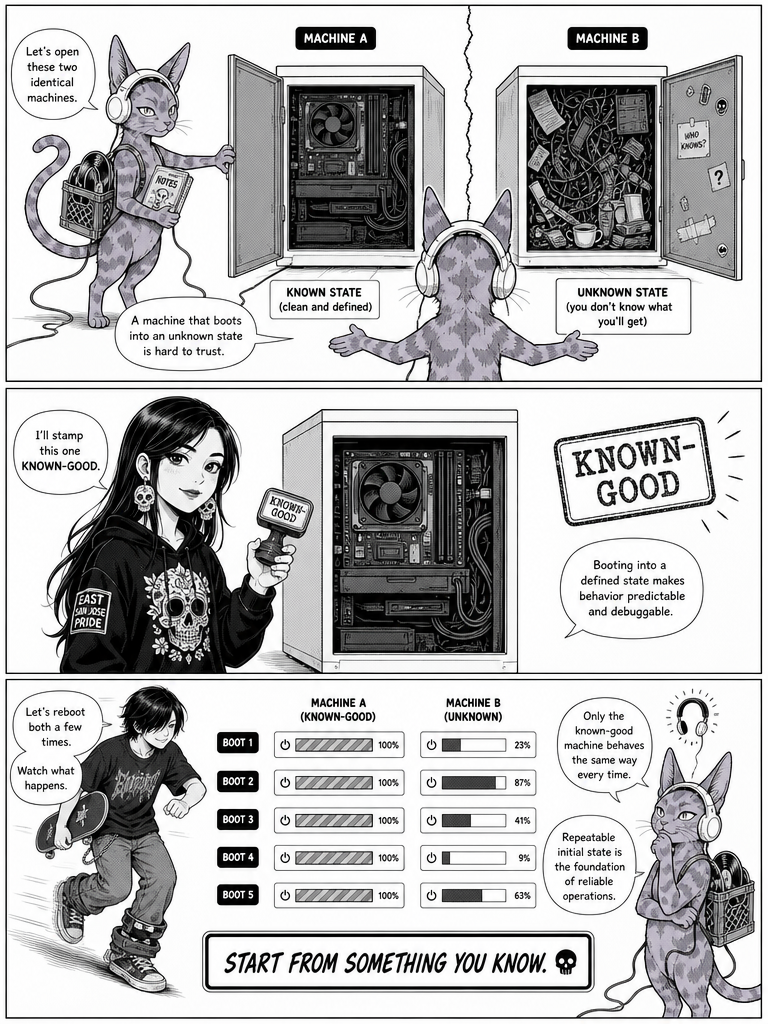
my take on page 10
key idea
A known-good boot state makes machines predictable.
flip ↺
why this matters
You cannot reliably debug or automate machines that start from unknown states.
flip ↺
p. 10 · 20
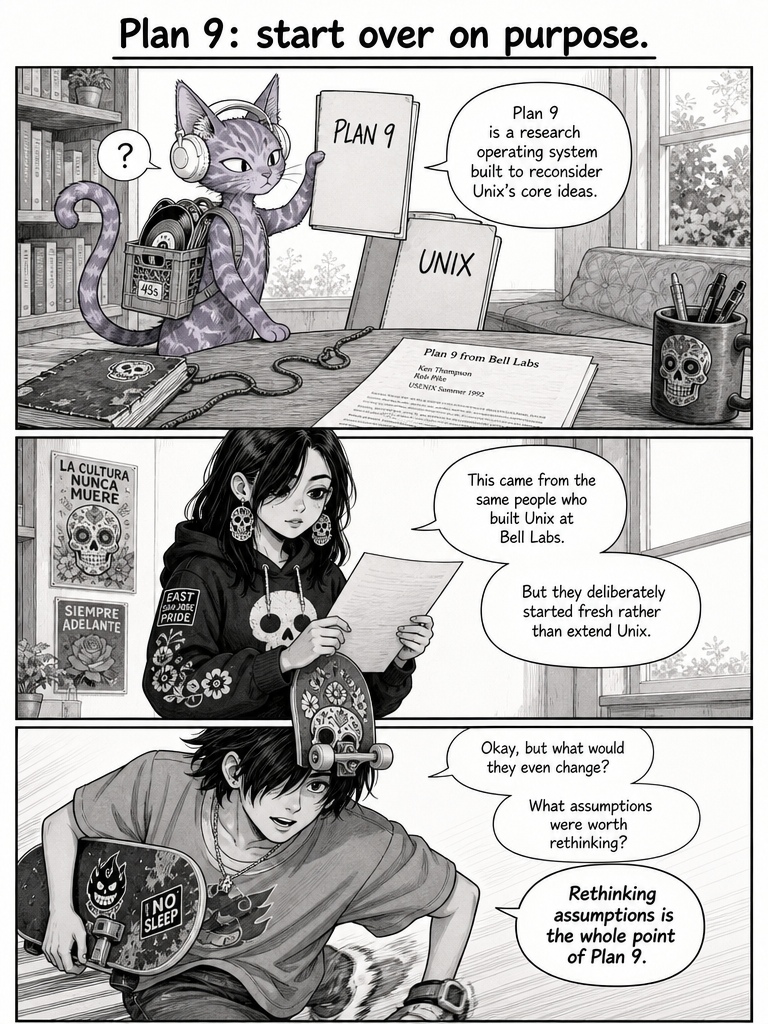
my take on page 11
key idea
Plan 9 deliberately redesigns Unix's foundations.
flip ↺
why this matters
Studying a clean redesign reveals which OS ideas were essential and which were accidental.
flip ↺
p. 11 · 20
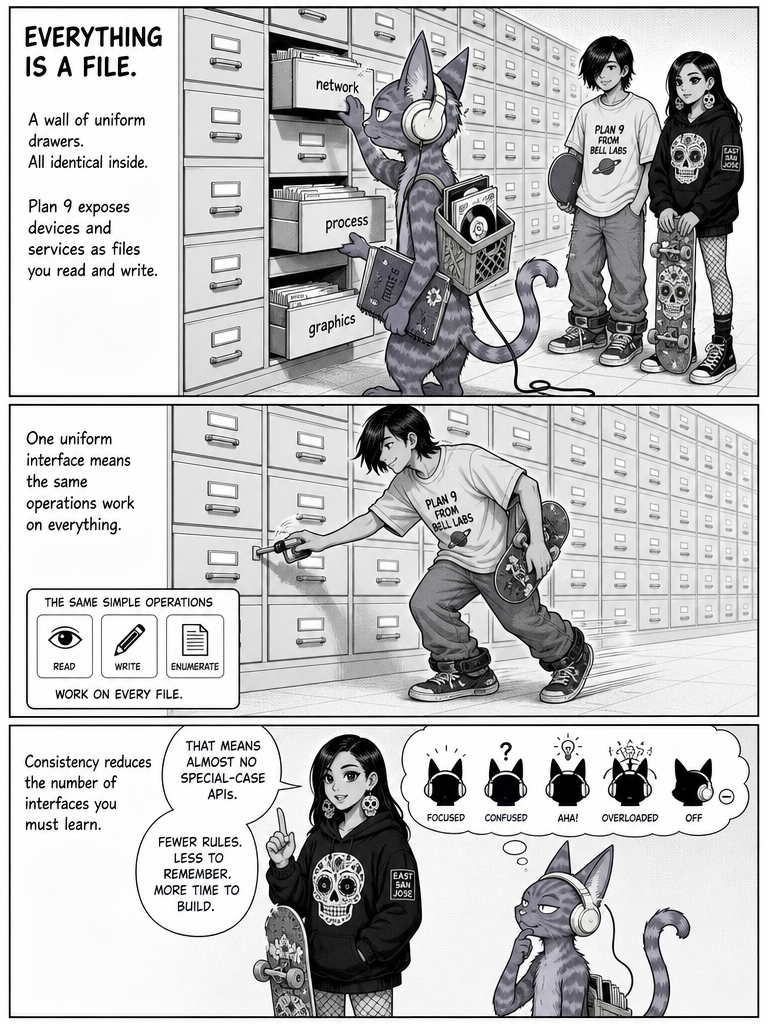
my take on page 12
key idea
In Plan 9 almost everything is a file.
flip ↺
why this matters
A single uniform interface makes systems simpler to learn and compose.
flip ↺
p. 12 · 20
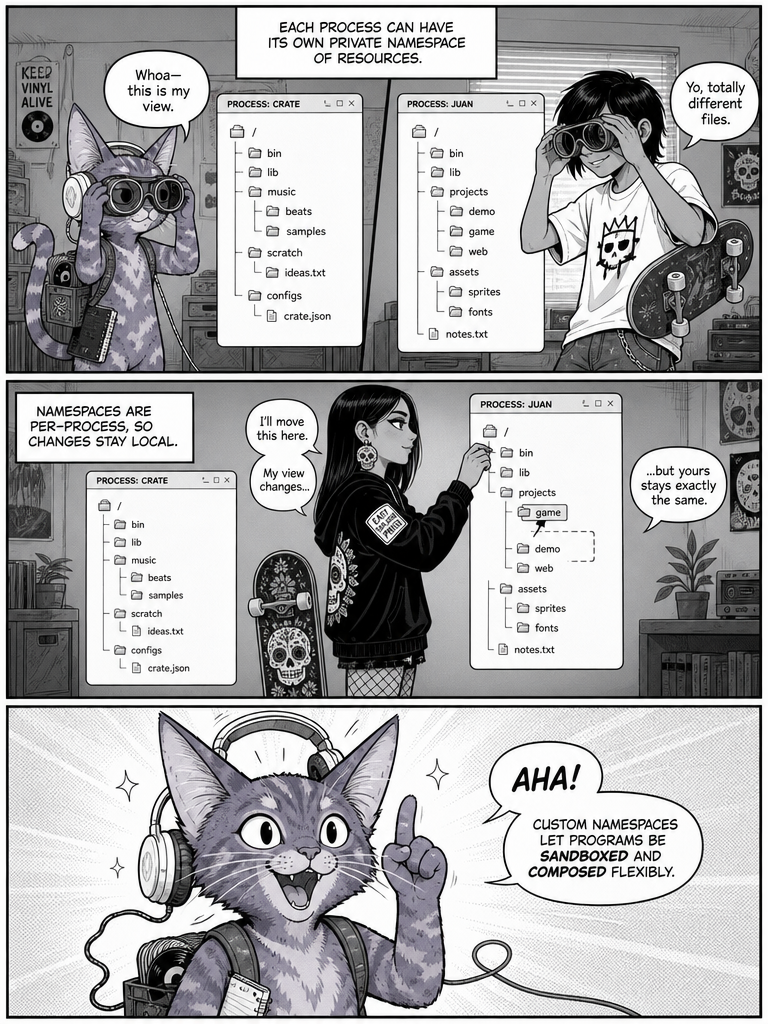
my take on page 13
key idea
Each process gets its own customizable namespace.
flip ↺
why this matters
Per-process namespaces enable clean isolation and flexible composition of resources.
flip ↺
p. 13 · 20
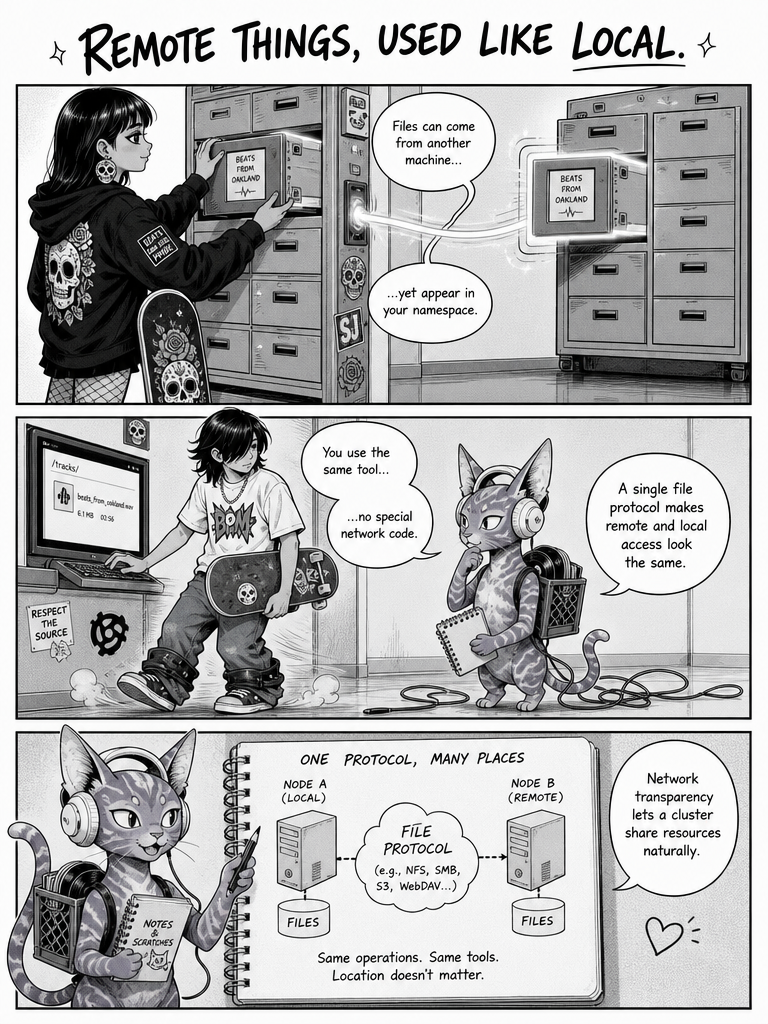
my take on page 14
key idea
Plan 9 makes remote resources look and act local.
flip ↺
why this matters
Network-transparent files make distributed systems far simpler to build.
flip ↺
p. 14 · 20
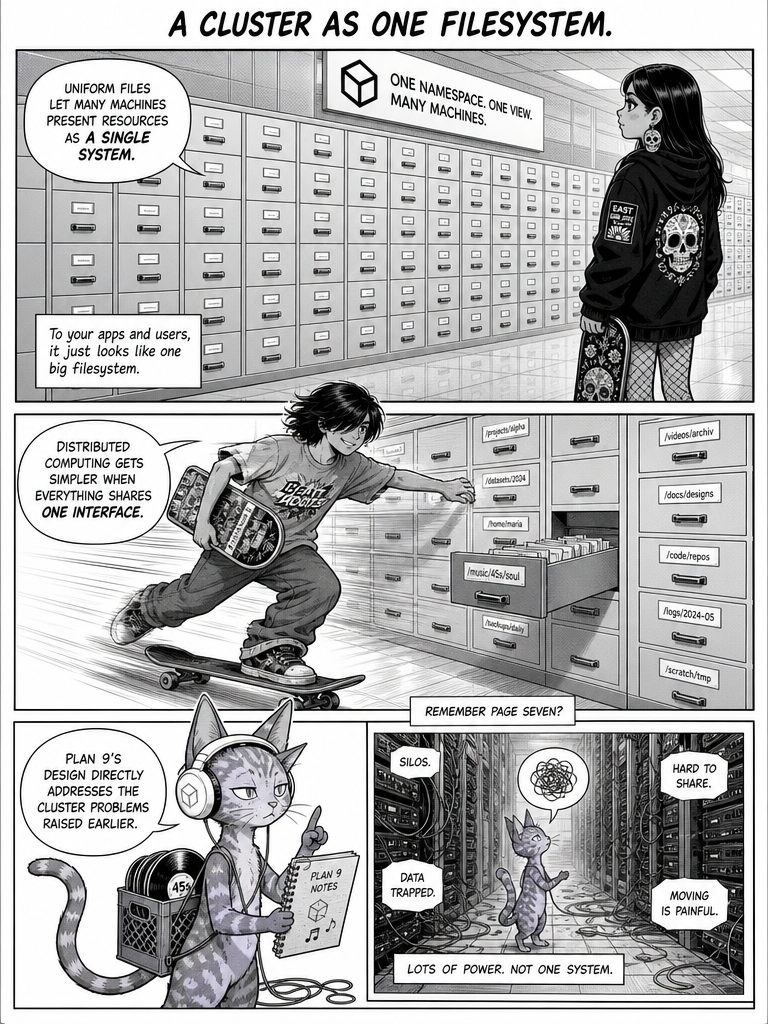
my take on page 15
key idea
Plan 9's file model fits distributed cluster computing well.
flip ↺
why this matters
A consistent model across machines reduces the complexity of managing clusters.
flip ↺
p. 15 · 20
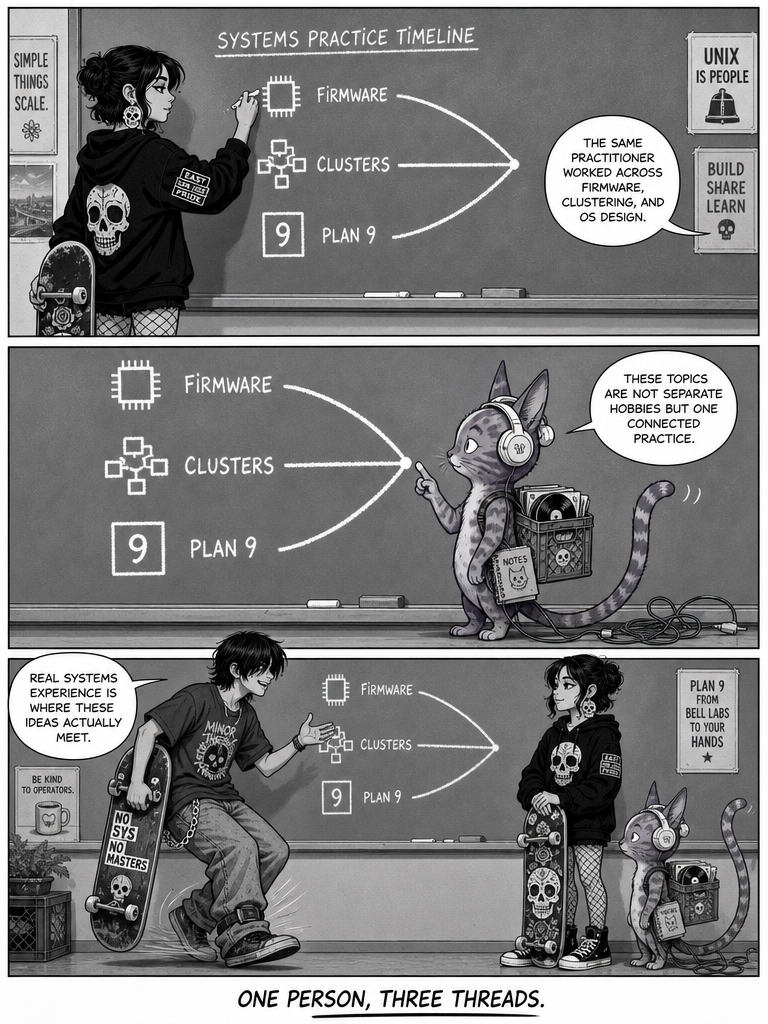
my take on page 16
key idea
Firmware, clusters, and OS design meet in real deployments.
flip ↺
why this matters
Hard-won deployment experience is what ties these abstract ideas together.
flip ↺
p. 16 · 20
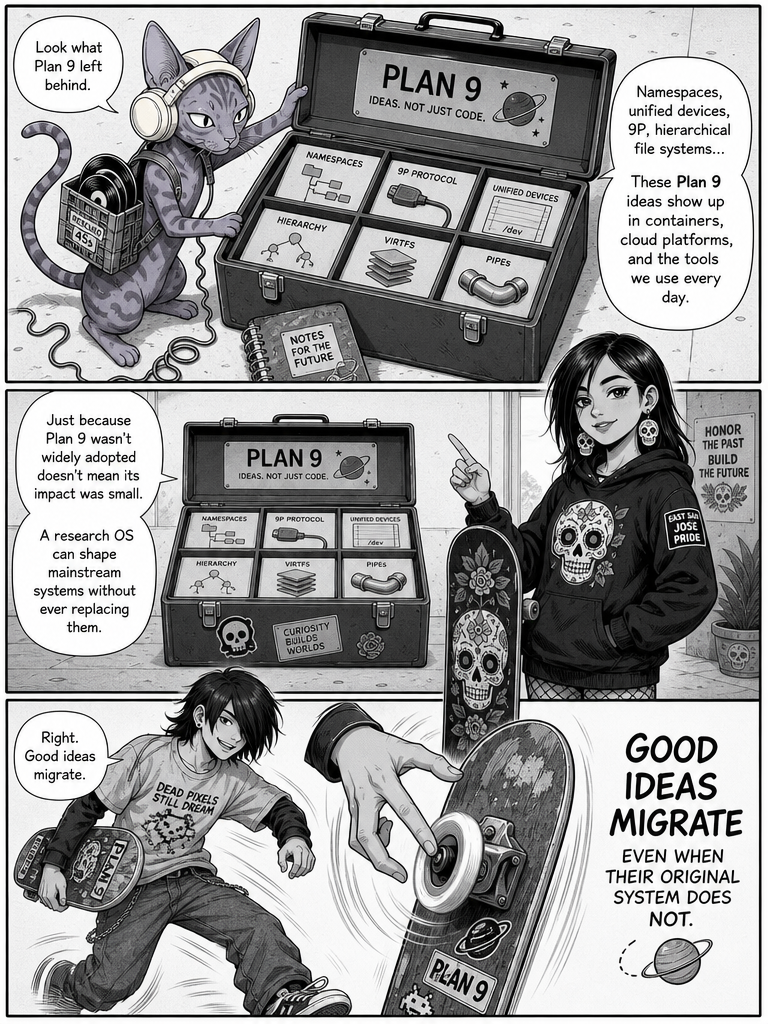
my take on page 17
key idea
Research OS ideas influence mainstream tools despite low adoption.
flip ↺
why this matters
Studying niche systems reveals ideas that later become industry standard.
flip ↺
p. 17 · 20
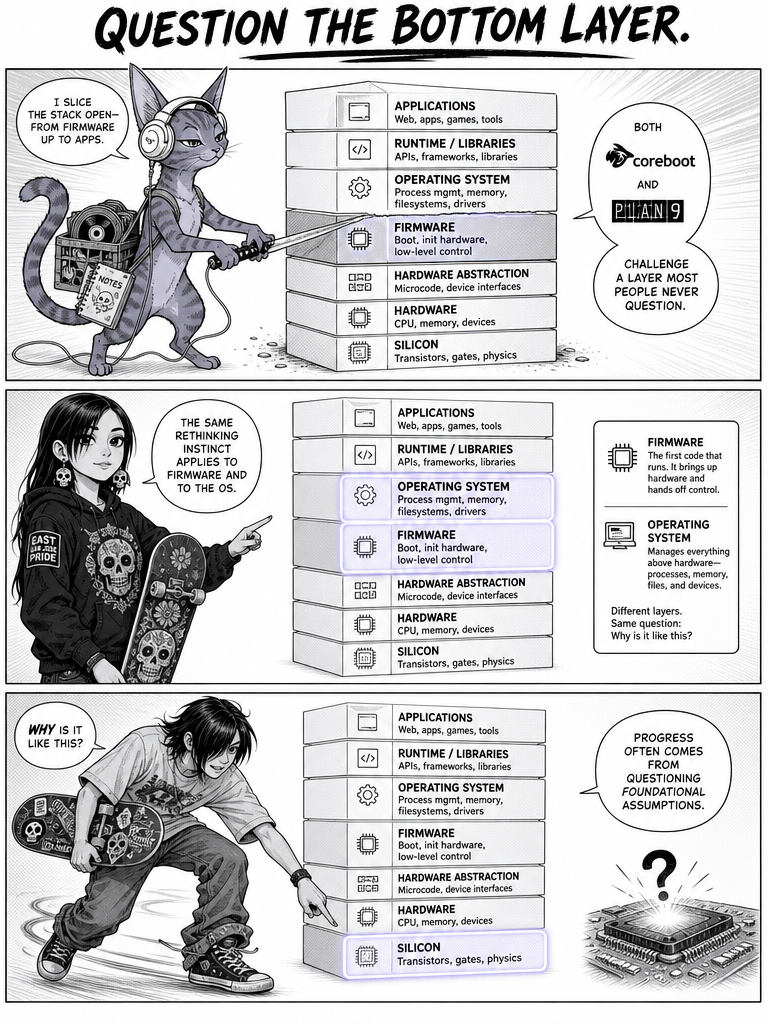
my take on page 18
key idea
Rethinking foundational layers exposes hidden assumptions.
flip ↺
why this matters
The biggest improvements often hide in layers no one thinks to question.
flip ↺
p. 18 · 20
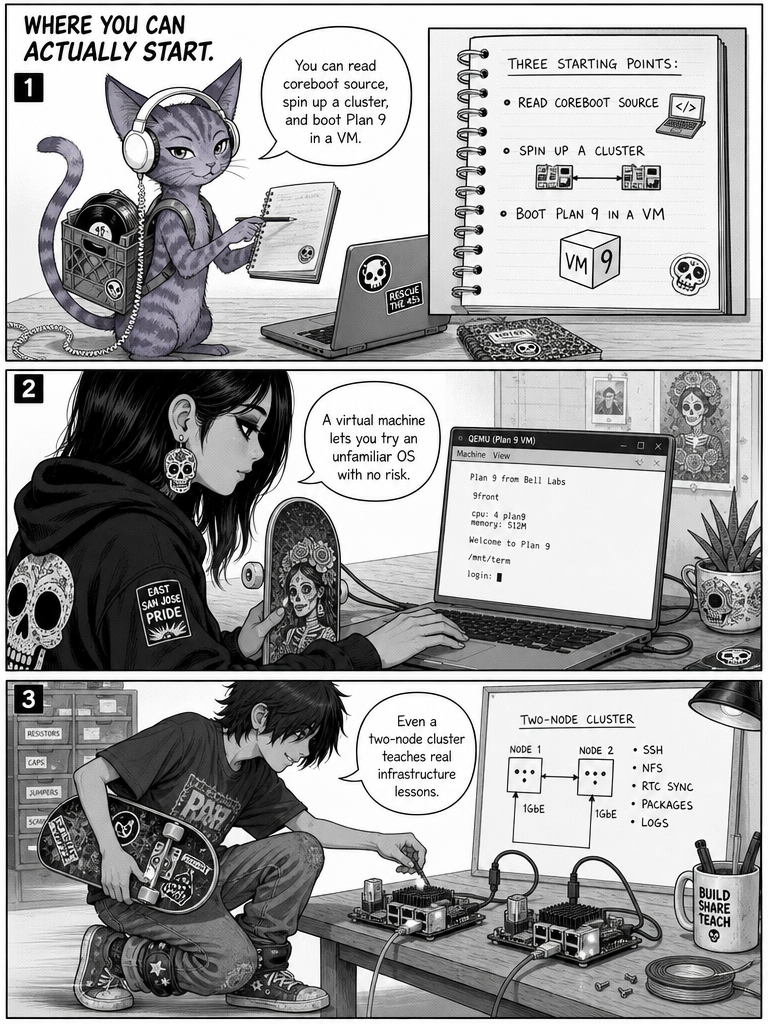
my take on page 19
key idea
Hands-on entry points make these topics approachable.
flip ↺
why this matters
Experimenting cheaply and safely is the fastest way to understand systems.
flip ↺
p. 19 · 20
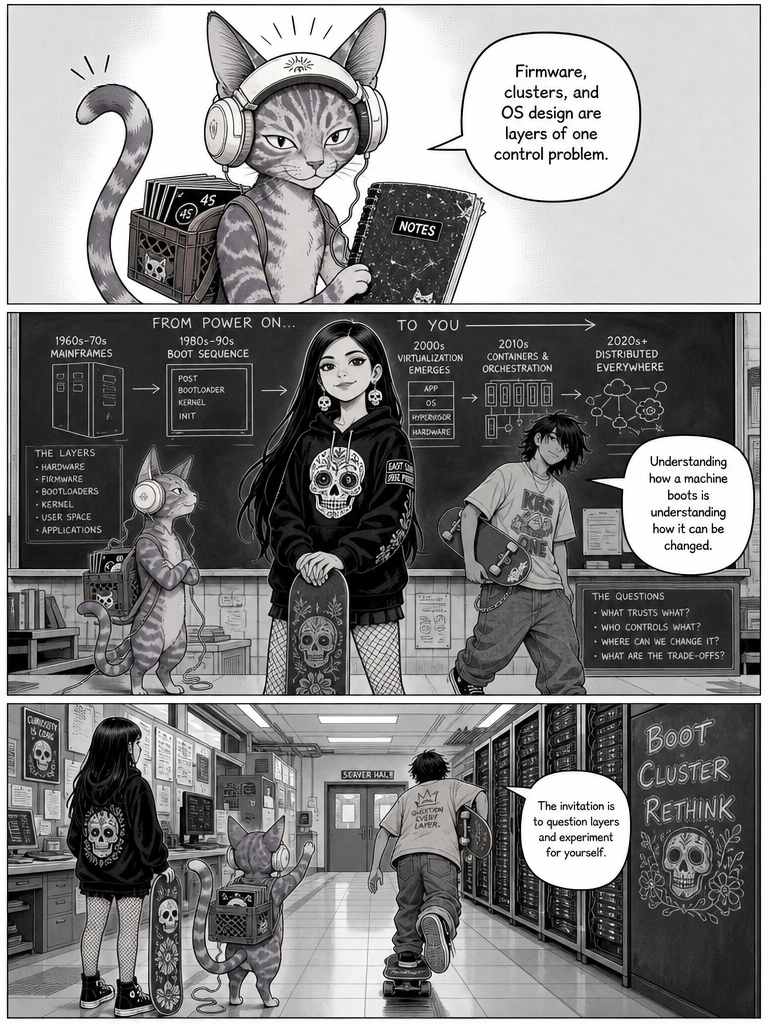
my take on page 20
key idea
The three topics are layers of one control problem.
flip ↺
why this matters
Seeing the whole stack as one story helps you reason about any system.
flip ↺
p. 20 · 20
flashcards · all 20
key idea
The talk links firmware, clusters, and alternative operating systems.
click to flip ↺
why this matters
Understanding all three layers explains how real machines start and scale.
click to flip ↺
card 1 · 20
one card per page — cycle through before you close the book.
index of key ideas
1The talk links firmware, clusters, and alternative operating systems.
2Firmware is the first code a computer executes at power-on.
3Legacy firmware is proprietary, slow, and opaque.
4Coreboot is minimal open-source firmware.
5Coreboot separates hardware init from a swappable payload.
6Minimal auditable firmware shrinks the attack surface.
7Clusters need thousands of machines to boot identically and reliably.
8Infrastructure automates the full lifecycle of many machines.
9Open firmware makes fleet-wide boot control possible.
10A known-good boot state makes machines predictable.
11Plan 9 deliberately redesigns Unix's foundations.
12In Plan 9 almost everything is a file.
13Each process gets its own customizable namespace.
14Plan 9 makes remote resources look and act local.
15Plan 9's file model fits distributed cluster computing well.
16Firmware, clusters, and OS design meet in real deployments.
17Research OS ideas influence mainstream tools despite low adoption.
18Rethinking foundational layers exposes hidden assumptions.
19Hands-on entry points make these topics approachable.
20The three topics are layers of one control problem.
comicexplain
paste a paper, get an annotated comic — pages appear in seconds.
front cover