explained comic · 20 pages · your annotated copy
an educational manga explainer
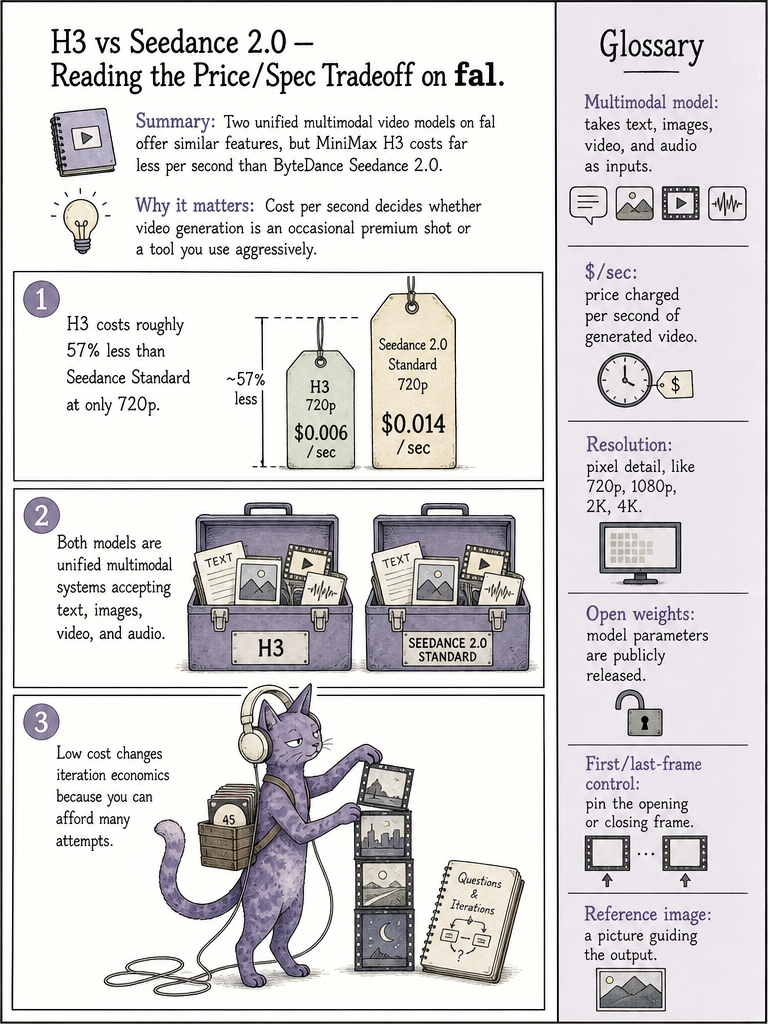
H3 vs Seedance 2.0: Reading the Price/Spec Tradeoff on fal
comicexplain
session notes
kept private to your copy — sign in to add notes.
about this comic
H3 vs Seedance 2.0: Reading the Price/Spec Tradeoff on fal
my take on page 1
key idea
Similar capabilities can hide very different costs.
flip ↺
why this matters
Per-second cost determines how freely a team can generate and iterate on video.
flip ↺
p. 1 · 20
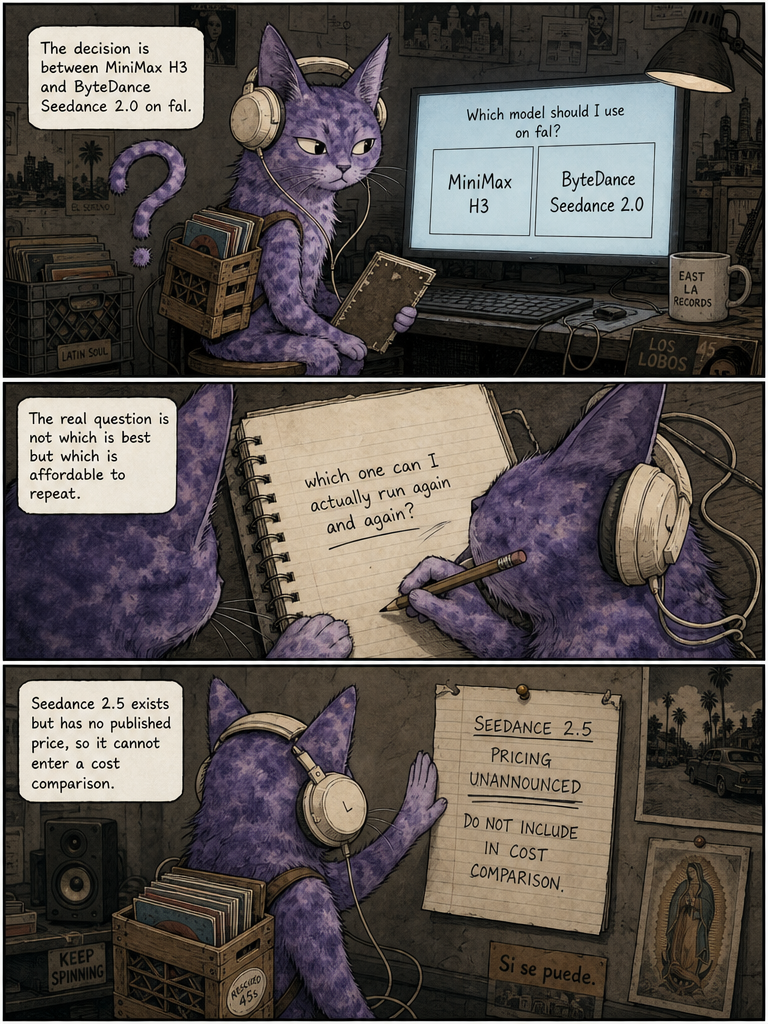
my take on page 2
key idea
You can only compare costs for models with published prices.
flip ↺
why this matters
Production planning needs real numbers, not unannounced future pricing.
flip ↺
p. 2 · 20
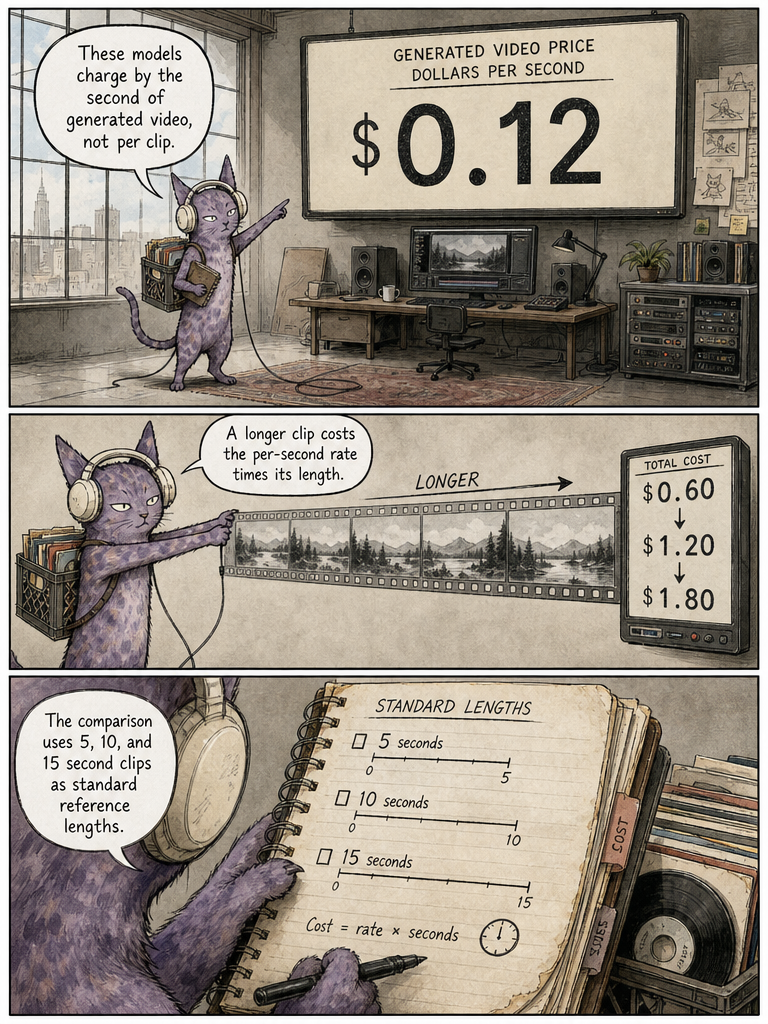
my take on page 3
key idea
Cost equals rate per second times clip length.
flip ↺
why this matters
Understanding the billing unit prevents surprise costs on longer clips.
flip ↺
p. 3 · 20
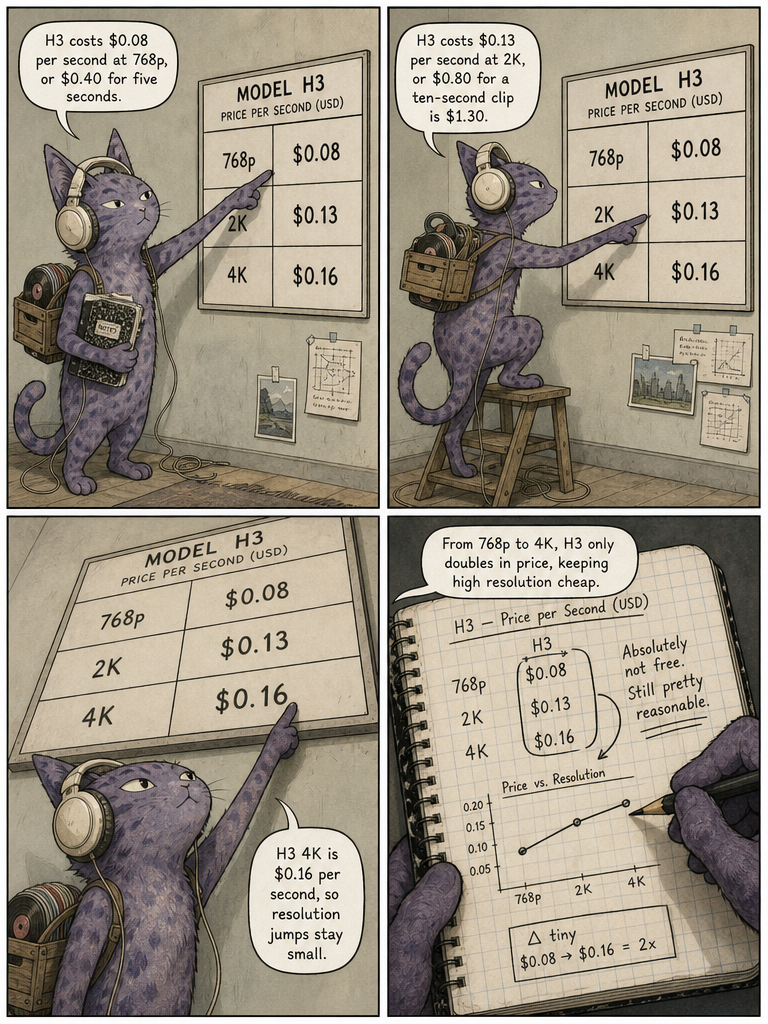
my take on page 4
key idea
H3 keeps resolution upgrades cheap.
flip ↺
why this matters
Affordable high resolution means you rarely trade quality for budget.
flip ↺
p. 4 · 20
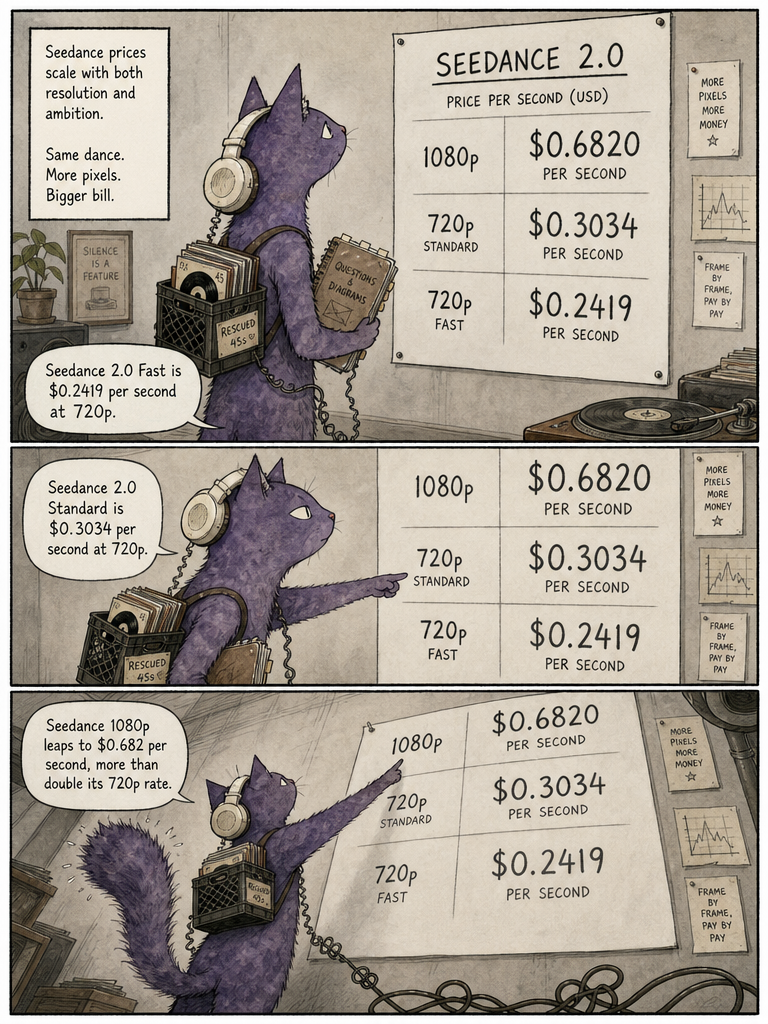
my take on page 5
key idea
Seedance prices climb steeply toward 1080p.
flip ↺
why this matters
Steep resolution pricing forces budget tradeoffs on higher-quality Seedance clips.
flip ↺
p. 5 · 20
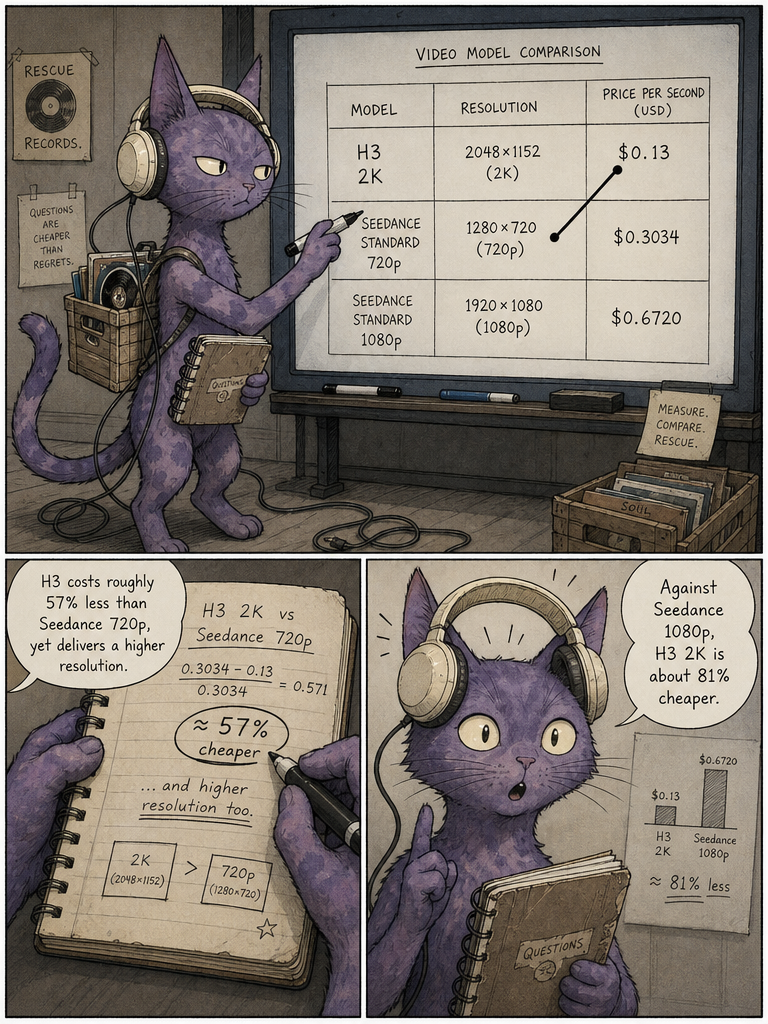
my take on page 6
key idea
H3 is cheaper while offering more resolution.
flip ↺
why this matters
A cheaper, higher-resolution option reshapes which model is the default choice.
flip ↺
p. 6 · 20
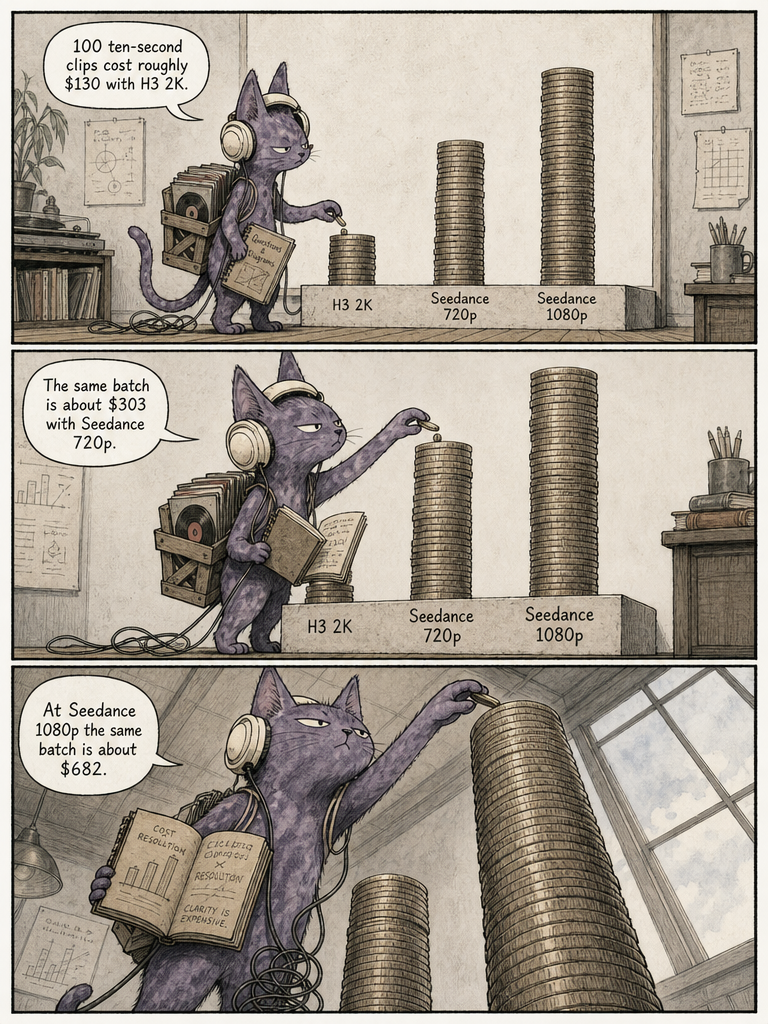
my take on page 7
key idea
At batch scale the price gap grows to hundreds of dollars.
flip ↺
why this matters
Batch scale is where per-second differences become budget decisions.
flip ↺
p. 7 · 20
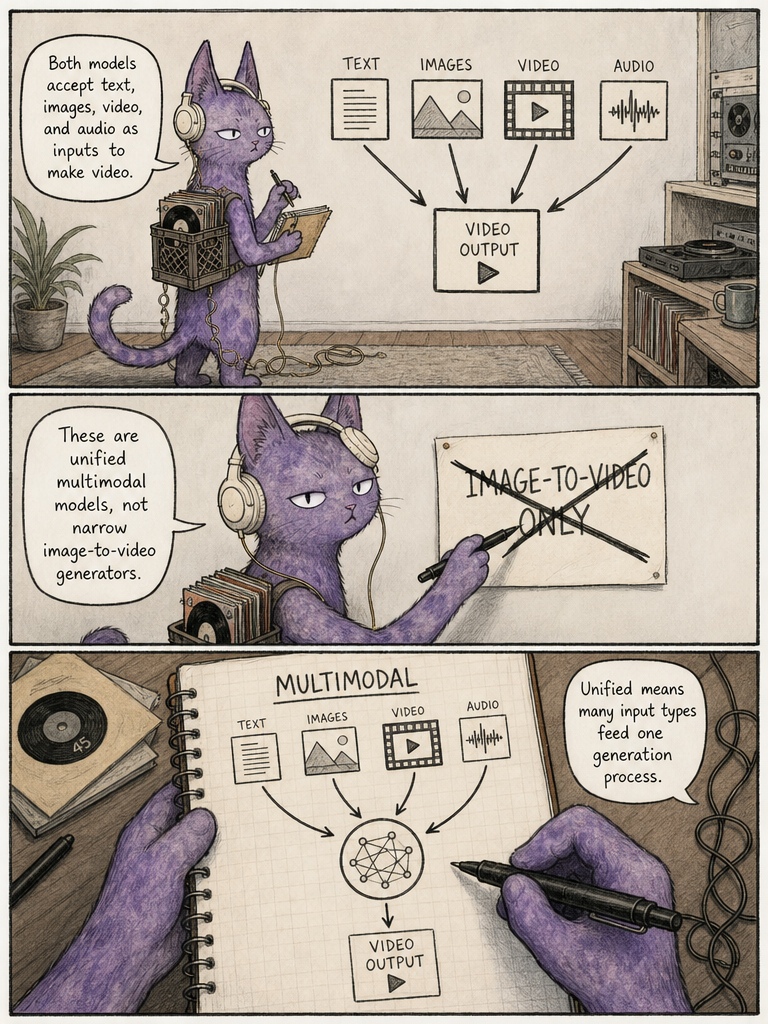
my take on page 8
key idea
Both are unified multimodal generators.
flip ↺
why this matters
Unified inputs let one model handle many creative workflows at once.
flip ↺
p. 8 · 20
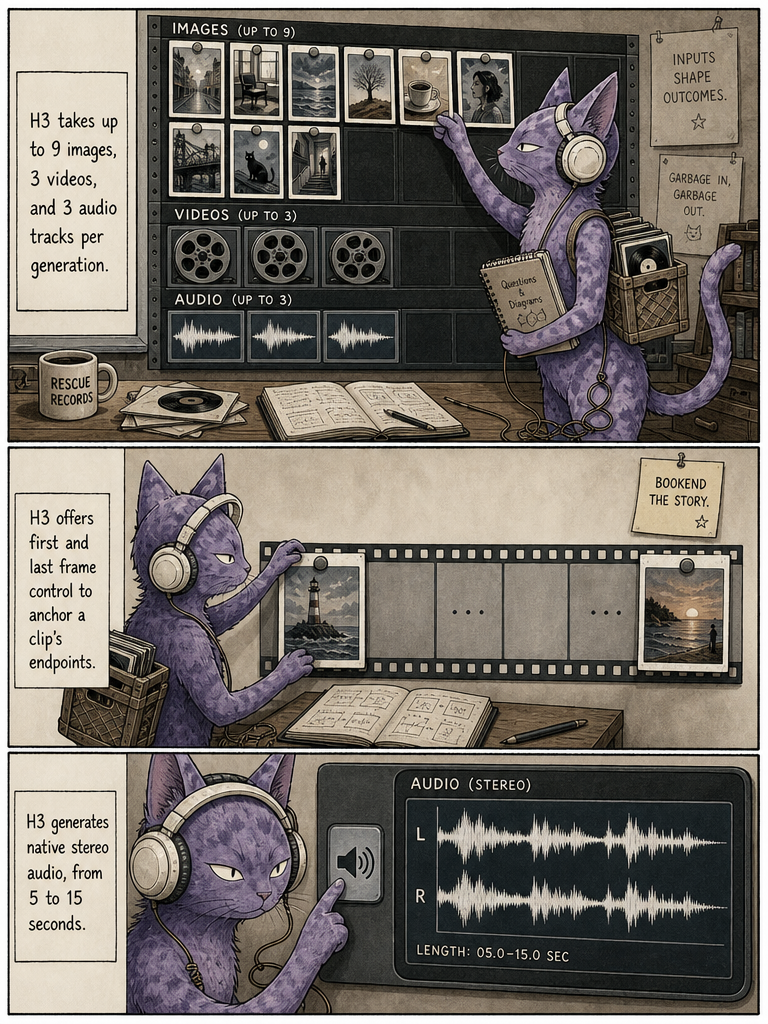
my take on page 9
key idea
H3 supports rich multimodal references and frame anchoring.
flip ↺
why this matters
Frame control and rich references give tight control over generated clips.
flip ↺
p. 9 · 20
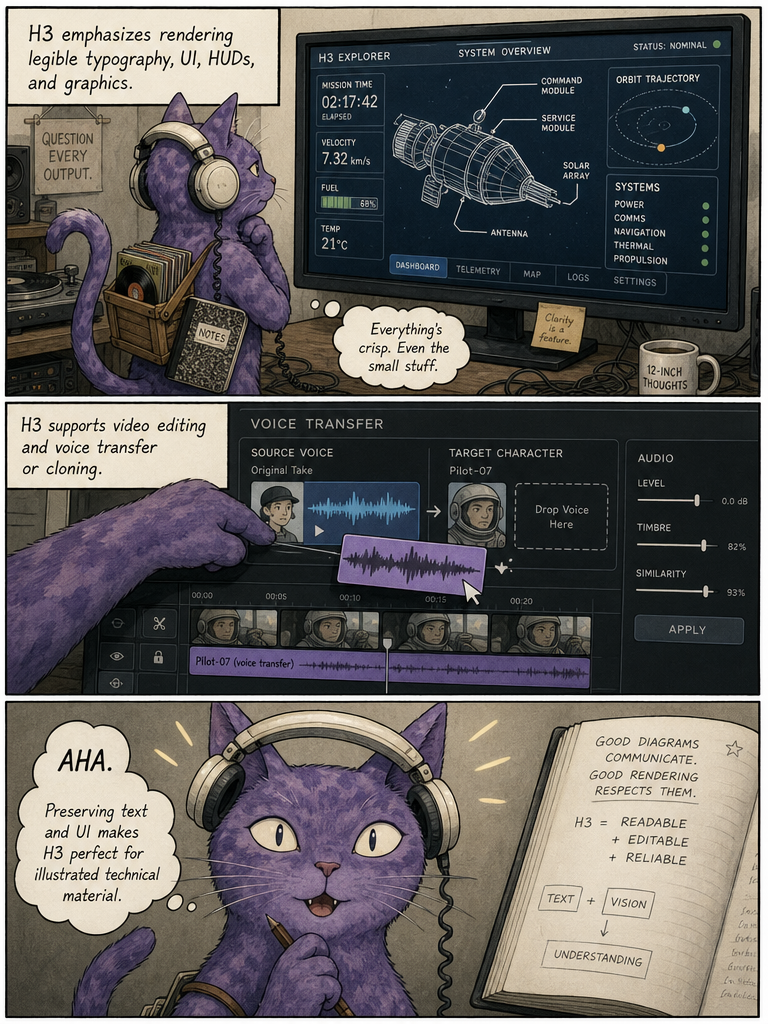
my take on page 10
key idea
H3 preserves on-screen text and interfaces well.
flip ↺
why this matters
Legible text and UI are essential for illustrated technical explainers.
flip ↺
p. 10 · 20
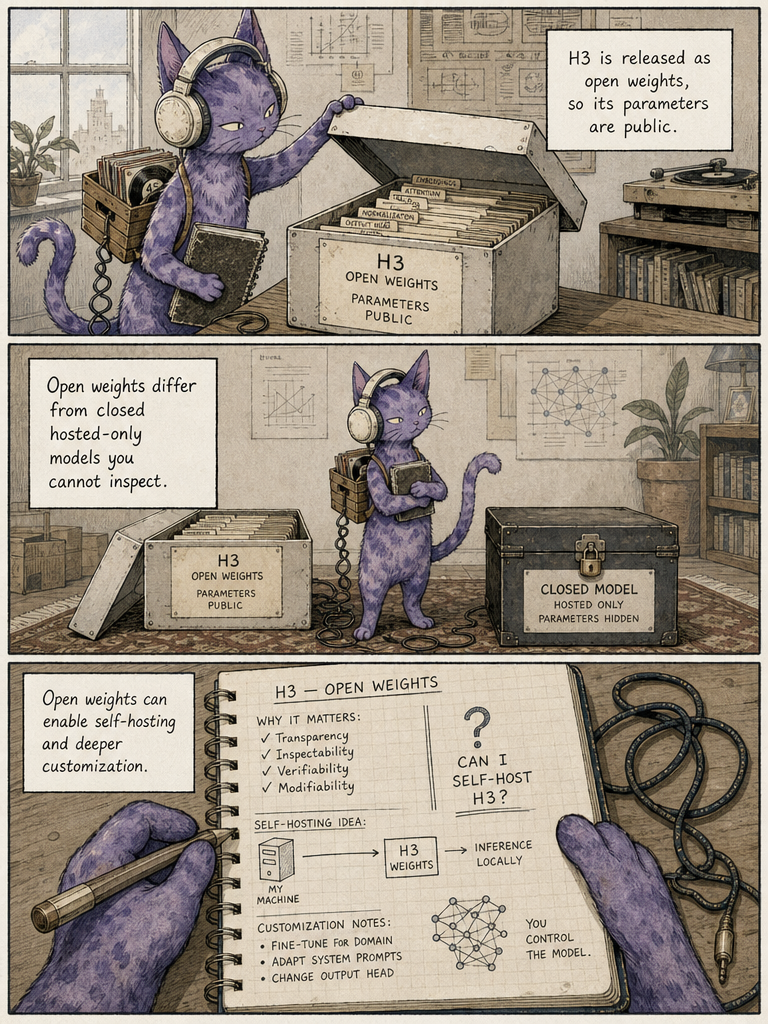
my take on page 11
key idea
H3 is an open-weights model.
flip ↺
why this matters
Open weights allow inspection, self-hosting, and customization.
flip ↺
p. 11 · 20
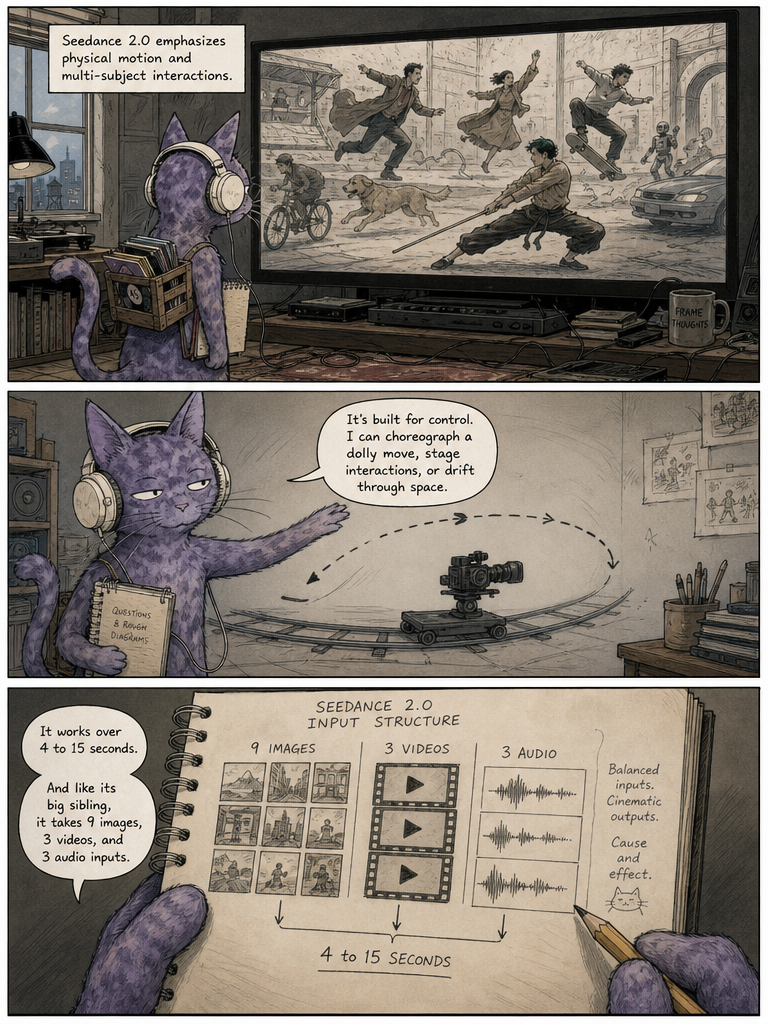
my take on page 12
key idea
Seedance emphasizes motion and cinematic control.
flip ↺
why this matters
Motion and cinematic quality can decide the right model for action shots.
flip ↺
p. 12 · 20
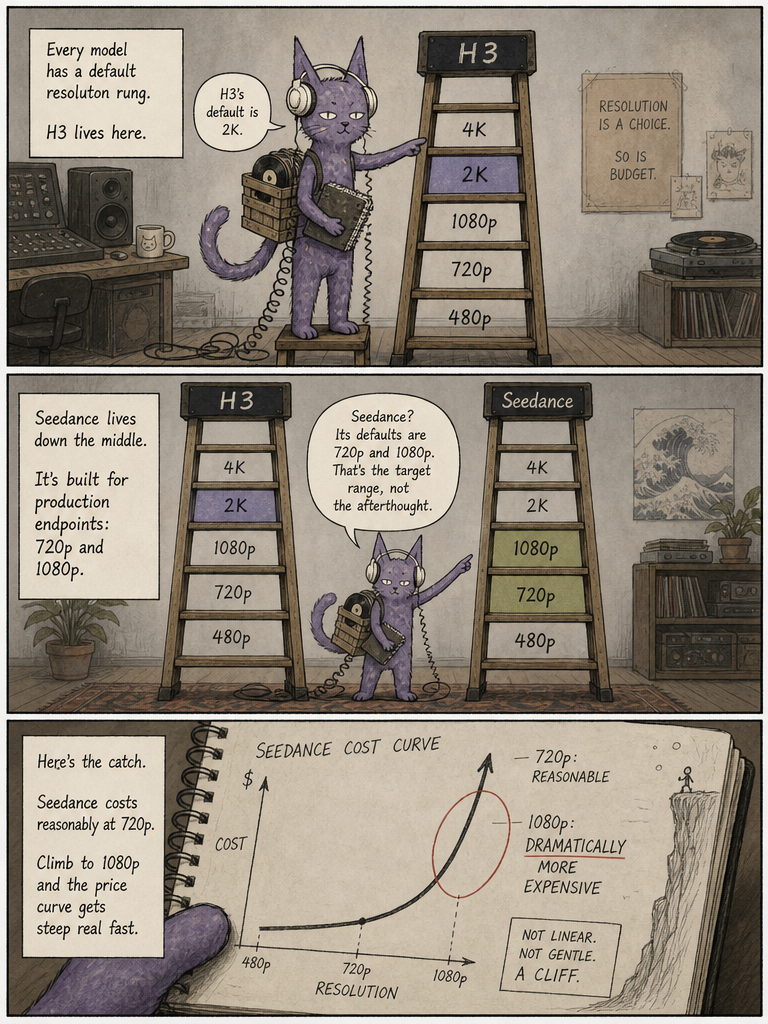
my take on page 13
key idea
H3 defaults higher-resolution than Seedance.
flip ↺
why this matters
Default resolution shapes both quality expectations and baseline cost.
flip ↺
p. 13 · 20
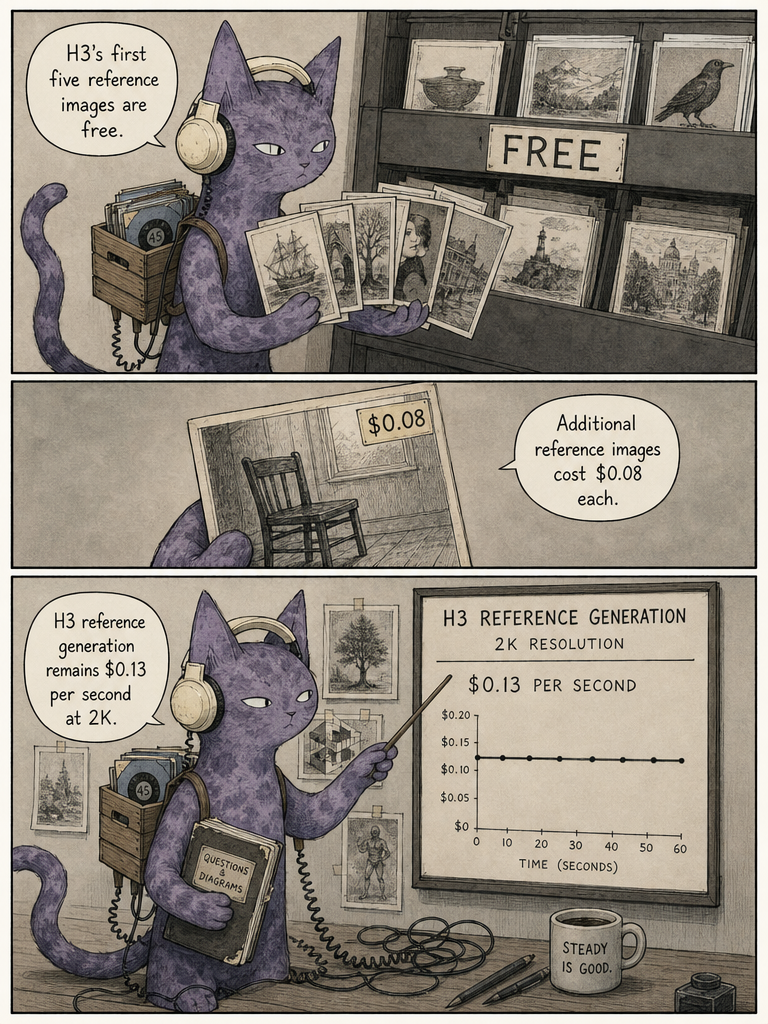
my take on page 14
key idea
H3 makes references cheap, starting with five free.
flip ↺
why this matters
Cheap references lower the cost of guiding output toward a target look.
flip ↺
p. 14 · 20
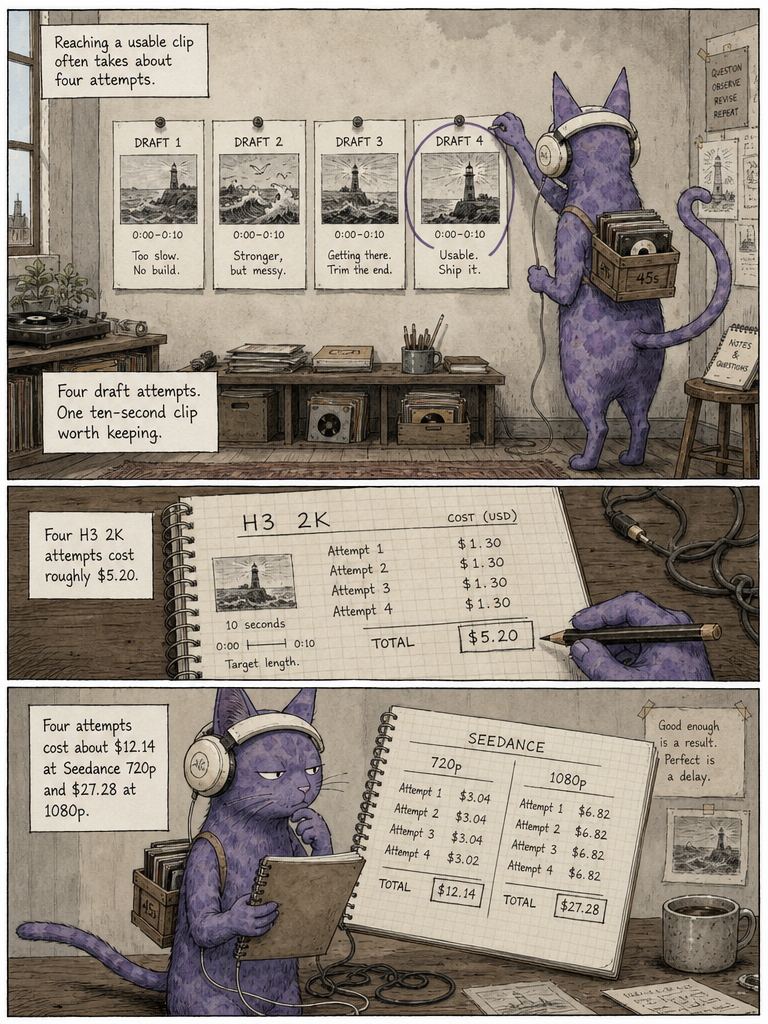
my take on page 15
key idea
Cheaper attempts make iteration affordable.
flip ↺
why this matters
Affordable retries let you refine clips instead of settling early.
flip ↺
p. 15 · 20
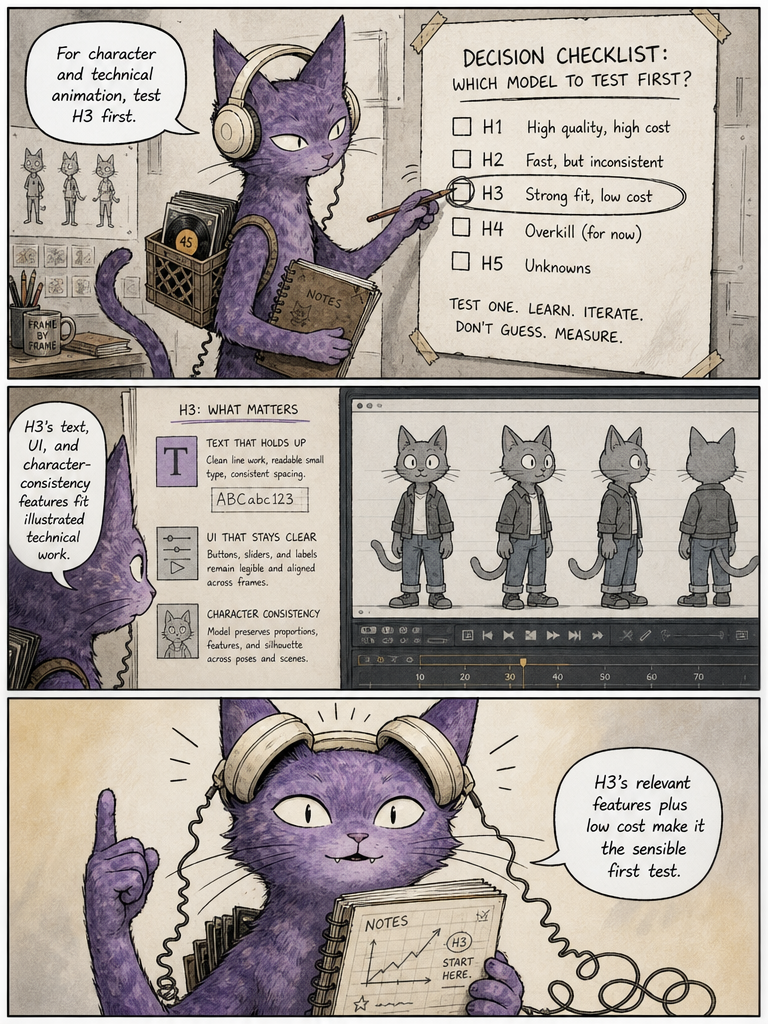
my take on page 16
key idea
Start by testing H3 for technical animation.
flip ↺
why this matters
Testing the cheaper, feature-fit model first saves budget and effort.
flip ↺
p. 16 · 20
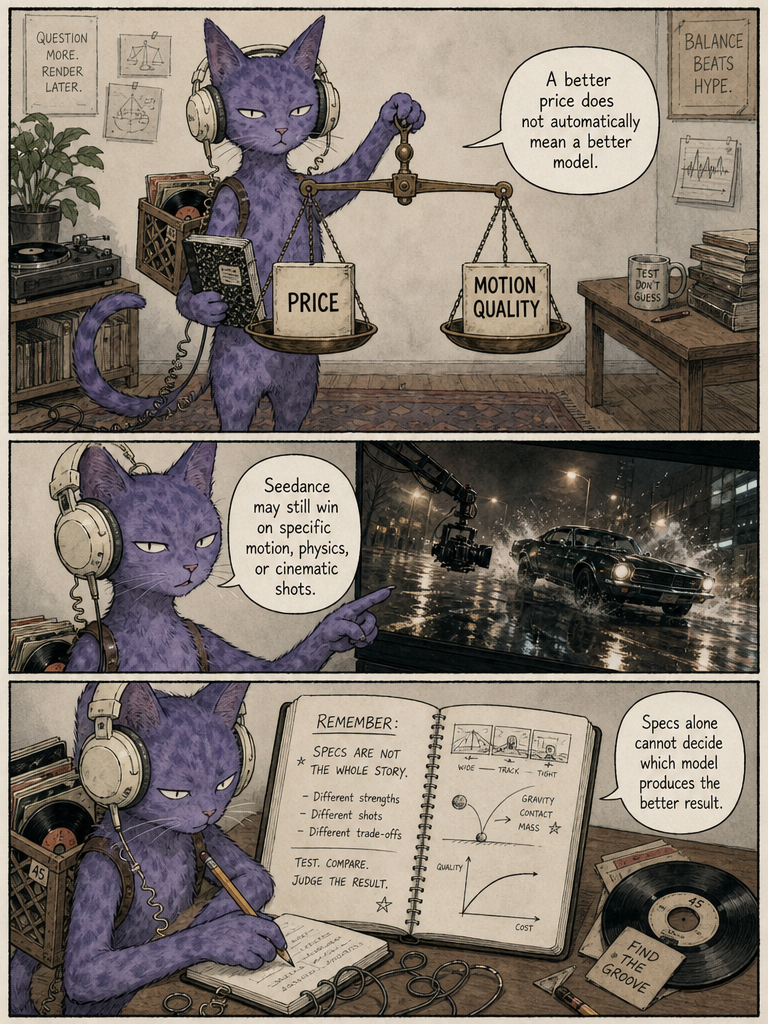
my take on page 17
key idea
Cheaper is not automatically better.
flip ↺
why this matters
Recognizing spec limits prevents choosing the wrong model for hard shots.
flip ↺
p. 17 · 20
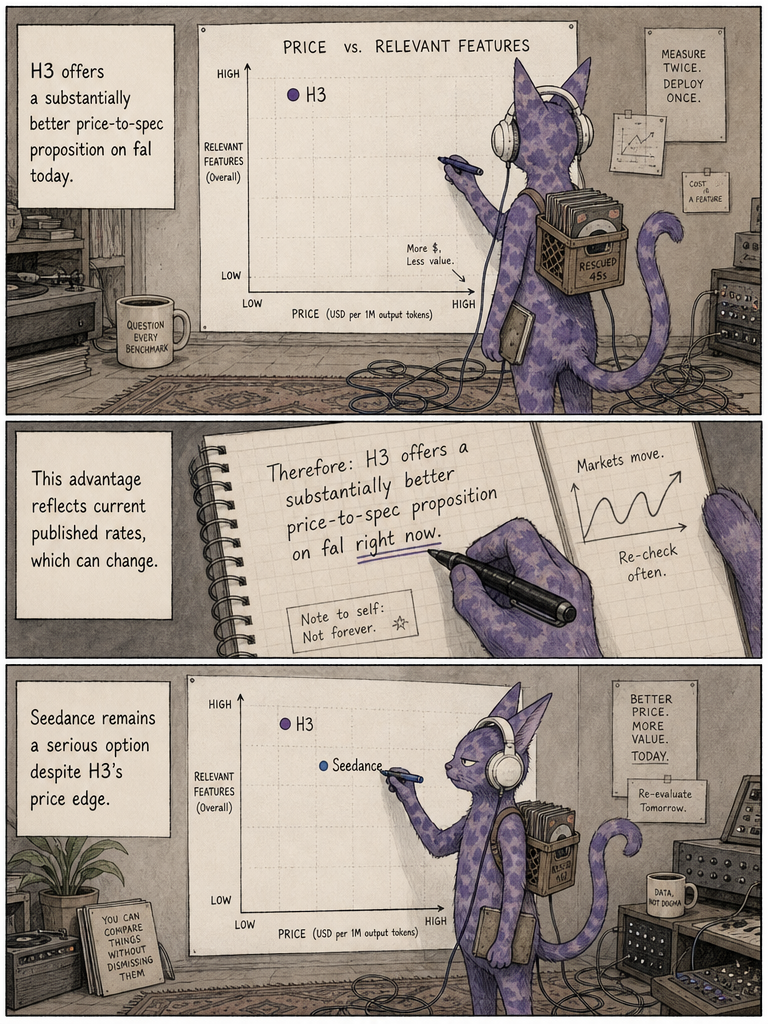
my take on page 18
key idea
H3 wins on price-to-spec, not absolute quality.
flip ↺
why this matters
Framing the advantage precisely keeps future model changes in view.
flip ↺
p. 18 · 20
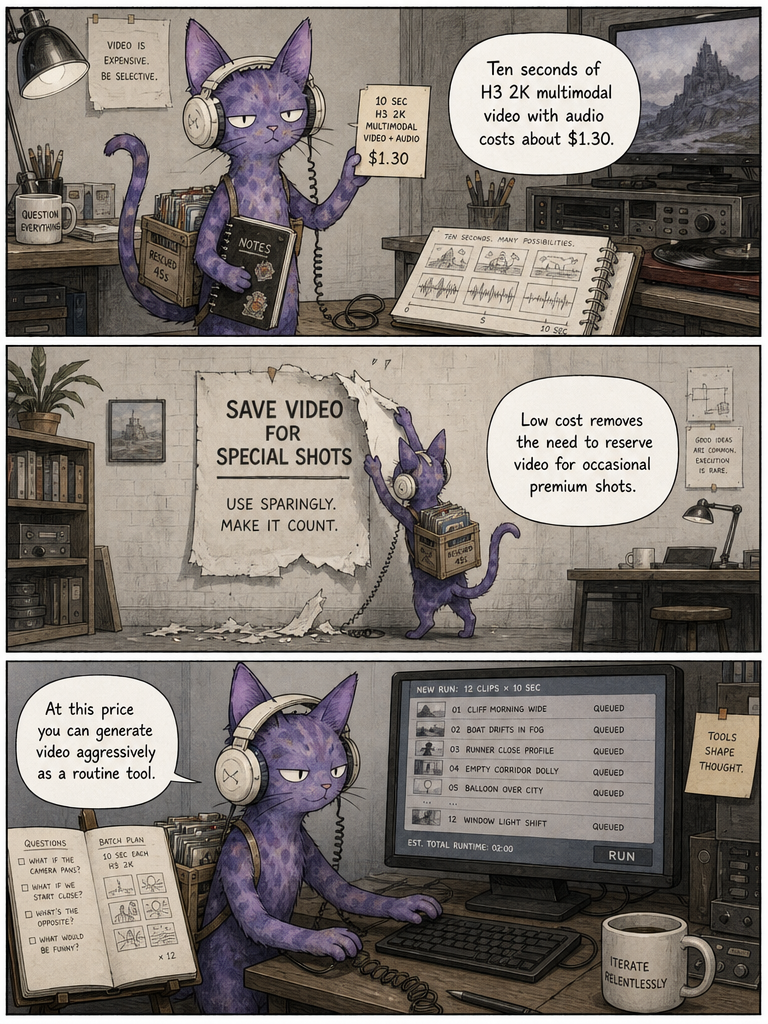
my take on page 19
key idea
H3 is cheap enough to use aggressively.
flip ↺
why this matters
Routine-cost video changes how often teams can include generated clips.
flip ↺
p. 19 · 20
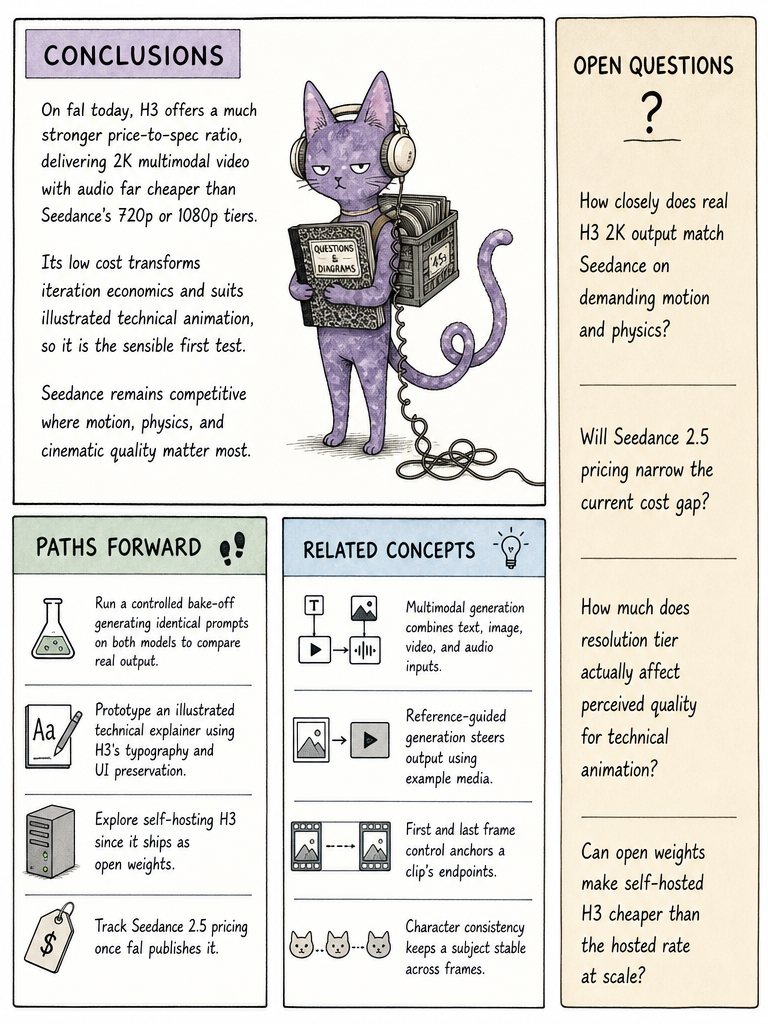
my take on page 20
key idea
Default to H3, but validate Seedance where motion matters.
flip ↺
why this matters
A clear default with named next steps turns a comparison into an actionable plan.
flip ↺
p. 20 · 20
flashcards · all 20
key idea
Similar capabilities can hide very different costs.
click to flip ↺
why this matters
Per-second cost determines how freely a team can generate and iterate on video.
click to flip ↺
card 1 · 20
one card per page — cycle through before you close the book.
index of key ideas
1Similar capabilities can hide very different costs.
2You can only compare costs for models with published prices.
3Cost equals rate per second times clip length.
4H3 keeps resolution upgrades cheap.
5Seedance prices climb steeply toward 1080p.
6H3 is cheaper while offering more resolution.
7At batch scale the price gap grows to hundreds of dollars.
8Both are unified multimodal generators.
9H3 supports rich multimodal references and frame anchoring.
10H3 preserves on-screen text and interfaces well.
11H3 is an open-weights model.
12Seedance emphasizes motion and cinematic control.
13H3 defaults higher-resolution than Seedance.
14H3 makes references cheap, starting with five free.
15Cheaper attempts make iteration affordable.
16Start by testing H3 for technical animation.
17Cheaper is not automatically better.
18H3 wins on price-to-spec, not absolute quality.
19H3 is cheap enough to use aggressively.
20Default to H3, but validate Seedance where motion matters.
comicexplain
paste a paper, get an annotated comic — pages appear in seconds.
front cover