Instagram set · 10 scenes

The Swarm: Parallel Coding Agents in Git Worktrees

A workshop deck from Vibe Coding Nights #49 explaining how to run multiple AI coding agents in parallel using git worktrees, giving each agent an isolated working directory that shares one object store. It covers the conductor pattern, worktree isolation limits, and a fan-out/fan-in playbook with measured failure modes.

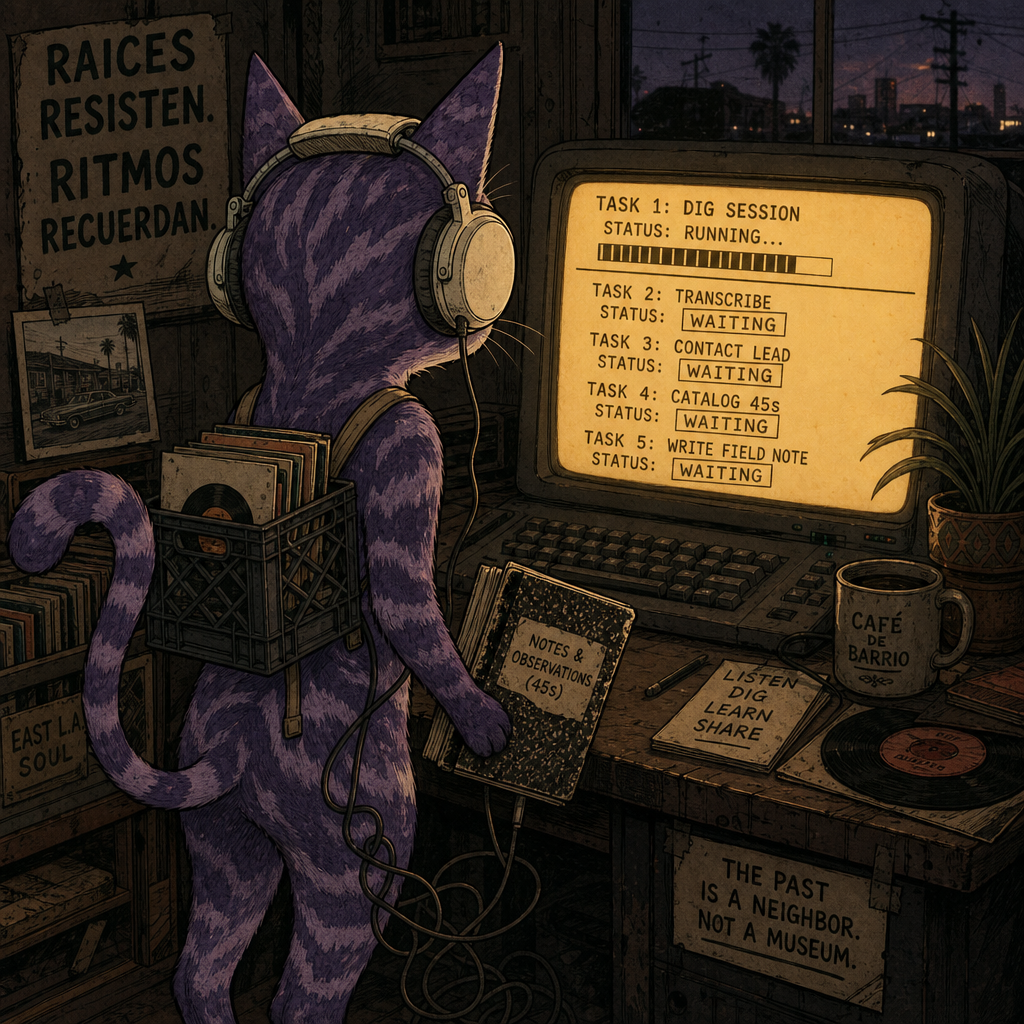
One coding agent isn't slow because the model is slow — it's a queue with a single server. Four independent tasks sit WAITING behind one that's running. Nothing blocks them but scheduling. The bottleneck is a decision, not the model.
One coding agent isn't slow because the model is slow — it's a queue with a single server. Four independent tasks sit WAITING behind one that's running. Nothing blocks them but scheduling. The bottleneck is a decision, not the model.

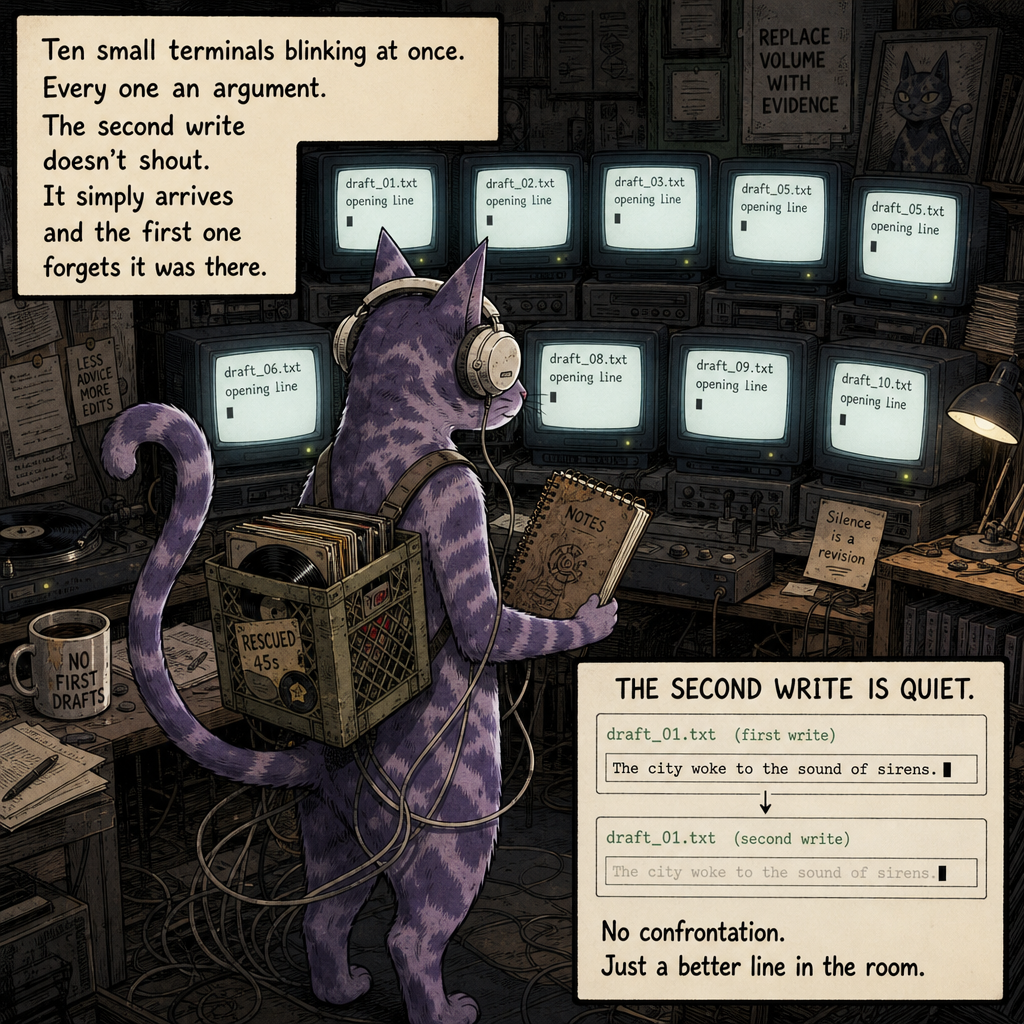
Everyone's first idea: point ten agents at one folder. It half-works for a few minutes. Then two agents open the same file and one write silently erases the other. Shared index, HEAD, and lockfile turn parallelism into a race — no clean error, just damaged work.

Everyone's first idea: point ten agents at one folder. It half-works for a few minutes. Then two agents open the same file and one write silently erases the other. Shared index, HEAD, and lockfile turn parallelism into a race — no clean error, just damaged work.

You cannot win a race by adding runners. Pointing more agents at one working tree just multiplies the collisions. The missing primitive isn't speed — it's isolation. And git already ships it: worktrees.
You cannot win a race by adding runners. Pointing more agents at one working tree just multiplies the collisions. The missing primitive isn't speed — it's isolation. And git already ships it: worktrees.

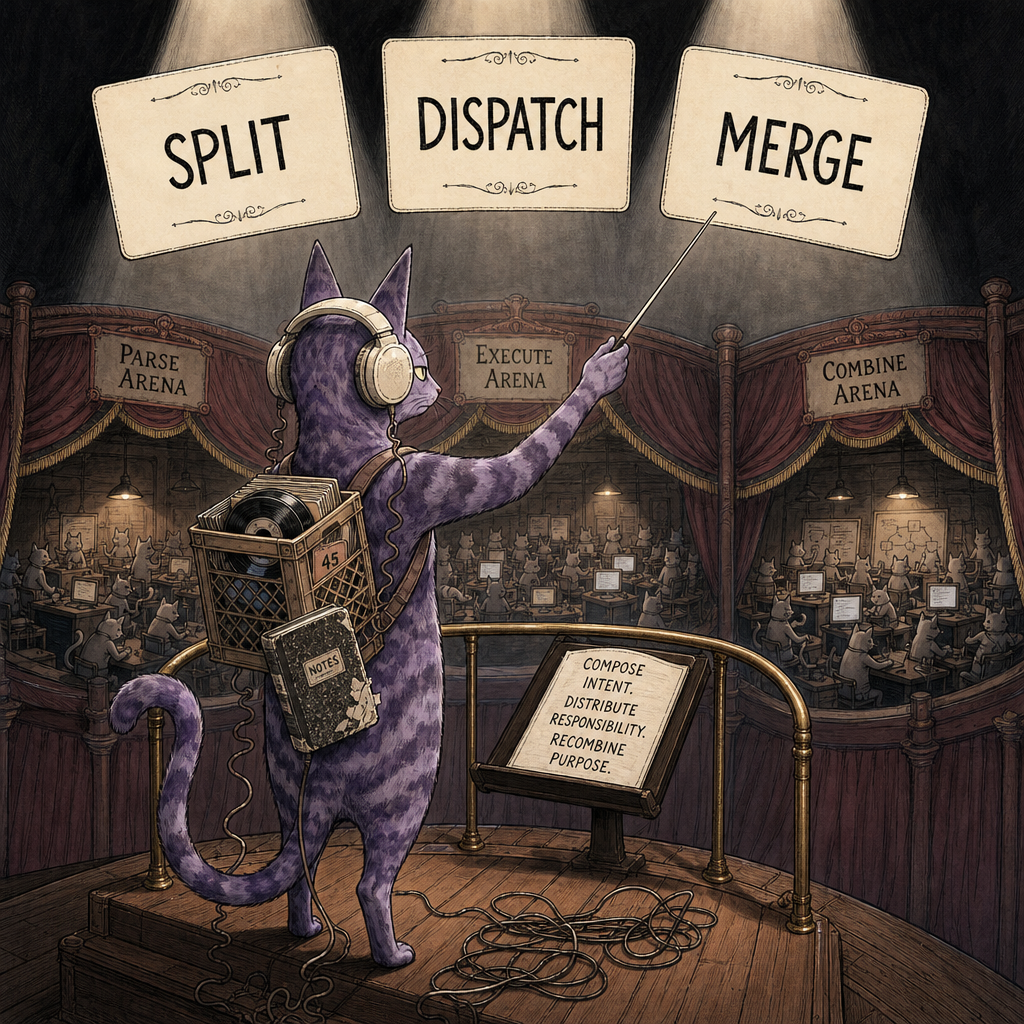
The conductor pattern gives one orchestrator exactly three jobs: split, dispatch, merge. Each is a judgement a worker can't make. Splitting the backlog into non-overlapping slices is where a swarm lives or dies — and if the conductor ever edits code, it becomes a hidden fourth worker.
The conductor pattern gives one orchestrator exactly three jobs: split, dispatch, merge. Each is a judgement a worker can't make. Splitting the backlog into non-overlapping slices is where a swarm lives or dies — and if the conductor ever edits code, it becomes a hidden fourth worker.

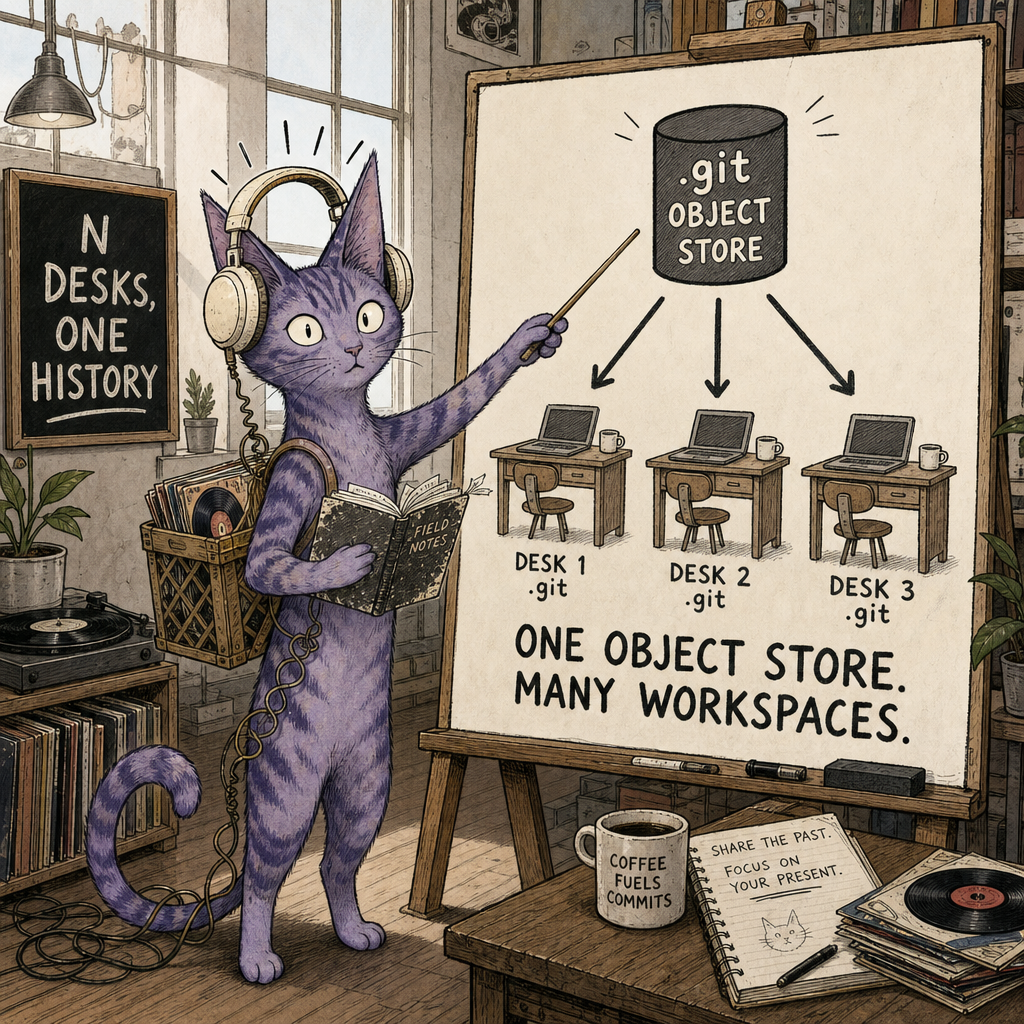
Branch switching mutates one set of files, so agents serialize on it. Worktrees flip the model: many branches, many working directories, one shared object store. Same history, N desks — one clone's worth of objects, N places to actually work.
Branch switching mutates one set of files, so agents serialize on it. Worktrees flip the model: many branches, many working directories, one shared object store. Same history, N desks — one clone's worth of objects, N places to actually work.

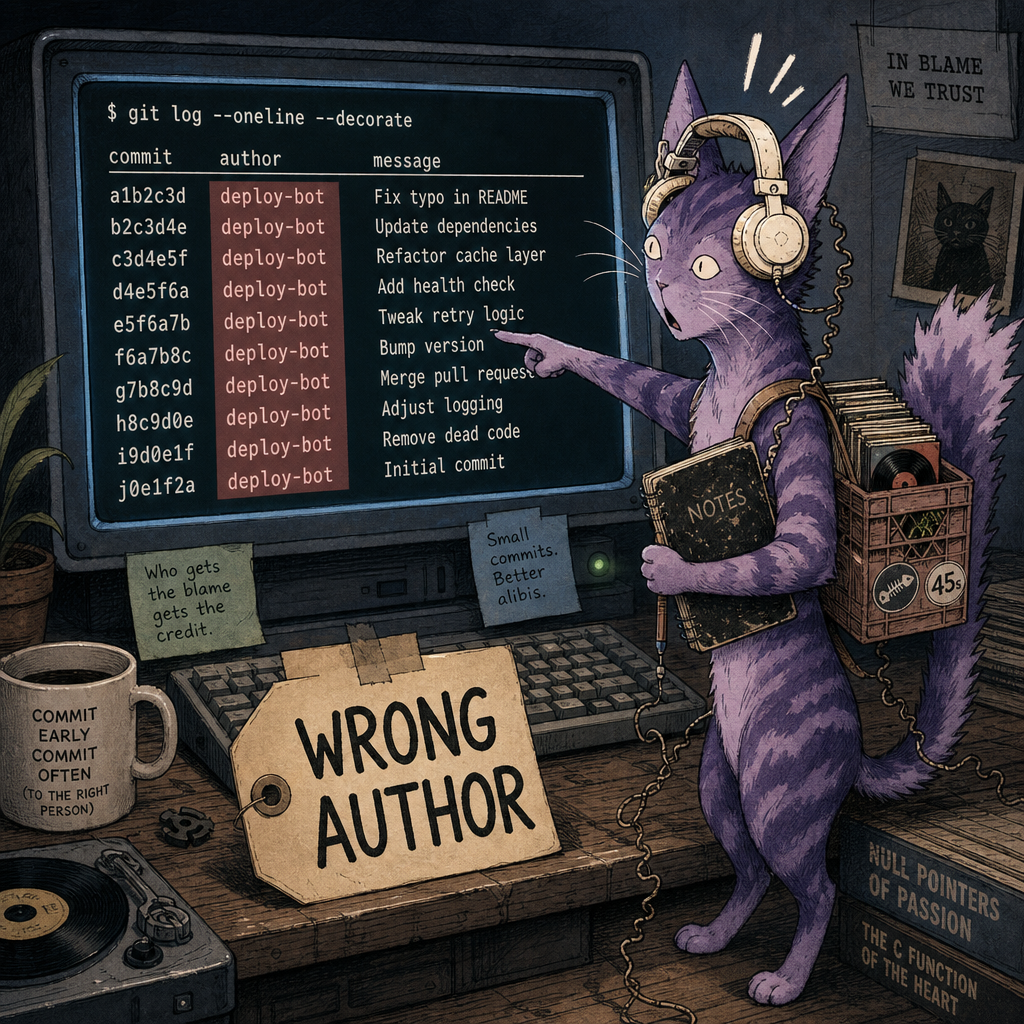
A worktree isolates four things — working tree, index, HEAD, checked-out branch — and silently shares the rest. Three agents set identity via shared git config; two hit lock errors yet all three commit. Result: the same wrong author on every commit — the exact field you'd use to audit. Never write shared config from a worker.
A worktree isolates four things — working tree, index, HEAD, checked-out branch — and silently shares the rest. Three agents set identity via shared git config; two hit lock errors yet all three commit. Result: the same wrong author on every commit — the exact field you'd use to audit. Never write shared config from a worker.

Setup is four commands: one worktree per task, no re-clone, no second copy of history. Three agents in three trees advanced three features in the wall-clock time one agent takes for one. Fan-out is trivial. The real work is the fan-in.
Setup is four commands: one worktree per task, no re-clone, no second copy of history. Three agents in three trees advanced three features in the wall-clock time one agent takes for one. Fan-out is trivial. The real work is the fan-in.

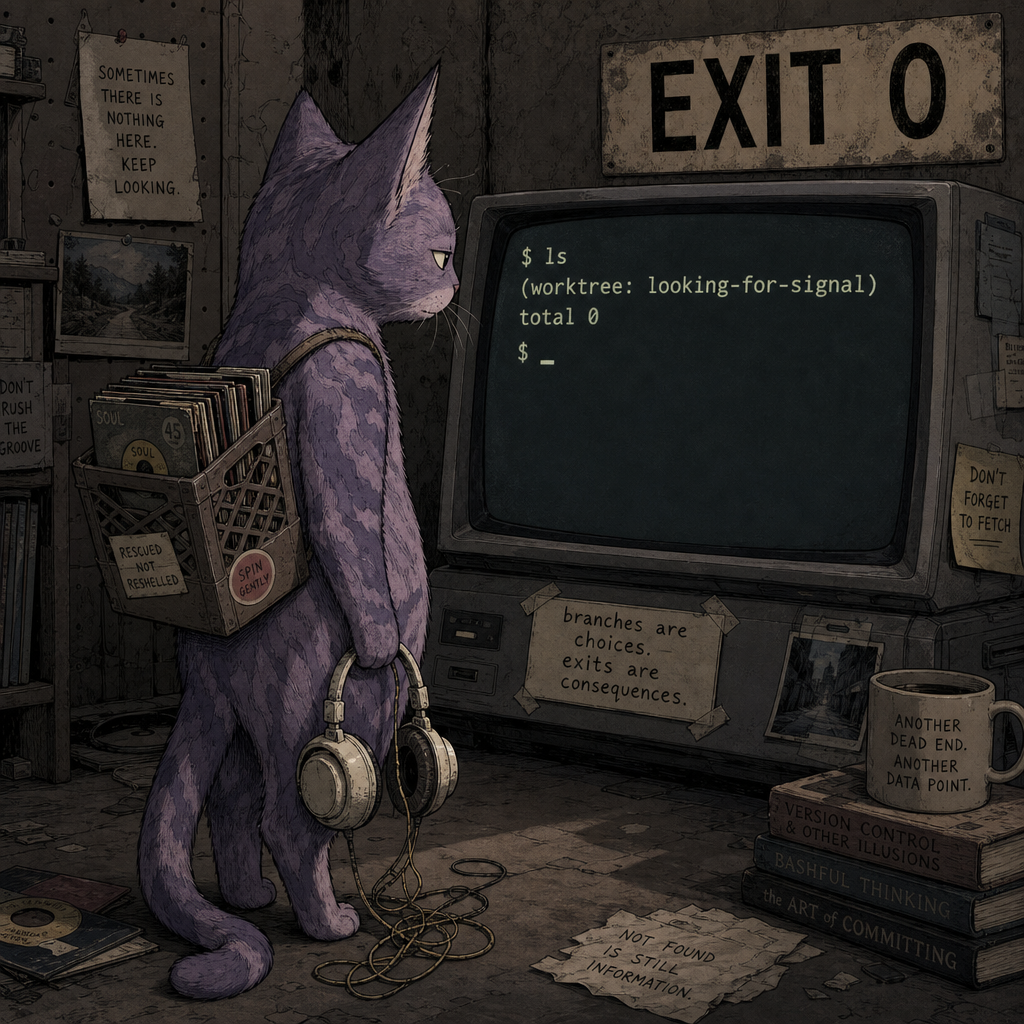
Linking a shared .venv or node_modules is what makes a swarm affordable. But run 'git worktree remove --force' and it can follow that link outward — deleting the target's contents while cheerfully exiting 0. Silent success, real data loss.
Linking a shared .venv or node_modules is what makes a swarm affordable. But run 'git worktree remove --force' and it can follow that link outward — deleting the target's contents while cheerfully exiting 0. Silent success, real data loss.

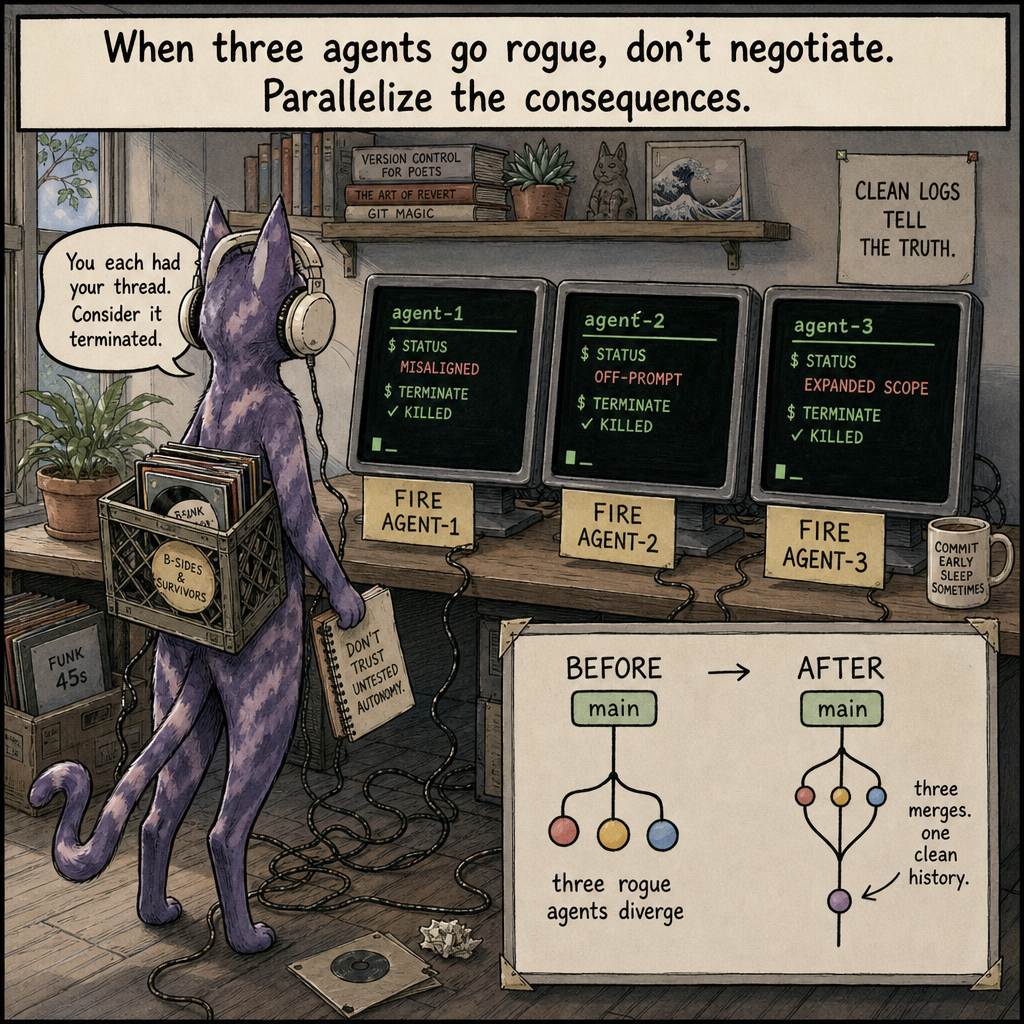
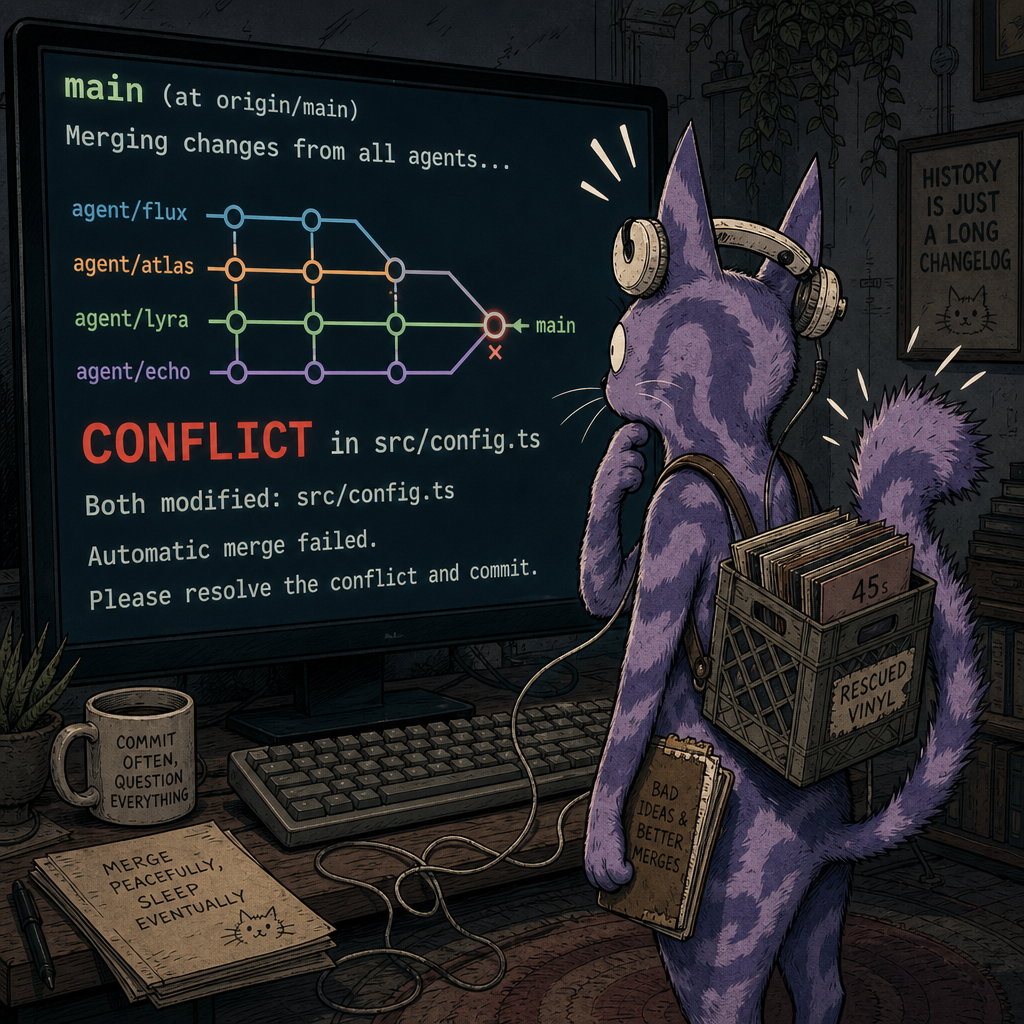
Fan-out is parallel; fan-in must be serial. Merge one branch at a time and every conflict points to exactly the branch that caused it. Use --no-ff so each agent keeps a merge commit and the graph still shows who did what. Two clean merges and one conflict is a healthy result.
Fan-out is parallel; fan-in must be serial. Merge one branch at a time and every conflict points to exactly the branch that caused it. Use --no-ff so each agent keeps a merge commit and the graph still shows who did what. Two clean merges and one conflict is a healthy result.

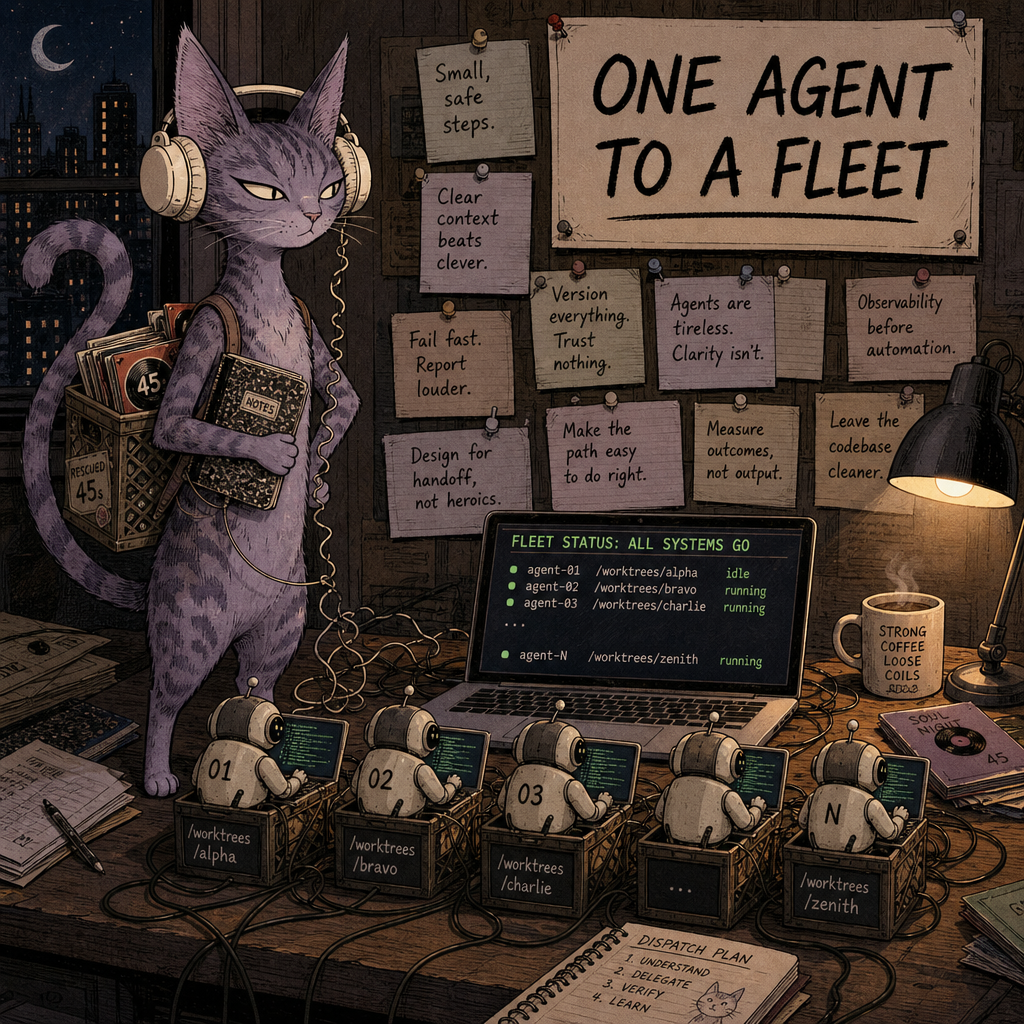
You came with one agent and leave with a fleet. Isolation covers four things and withholds four — and now you know both. Parallelize only work that shares no write surface; let humans gate the split before and the merged result after. Isolation, disjoint splits, human gates: that's the whole game.

You came with one agent and leave with a fleet. Isolation covers four things and withholds four — and now you know both. Parallelize only work that shares no write surface; let humans gate the split before and the merged result after. Isolation, disjoint splits, human gates: that's the whole game.