explained comic · 20 pages · your annotated copy
an educational manga explainer
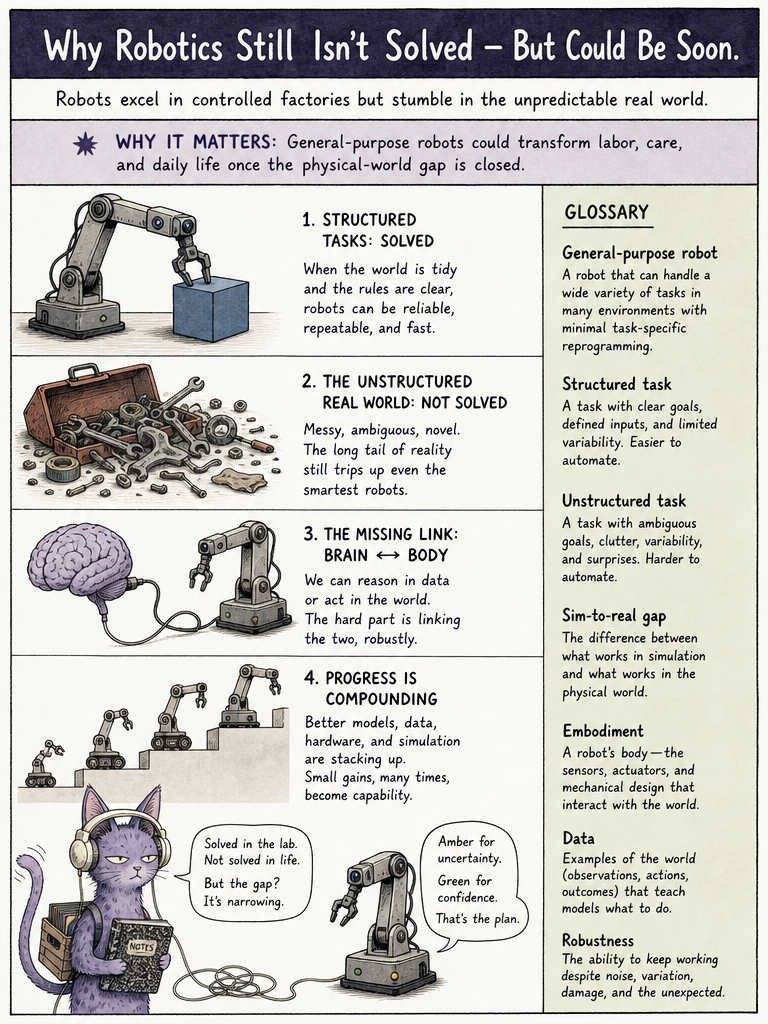
Why Robotics Still Isn't Solved — But Could Be Soon
comicexplain
session notes
kept private to your copy — sign in to add notes.
my take on page 1
key idea
Robotics is unsolved because the real world is messy and unstructured.
flip ↺
why this matters
General-purpose robots could reshape labor and daily life once real-world reliability arrives.
flip ↺
p. 1 · 20
my take on page 2
key idea
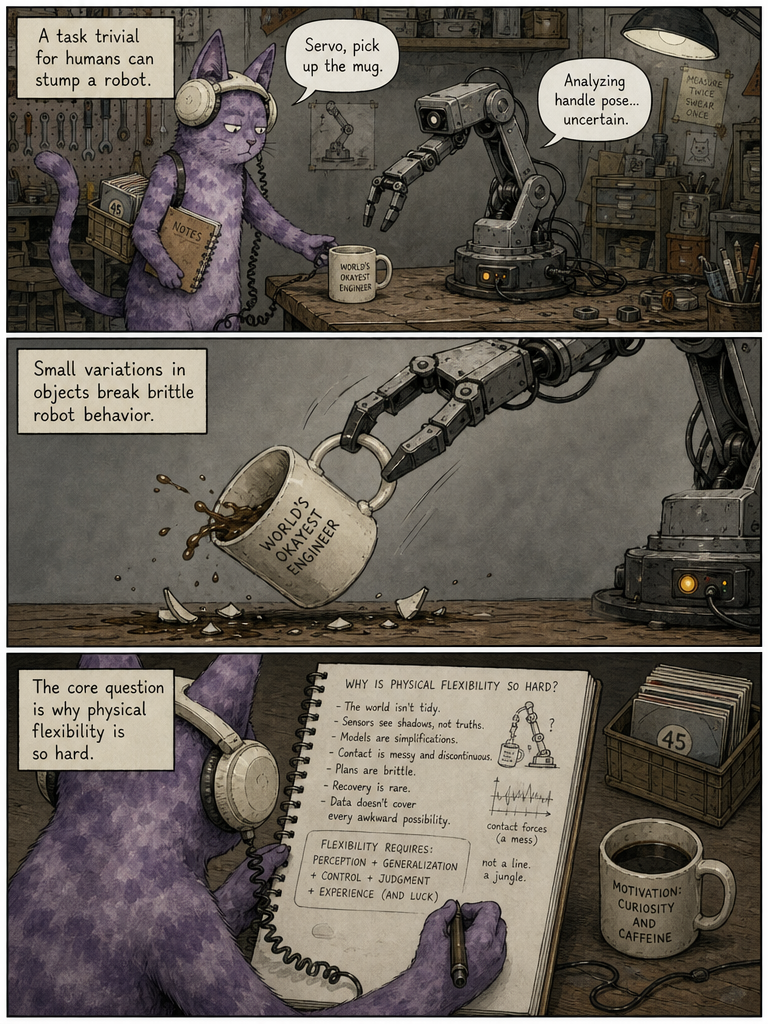
Robots are brittle: small real-world variations break their behavior.
flip ↺
why this matters
Understanding brittleness explains why lab demos rarely survive contact with the real world.
flip ↺
p. 2 · 20
my take on page 3
key idea
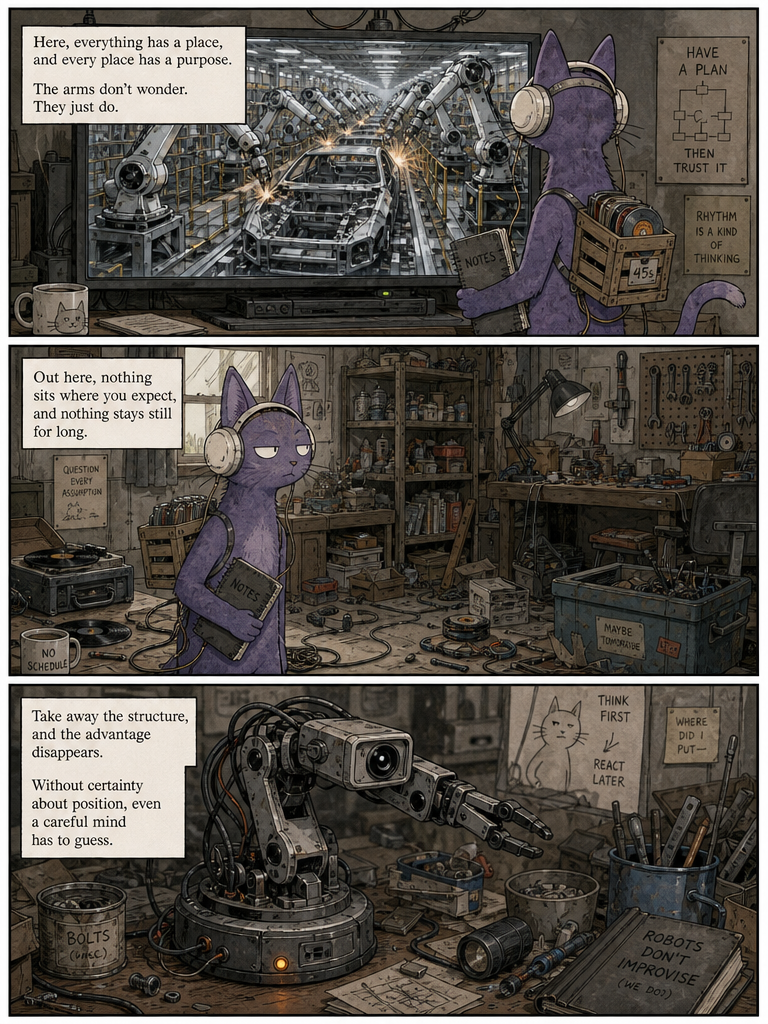
Industrial success comes from controlled environments, not general capability.
flip ↺
why this matters
It clarifies that automation gains so far are narrow, not evidence of general robots.
flip ↺
p. 3 · 20
my take on page 4
key idea
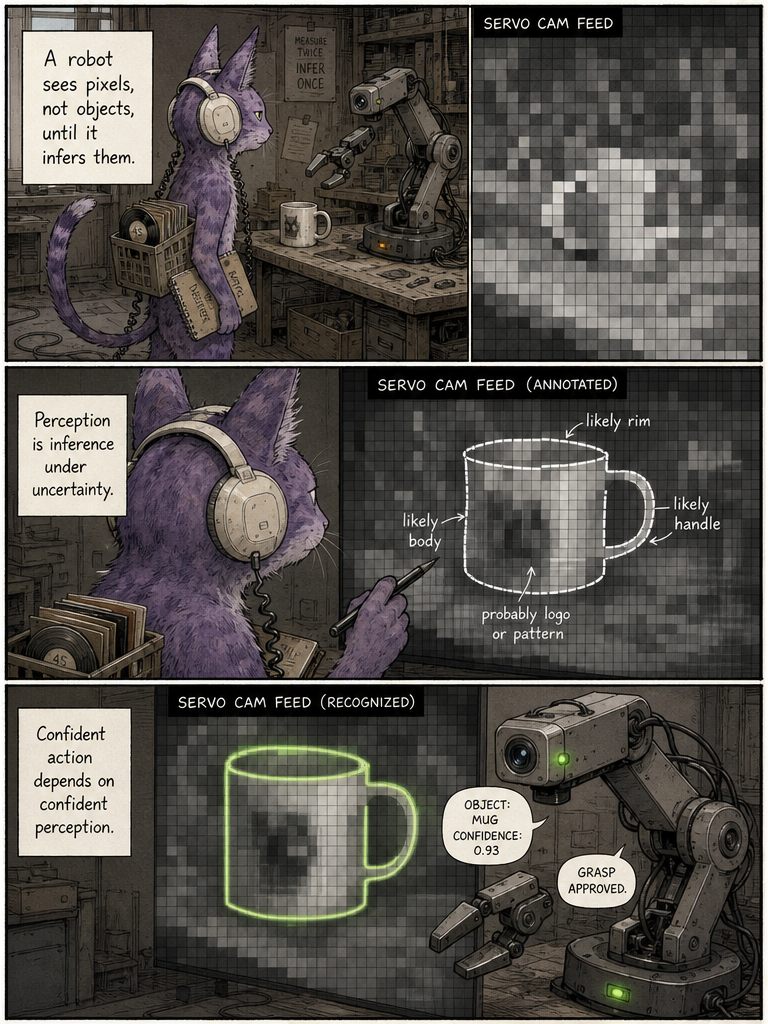
Perception turns messy sensor data into an actionable scene model.
flip ↺
why this matters
Perception errors cascade into every downstream decision a robot makes.
flip ↺
p. 4 · 20
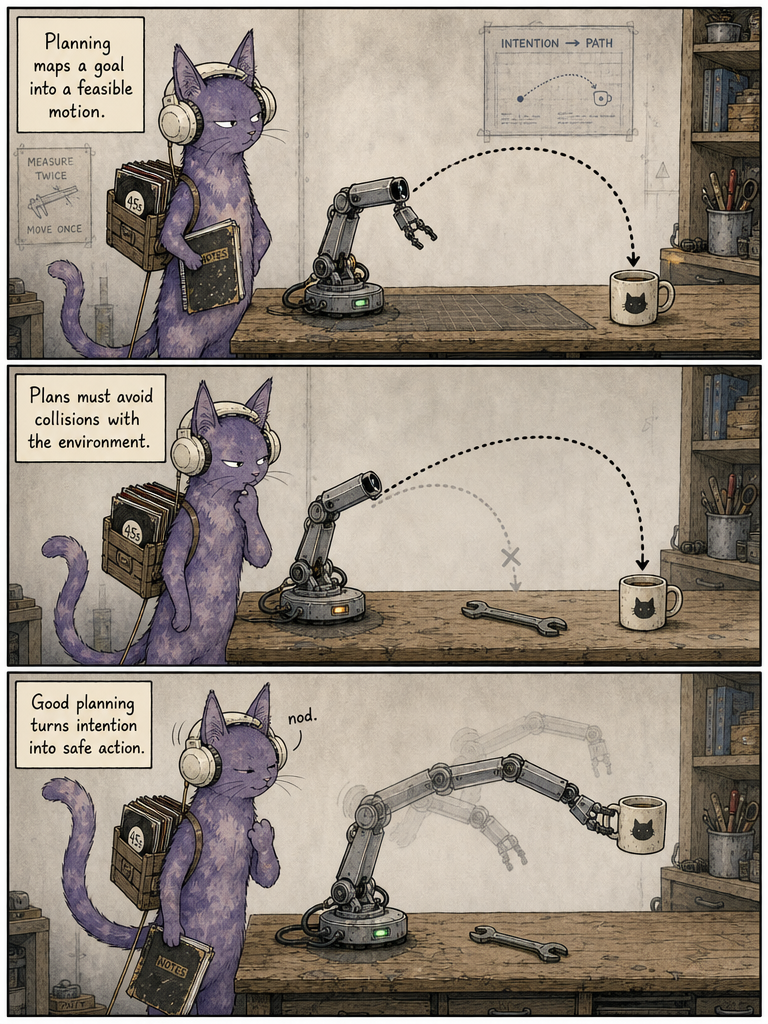
my take on page 5
key idea
Planning maps goals into feasible, collision-free motions.
flip ↺
why this matters
Robots share space with people and objects, so unsafe plans cause real harm.
flip ↺
p. 5 · 20
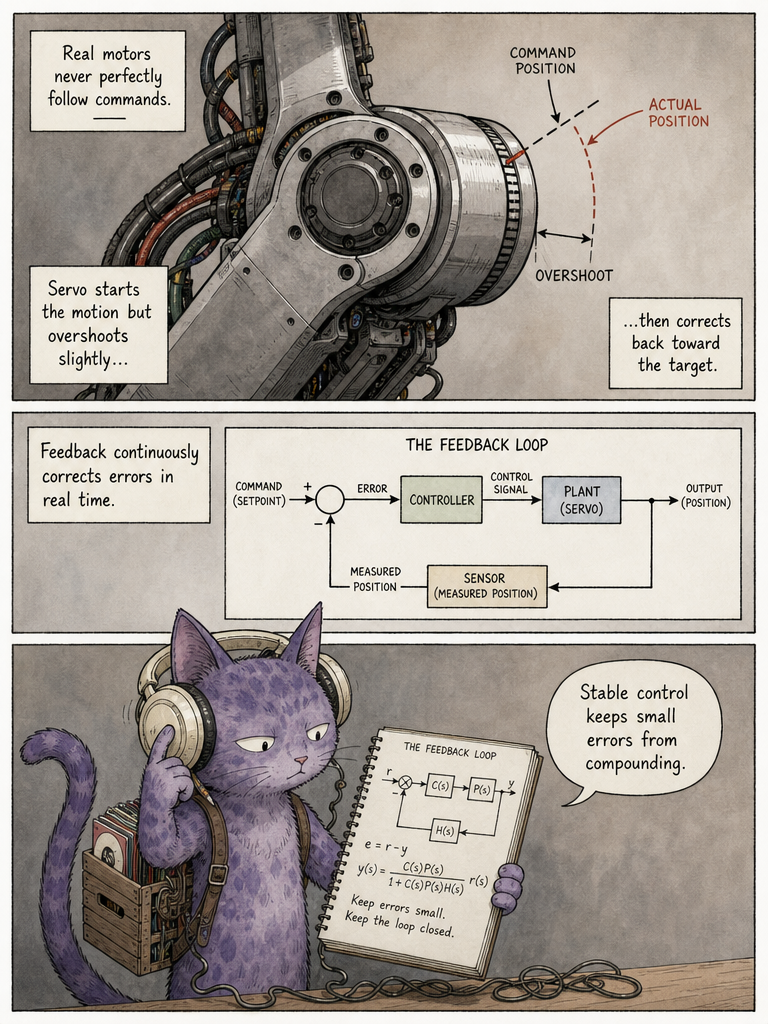
my take on page 6
key idea
Feedback control corrects the gap between commanded and actual motion.
flip ↺
why this matters
Without stable control, planned motions drift and small errors snowball into failure.
flip ↺
p. 6 · 20
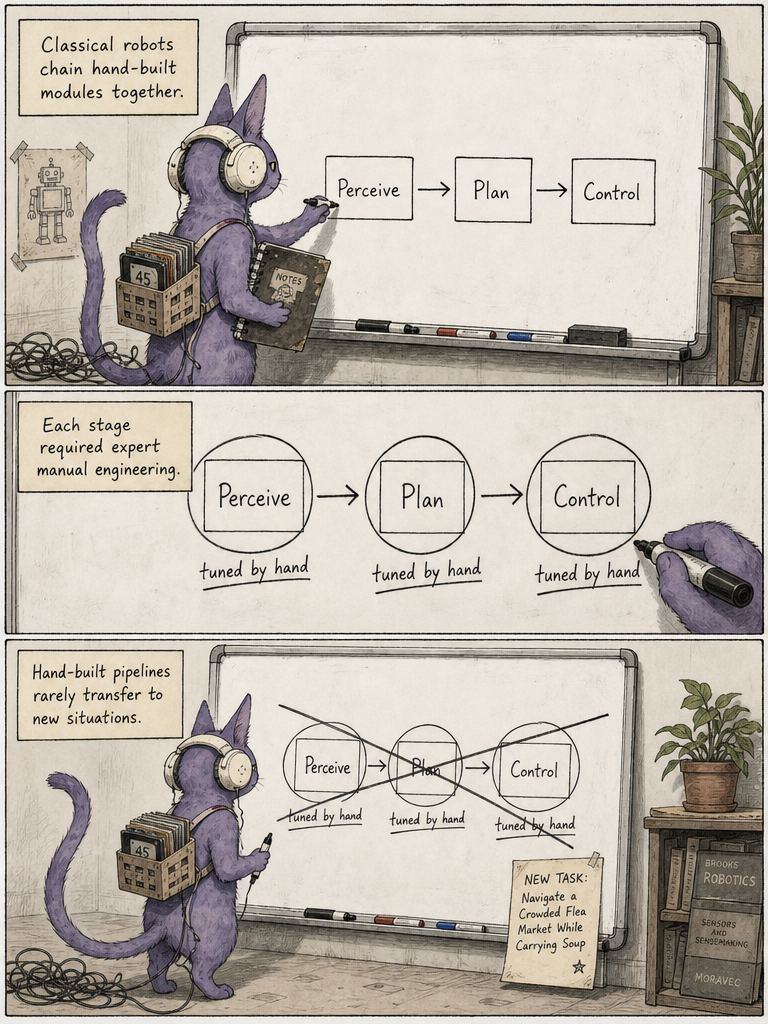
my take on page 7
key idea
Hand-engineered pipelines work narrowly but do not generalize.
flip ↺
why this matters
It explains why decades of engineering never produced a general-purpose robot.
flip ↺
p. 7 · 20
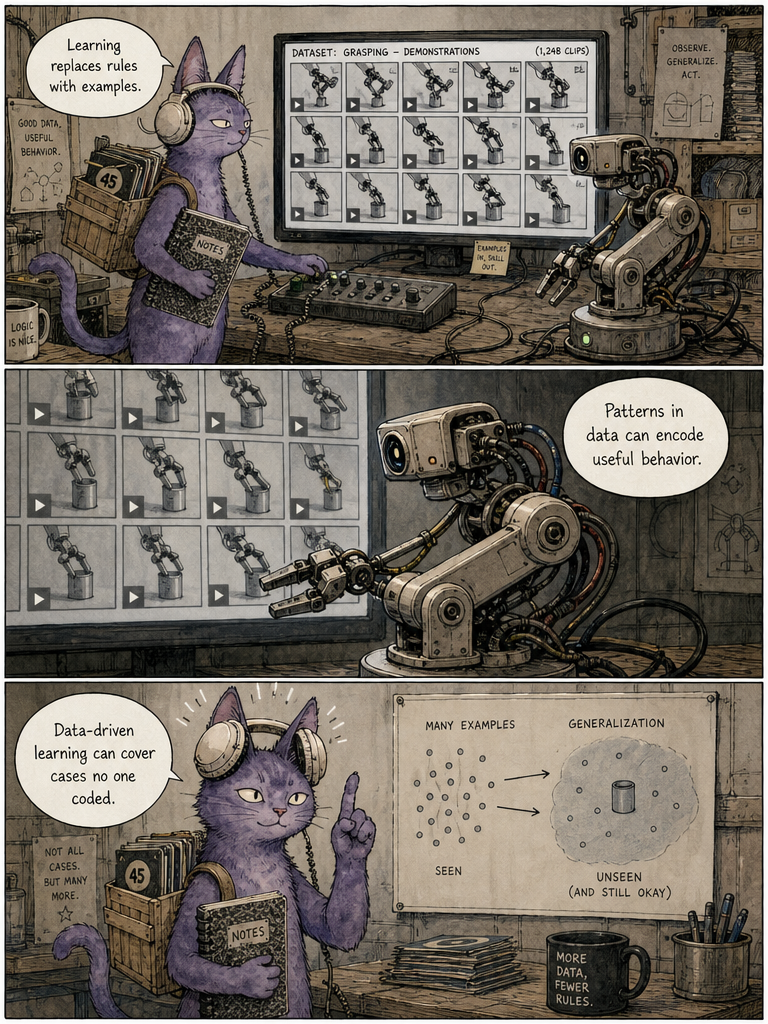
my take on page 8
key idea
Robots can learn behaviors from data instead of hand-coded rules.
flip ↺
why this matters
Learning offers a path past the brittleness of hand-built pipelines.
flip ↺
p. 8 · 20
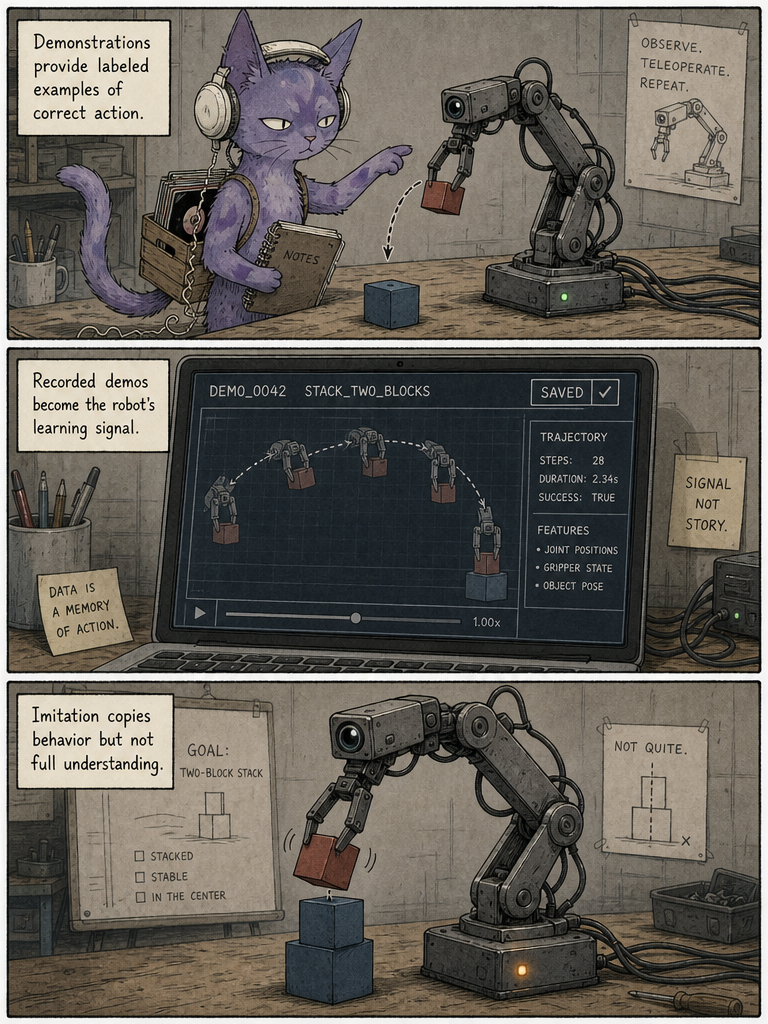
my take on page 9
key idea
Robots can learn by copying recorded expert demonstrations.
flip ↺
why this matters
Demonstrations are an intuitive, low-effort way to teach complex skills.
flip ↺
p. 9 · 20
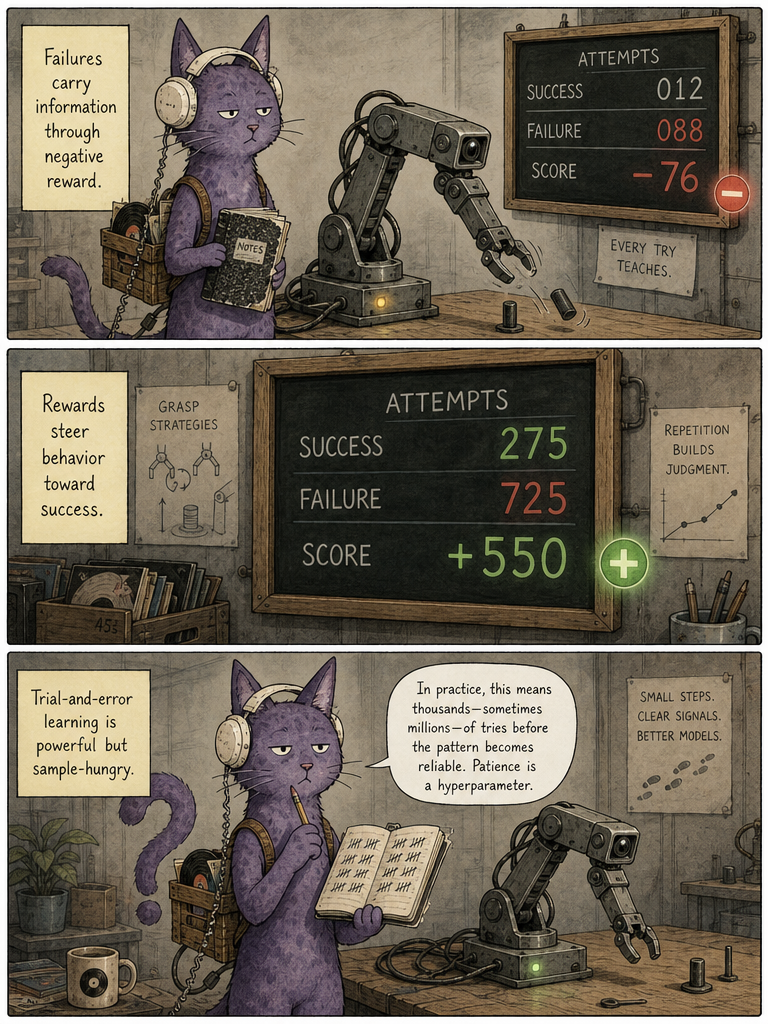
my take on page 10
key idea
Reward-driven trial and error can teach skills but needs many attempts.
flip ↺
why this matters
It reveals a key bottleneck: real-world trials are slow and costly.
flip ↺
p. 10 · 20
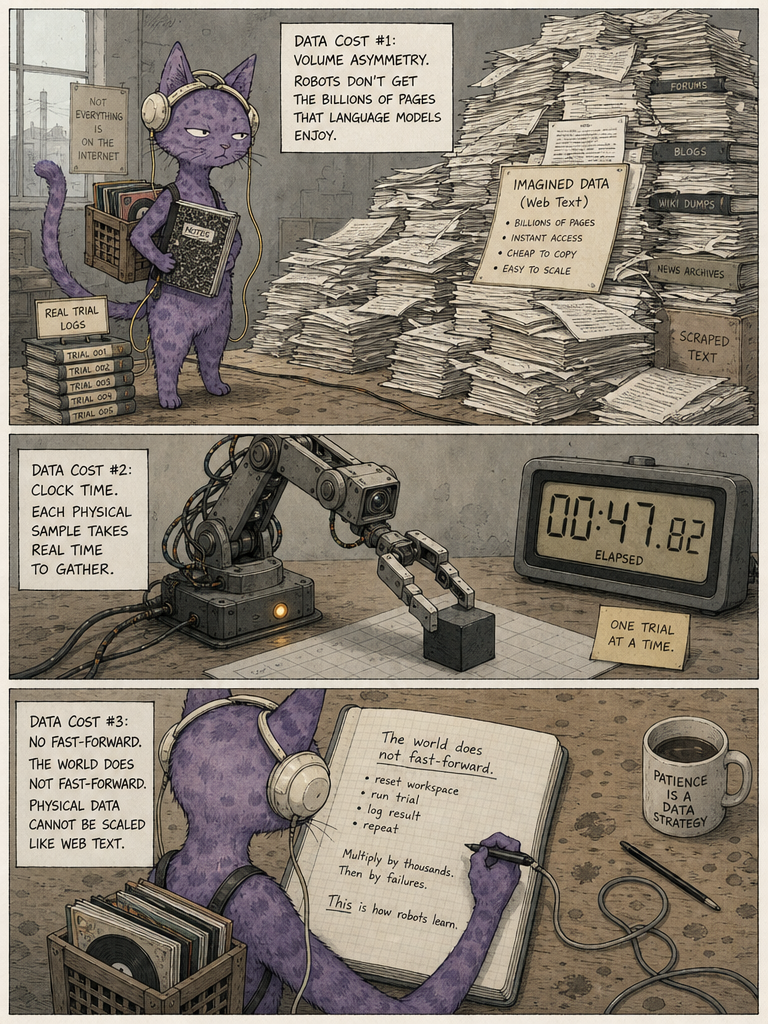
my take on page 11
key idea
Real-world robot data is expensive and slow to collect.
flip ↺
why this matters
Data scarcity is a central reason robotics lags behind language AI.
flip ↺
p. 11 · 20
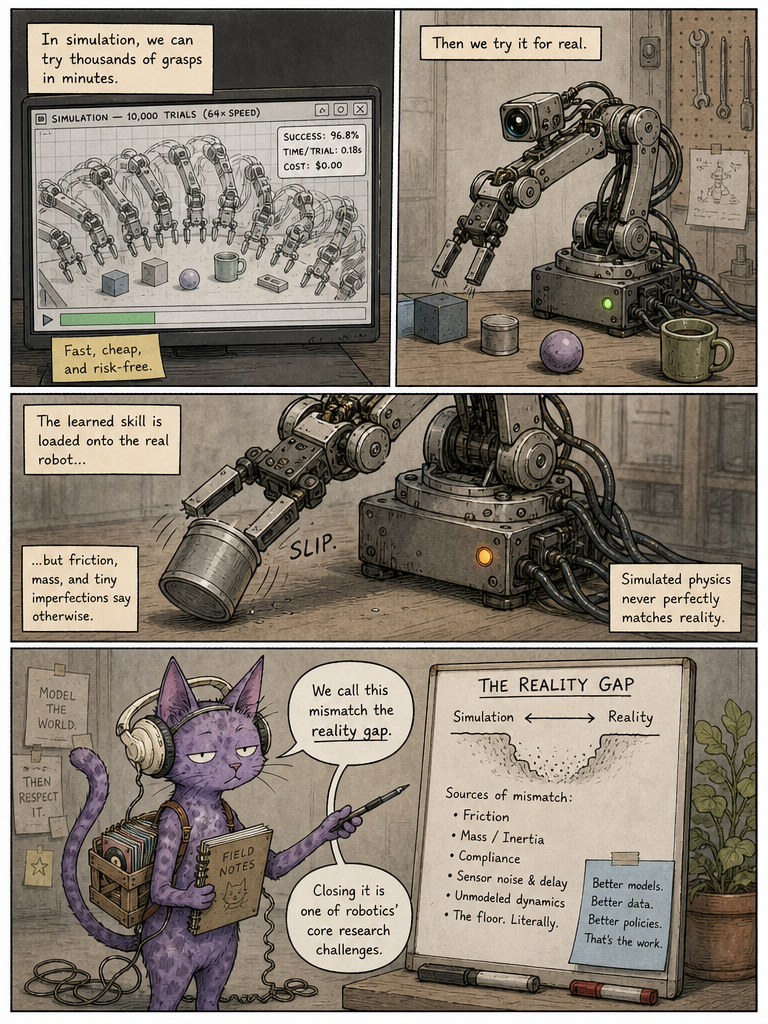
my take on page 12
key idea
Simulation scales practice but the reality gap limits transfer.
flip ↺
why this matters
Bridging sim-to-real is essential to make cheap training useful on real robots.
flip ↺
p. 12 · 20
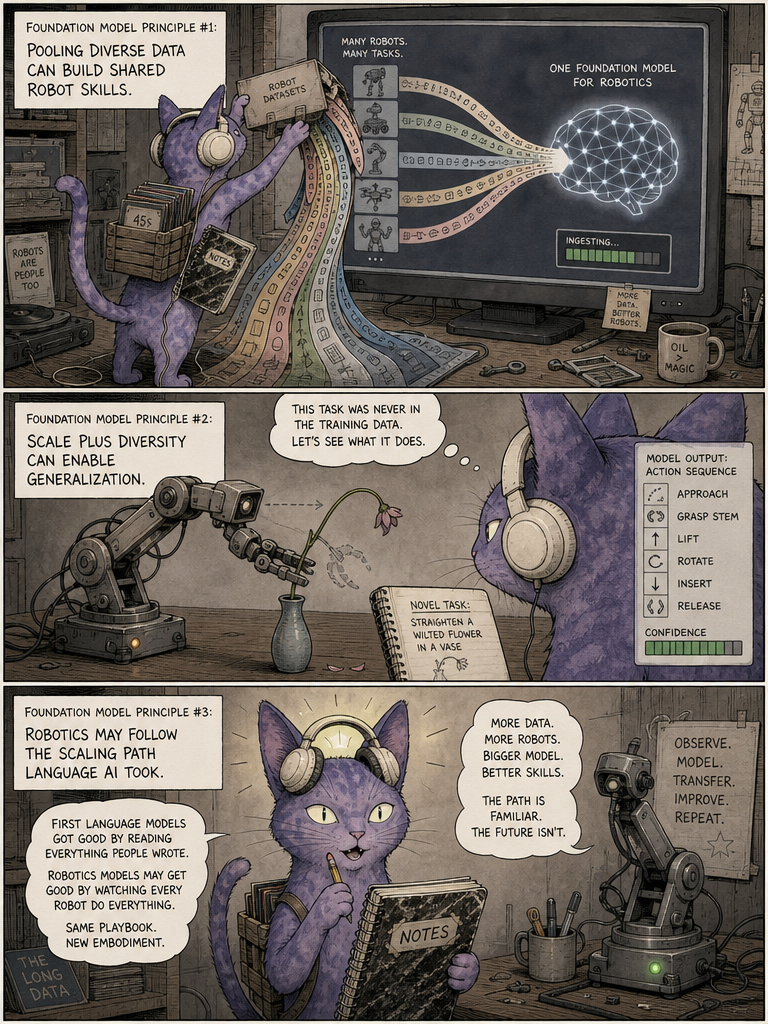
my take on page 13
key idea
A single large model trained on diverse data may generalize across tasks.
flip ↺
why this matters
This is the leading reason optimists believe robotics could soon be solved.
flip ↺
p. 13 · 20
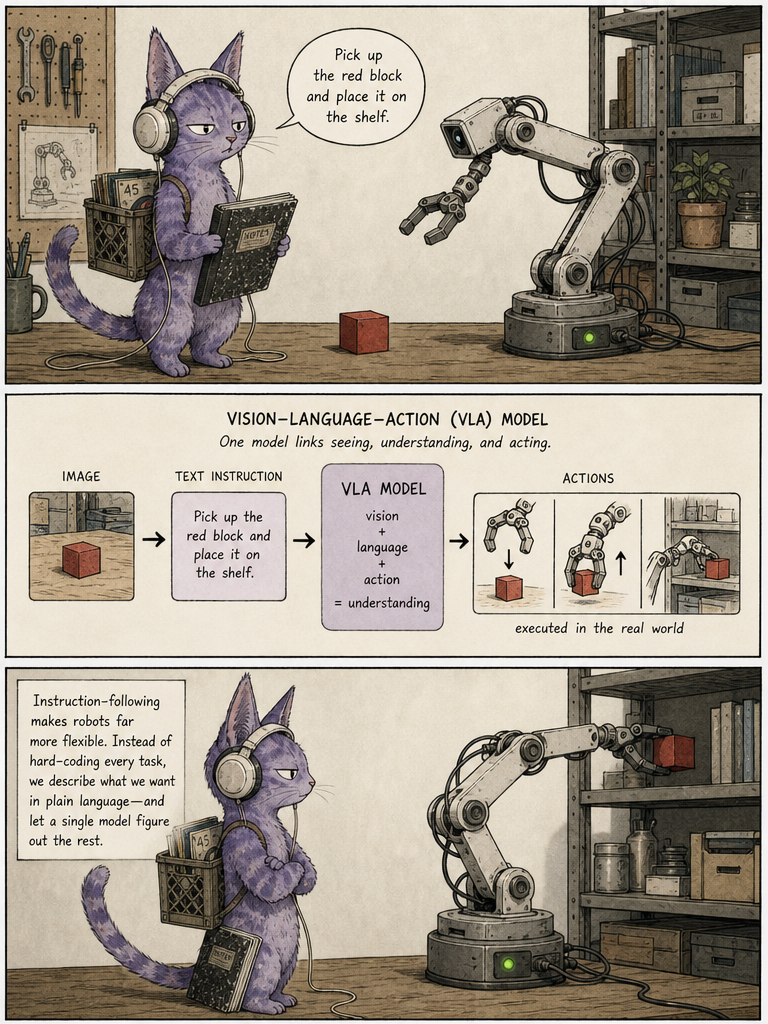
my take on page 14
key idea
One model can map vision and language directly to robot actions.
flip ↺
why this matters
Natural-language control could make robots usable by non-experts.
flip ↺
p. 14 · 20
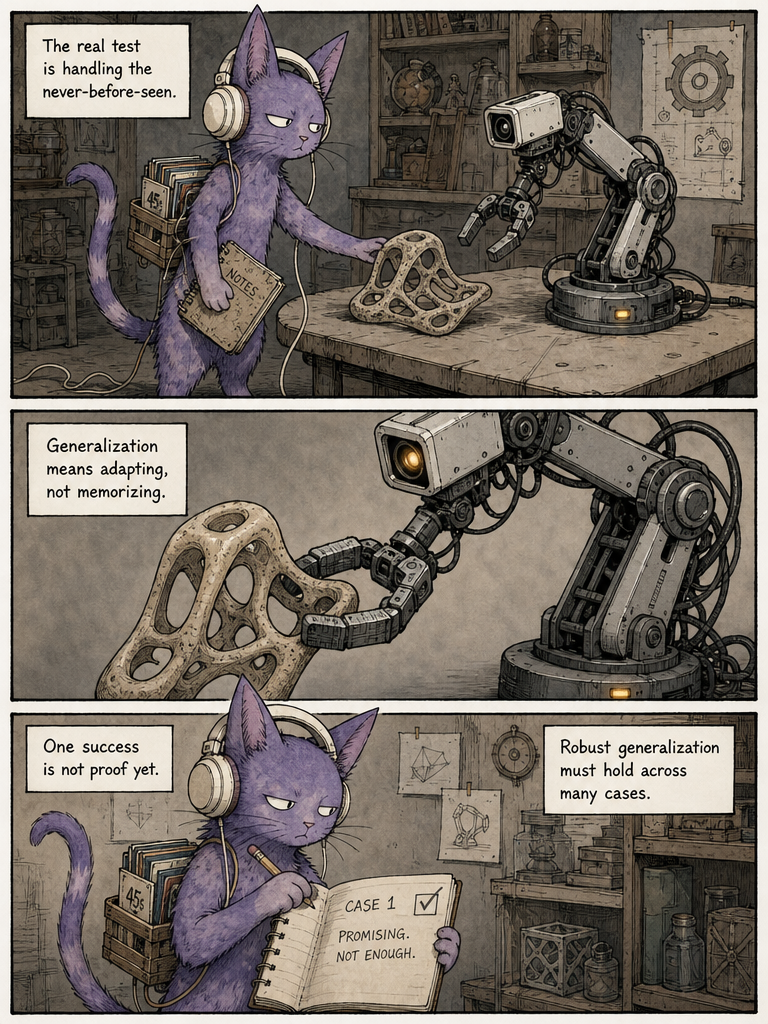
my take on page 15
key idea
True success is adapting to the unseen, not memorizing training cases.
flip ↺
why this matters
Generalization is the difference between a demo and a deployable robot.
flip ↺
p. 15 · 20
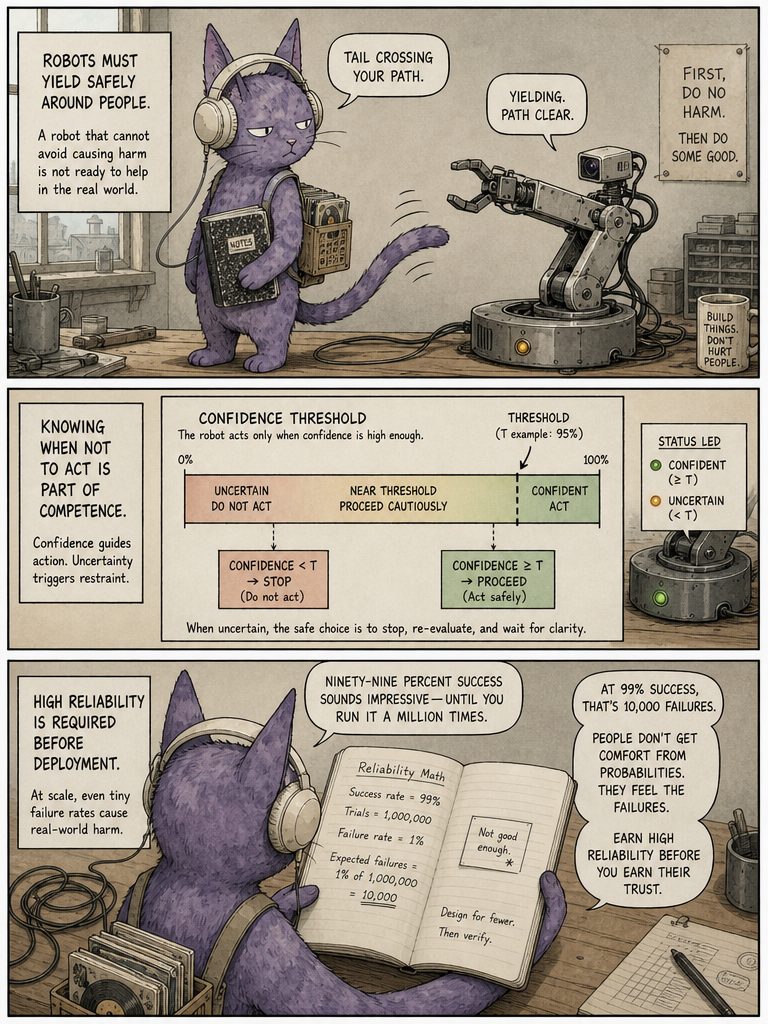
my take on page 16
key idea
Physical robots need safe failure and very high reliability.
flip ↺
why this matters
Even rare failures become frequent and dangerous across many deployed robots.
flip ↺
p. 16 · 20
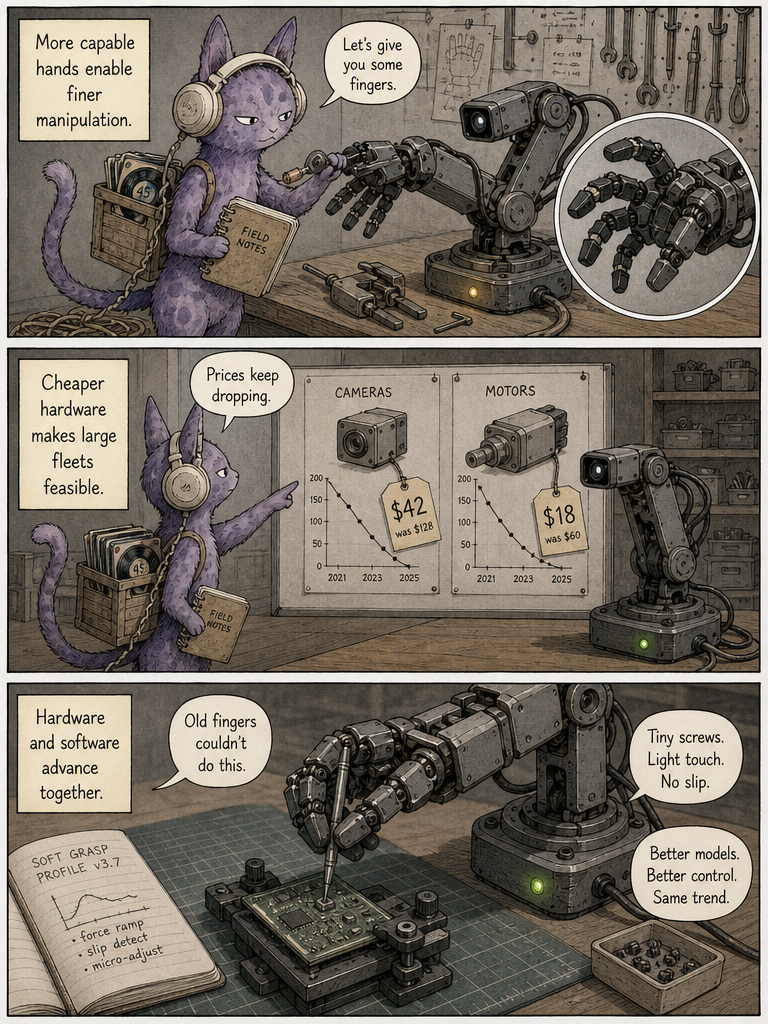
my take on page 17
key idea
Improving affordable hardware expands what learned robots can do.
flip ↺
why this matters
Affordable dexterous hardware makes scaling data collection and deployment realistic.
flip ↺
p. 17 · 20
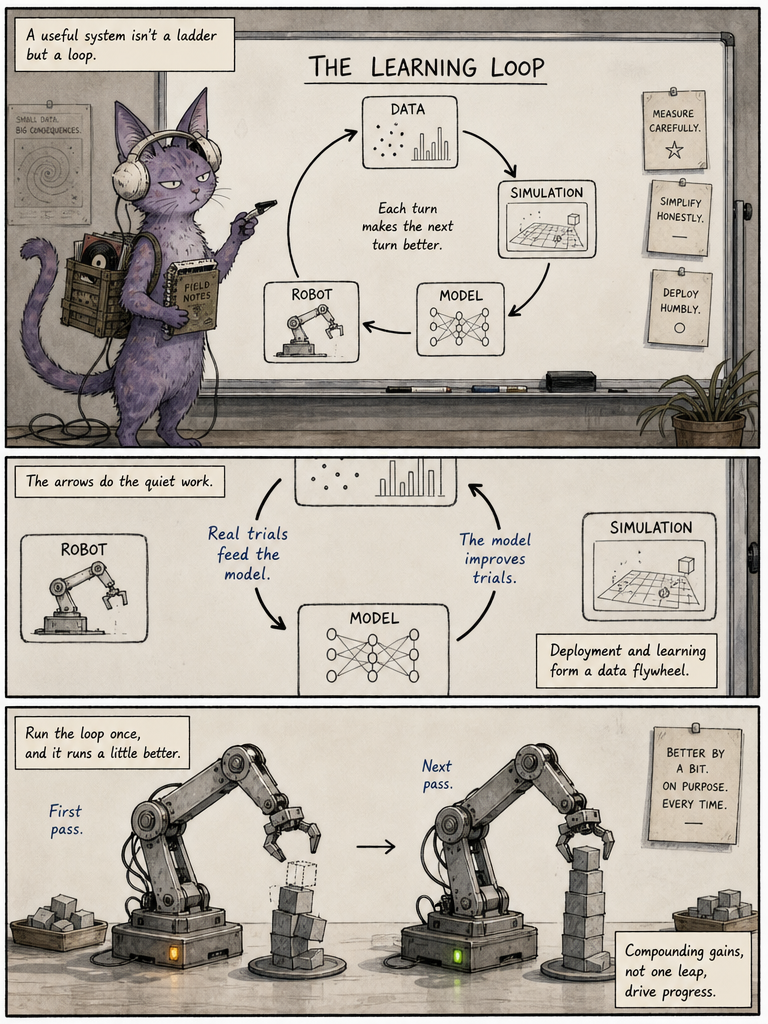
my take on page 18
key idea
Progress is a compounding flywheel, not a single breakthrough.
flip ↺
why this matters
Understanding the flywheel explains why many think robotics could soon accelerate.
flip ↺
p. 18 · 20
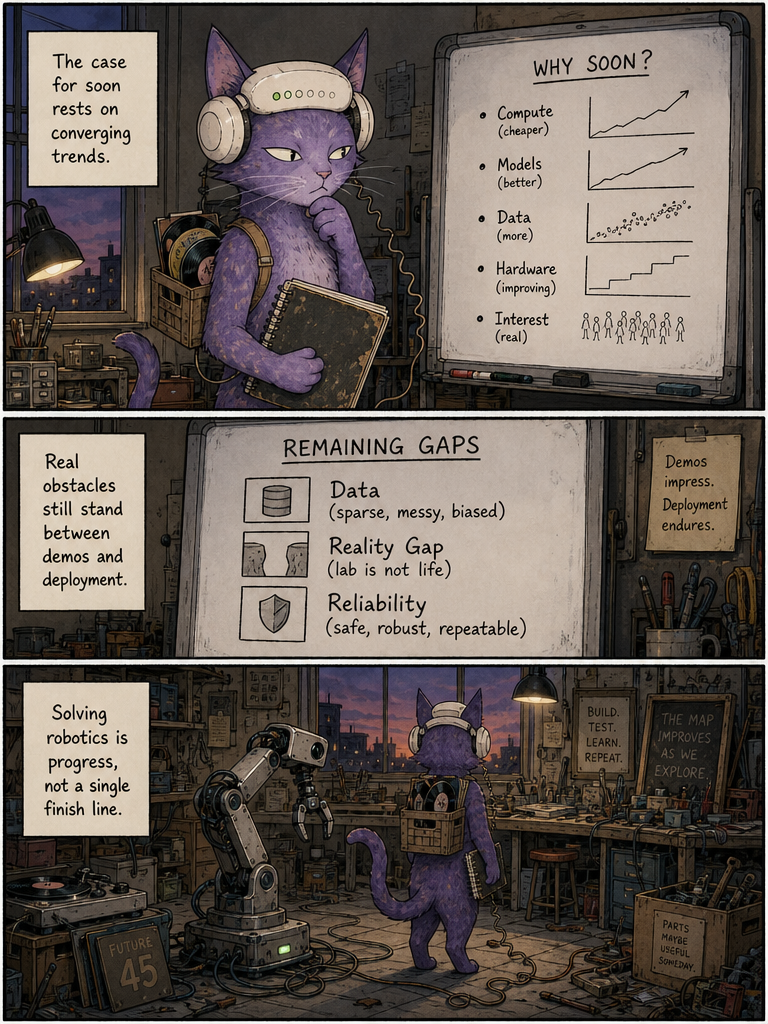
my take on page 19
key idea
Robotics may soon be solved, but key gaps are not yet closed.
flip ↺
why this matters
A balanced view helps you judge robotics hype against genuine technical progress.
flip ↺
p. 19 · 20
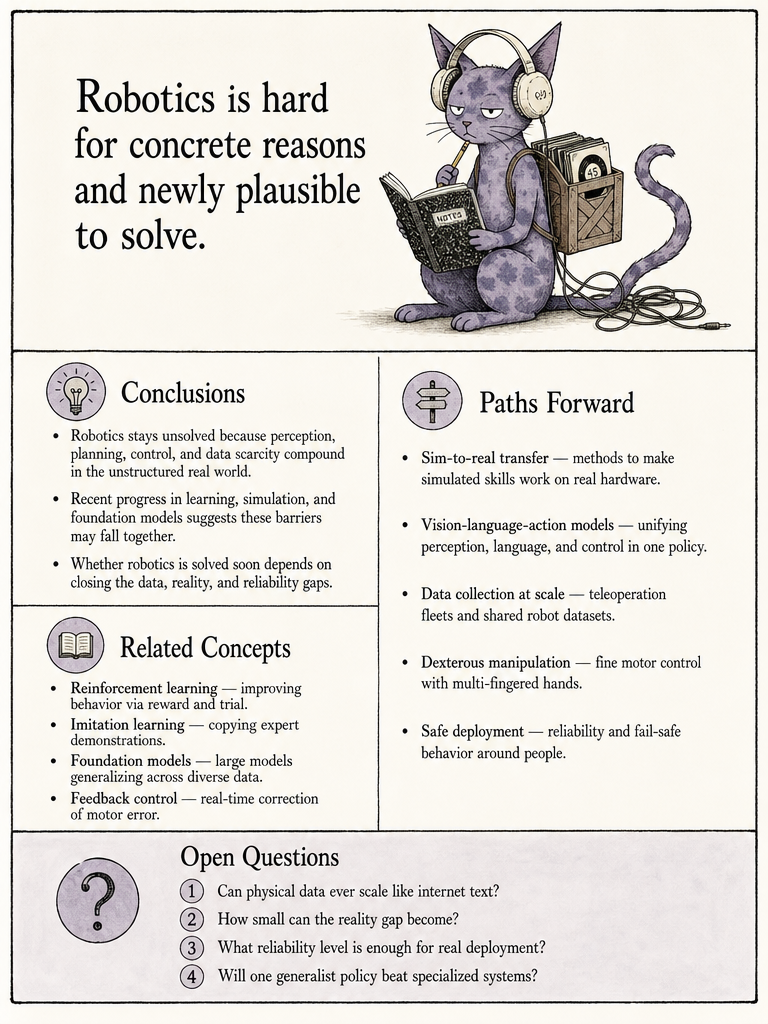
my take on page 20
key idea
Concrete barriers explain the difficulty; convergent advances explain the new optimism.
flip ↺
why this matters
Knowing the real bottlenecks lets you track meaningful robotics progress rather than hype.
flip ↺
p. 20 · 20
flashcards · all 20
key idea
Robotics is unsolved because the real world is messy and unstructured.
click to flip ↺
why this matters
General-purpose robots could reshape labor and daily life once real-world reliability arrives.
click to flip ↺
card 1 · 20
one card per page — cycle through before you close the book.
index of key ideas
1Robotics is unsolved because the real world is messy and unstructured.
2Robots are brittle: small real-world variations break their behavior.
3Industrial success comes from controlled environments, not general capability.
4Perception turns messy sensor data into an actionable scene model.
5Planning maps goals into feasible, collision-free motions.
6Feedback control corrects the gap between commanded and actual motion.
7Hand-engineered pipelines work narrowly but do not generalize.
8Robots can learn behaviors from data instead of hand-coded rules.
9Robots can learn by copying recorded expert demonstrations.
10Reward-driven trial and error can teach skills but needs many attempts.
11Real-world robot data is expensive and slow to collect.
12Simulation scales practice but the reality gap limits transfer.
13A single large model trained on diverse data may generalize across tasks.
14One model can map vision and language directly to robot actions.
15True success is adapting to the unseen, not memorizing training cases.
16Physical robots need safe failure and very high reliability.
17Improving affordable hardware expands what learned robots can do.
18Progress is a compounding flywheel, not a single breakthrough.
19Robotics may soon be solved, but key gaps are not yet closed.
20Concrete barriers explain the difficulty; convergent advances explain the new optimism.
comicexplain
paste a paper, get an annotated comic — pages appear in seconds.
front cover