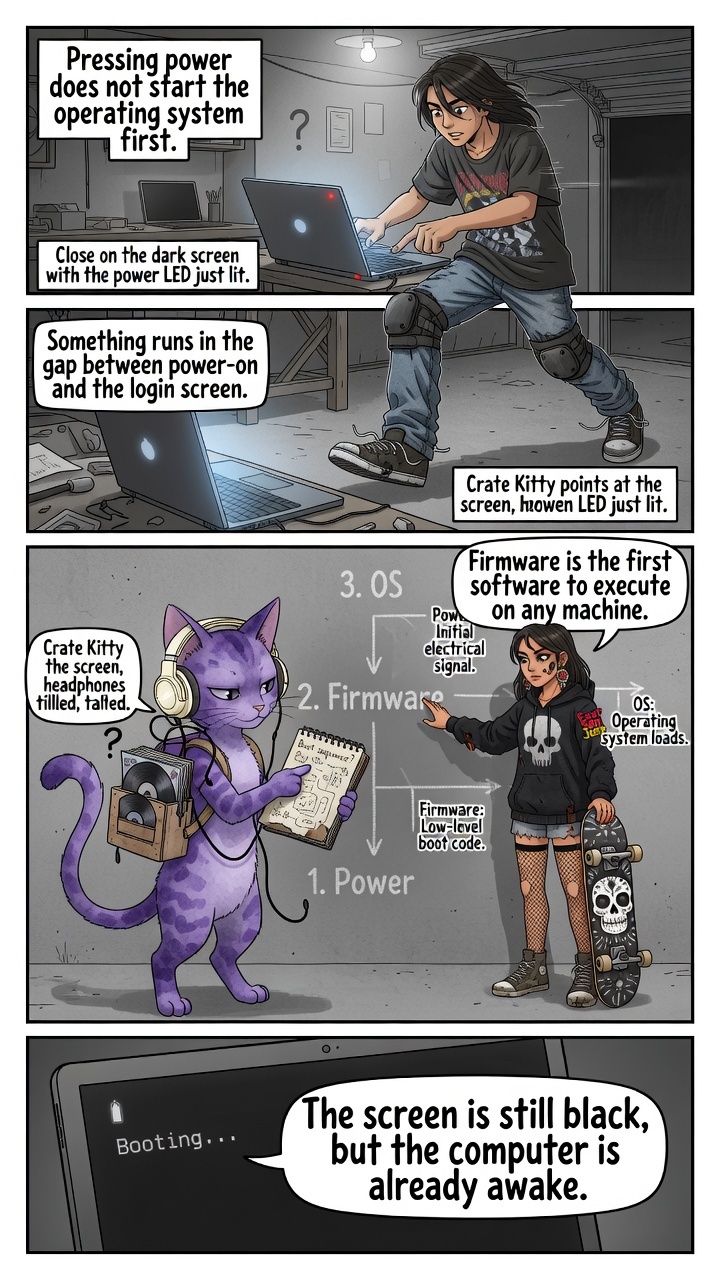
Every computer runs firmware in the silent gap between pressing power and the operating system starting.
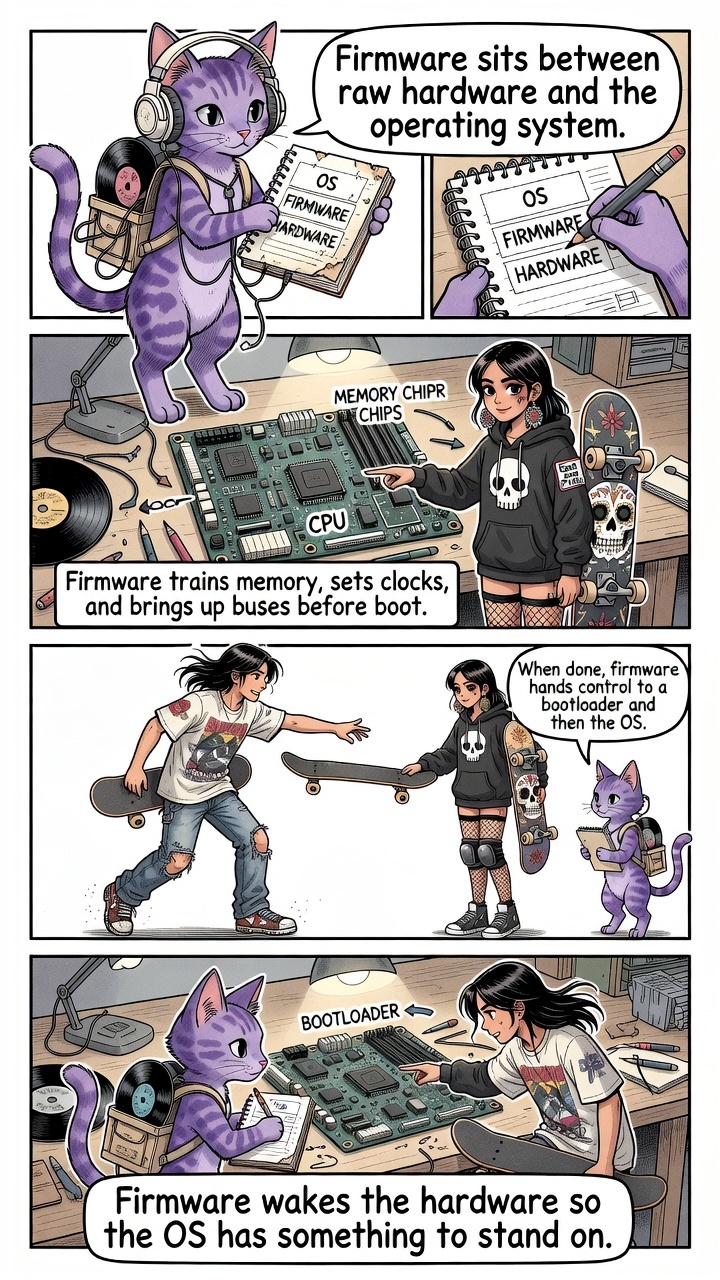
Firmware initializes memory, clocks, and buses, then passes control to a bootloader and the operating system.
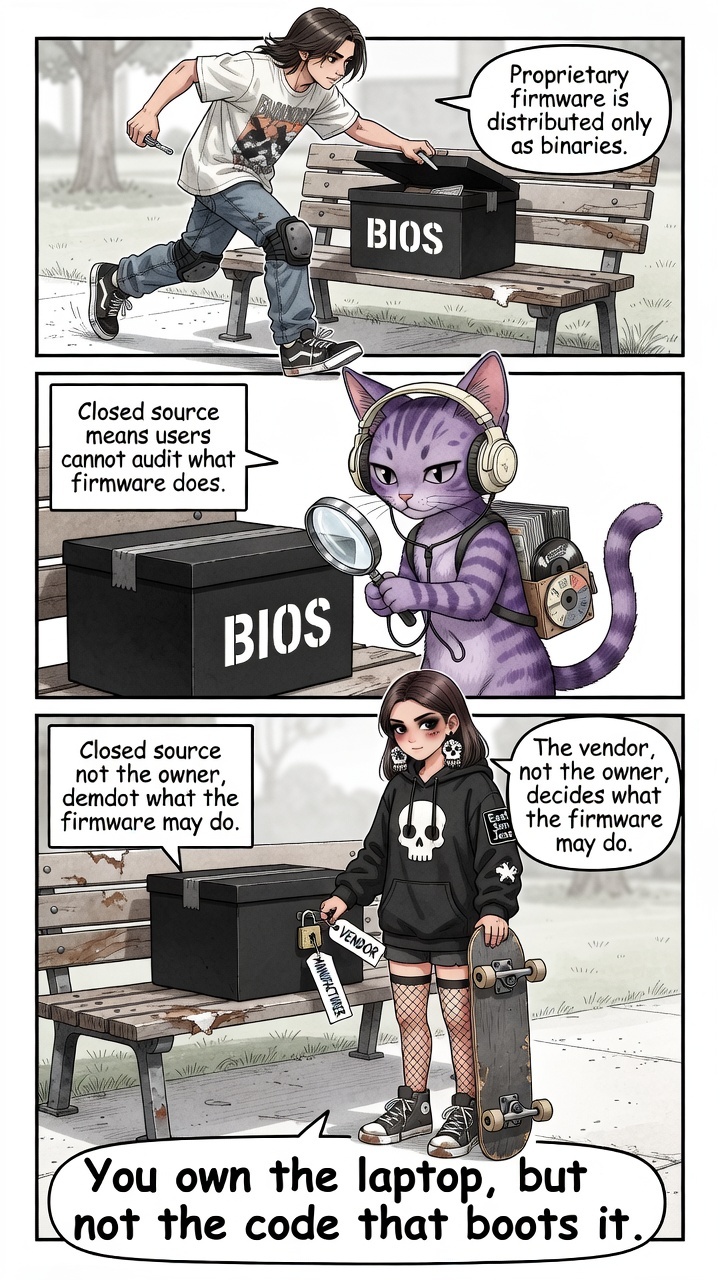
Conventional BIOS and UEFI arrive as unmodifiable binaries controlled by the vendor rather than the owner.
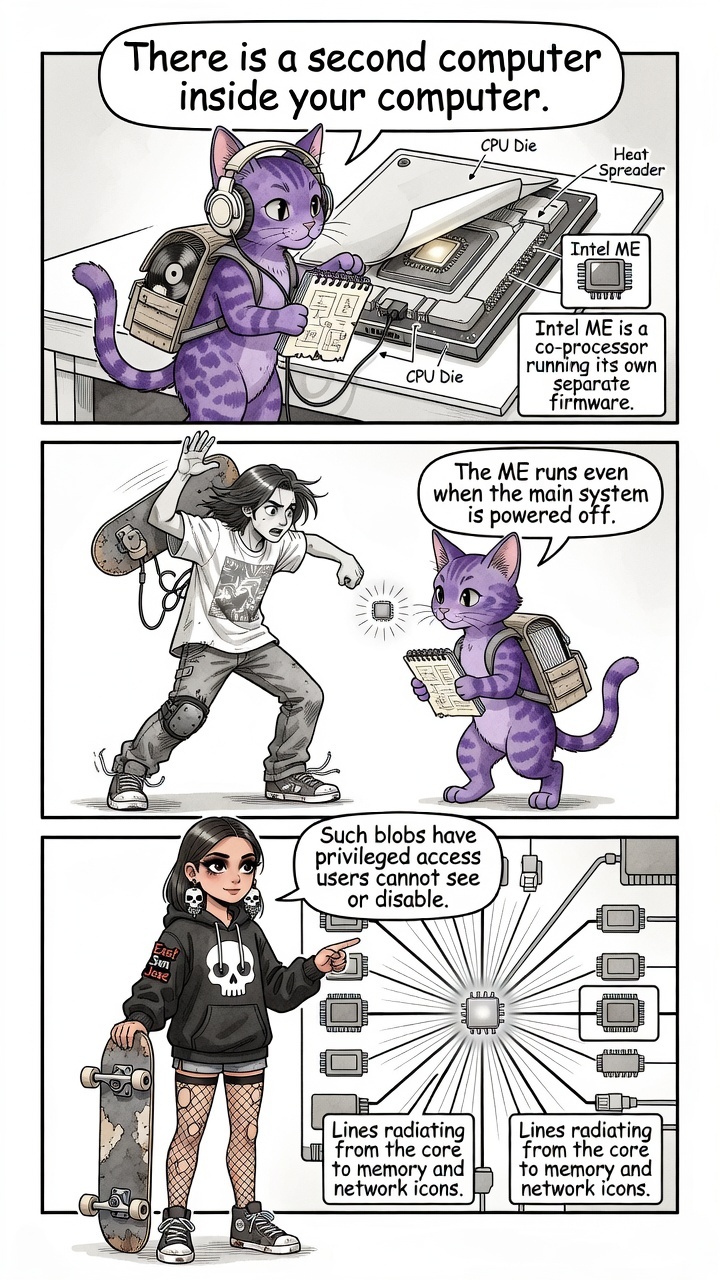
Blobs like Intel ME run as hidden co-processors with privileged access, active even when the main computer is off.
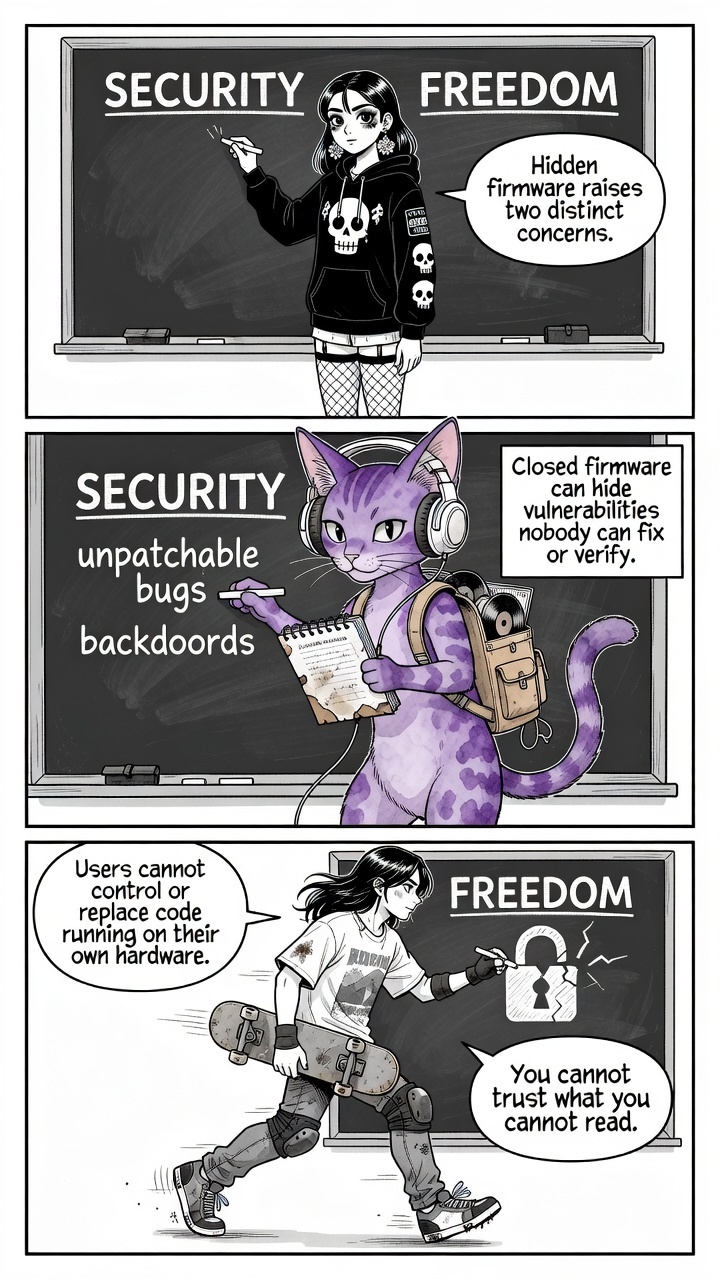
Unreadable firmware means unverifiable security and loss of control over hardware you supposedly own.
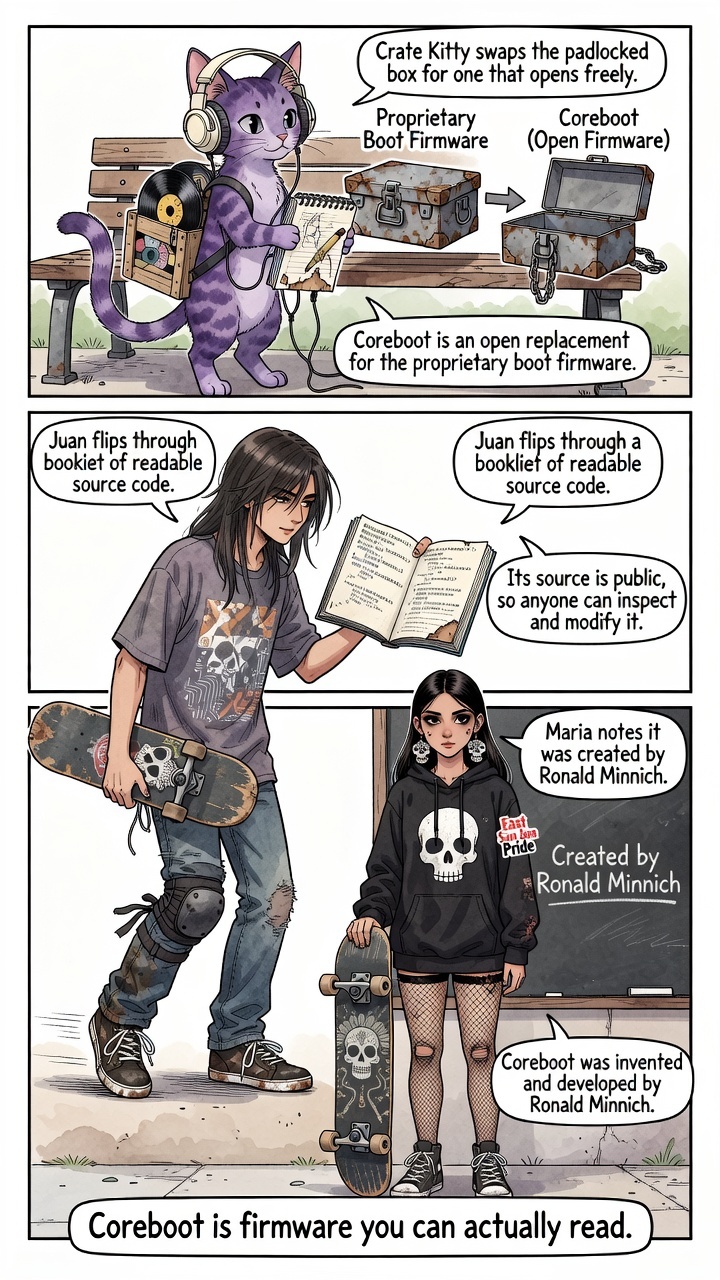
Coreboot replaces closed BIOS with open, inspectable firmware, developed by its inventor Ronald Minnich.
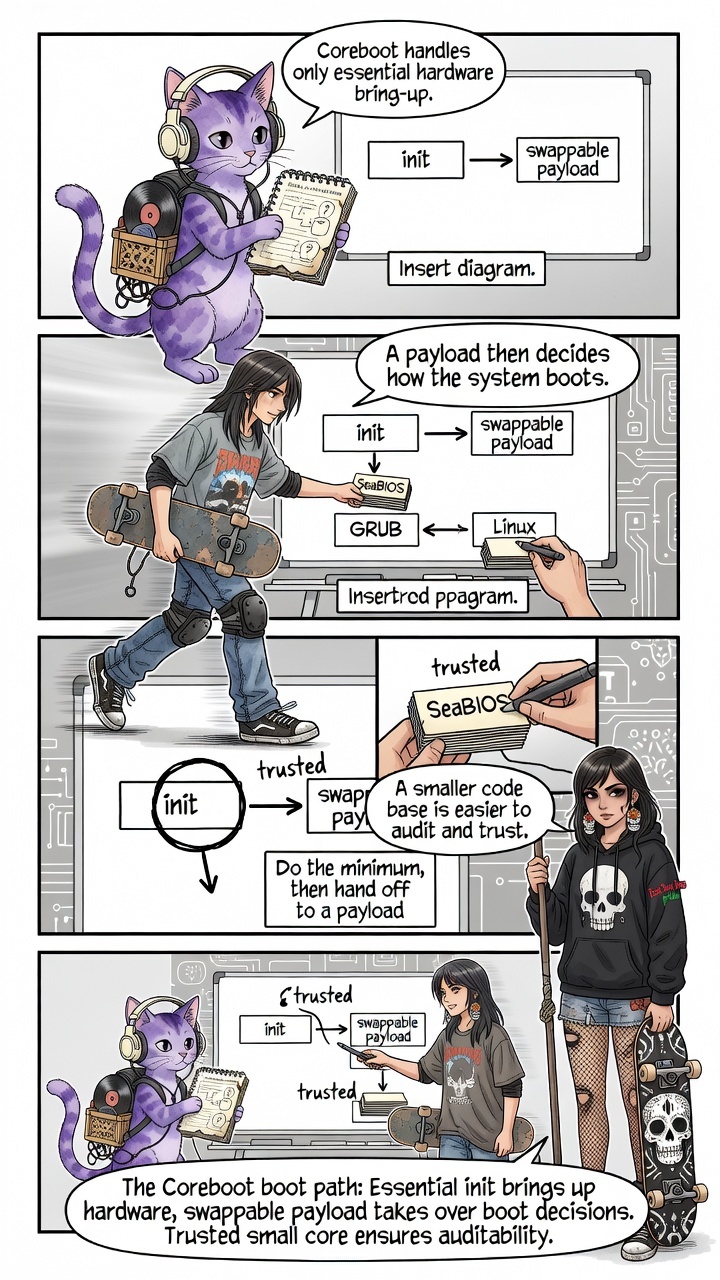
Coreboot keeps a small init core, then loads a chosen payload, shrinking the amount of code you must trust.
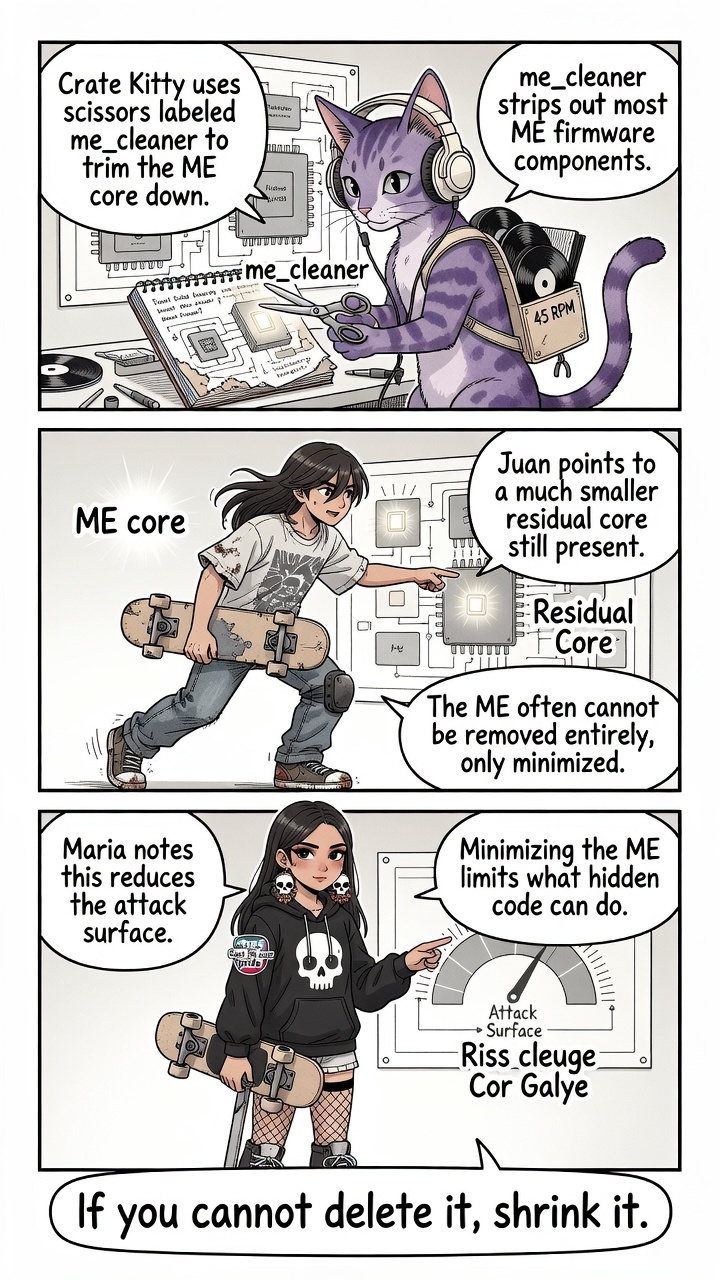
me_cleaner disables most of the Intel ME because it usually cannot be removed, reducing the hidden attack surface.
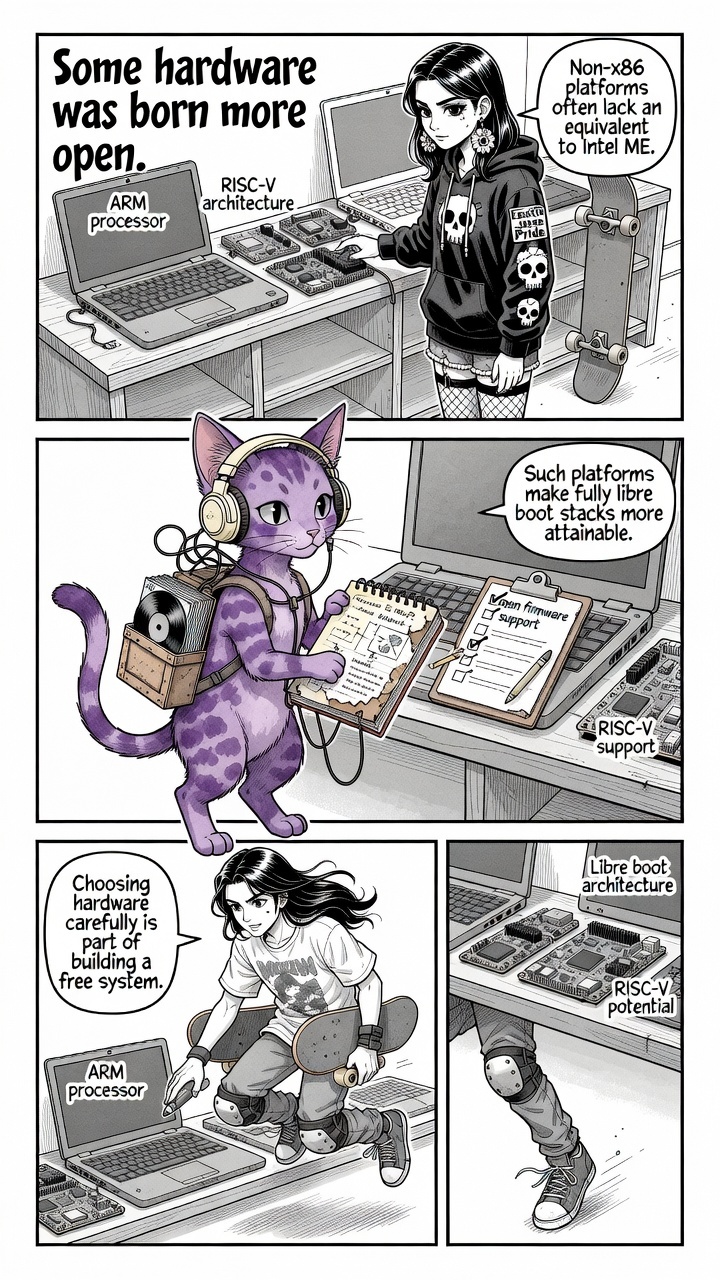
Non-x86 platforms frequently avoid ME-style blobs, making end-to-end libre firmware stacks more practical to build.
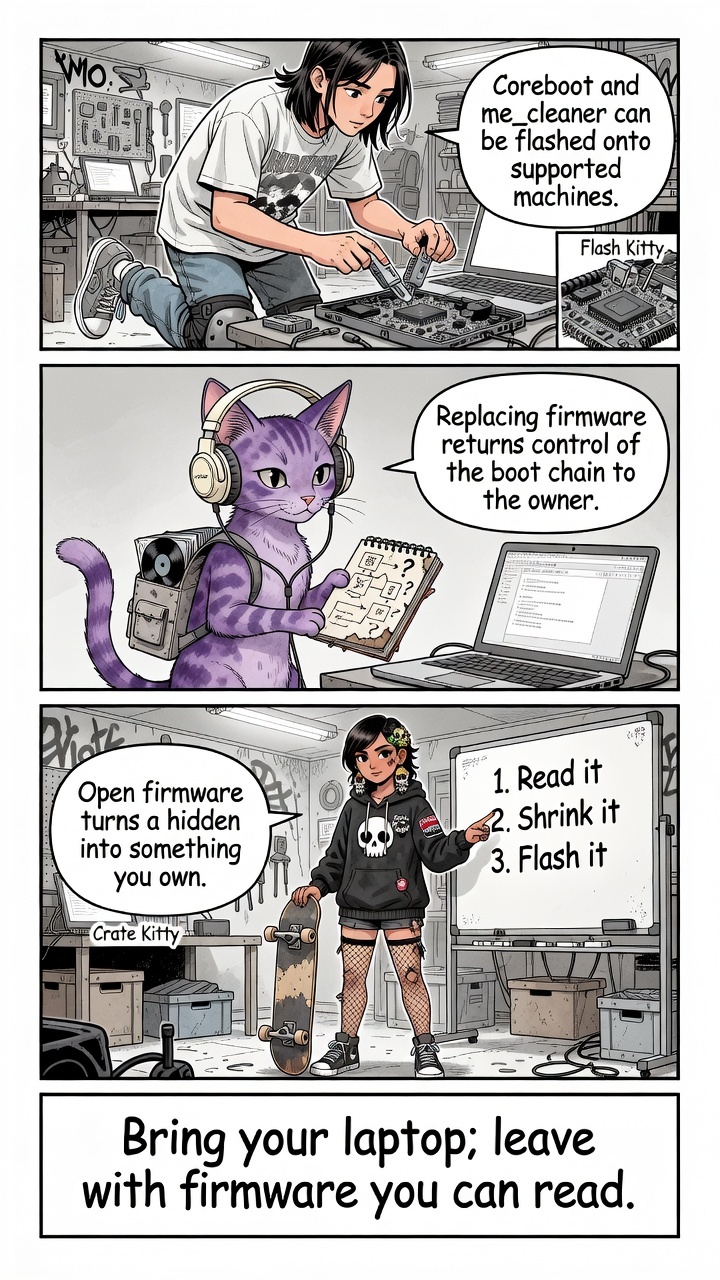
Flashing Coreboot and me_cleaner lets owners inspect, shrink, and replace hidden firmware, reclaiming control of the boot process.