explained comic · 21 pages · your annotated copy
an educational manga explainer
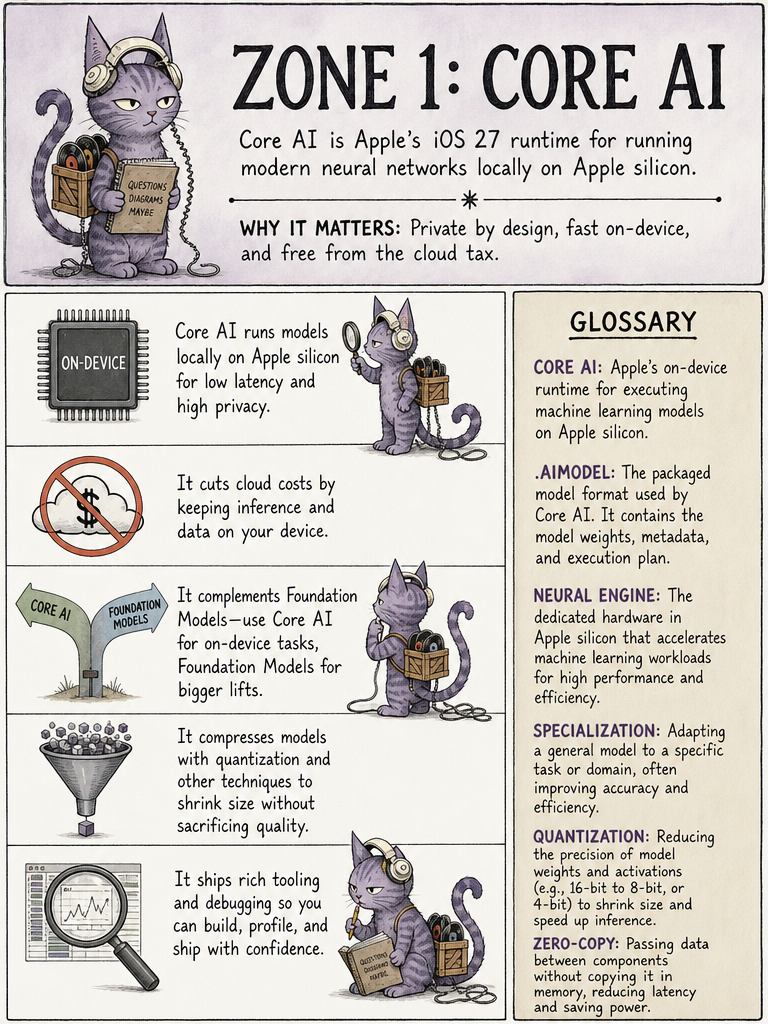
Core AI in iOS 27: Apple's On-Device AI Runtime
comicexplain
session notes
kept private to your copy — sign in to add notes.
my take on page 1
key idea
Core AI is a full on-device inference platform, not just a new API.
flip ↺
why this matters
It changes the economics, privacy, and architecture of building AI features into apps.
flip ↺
p. 1 · 21
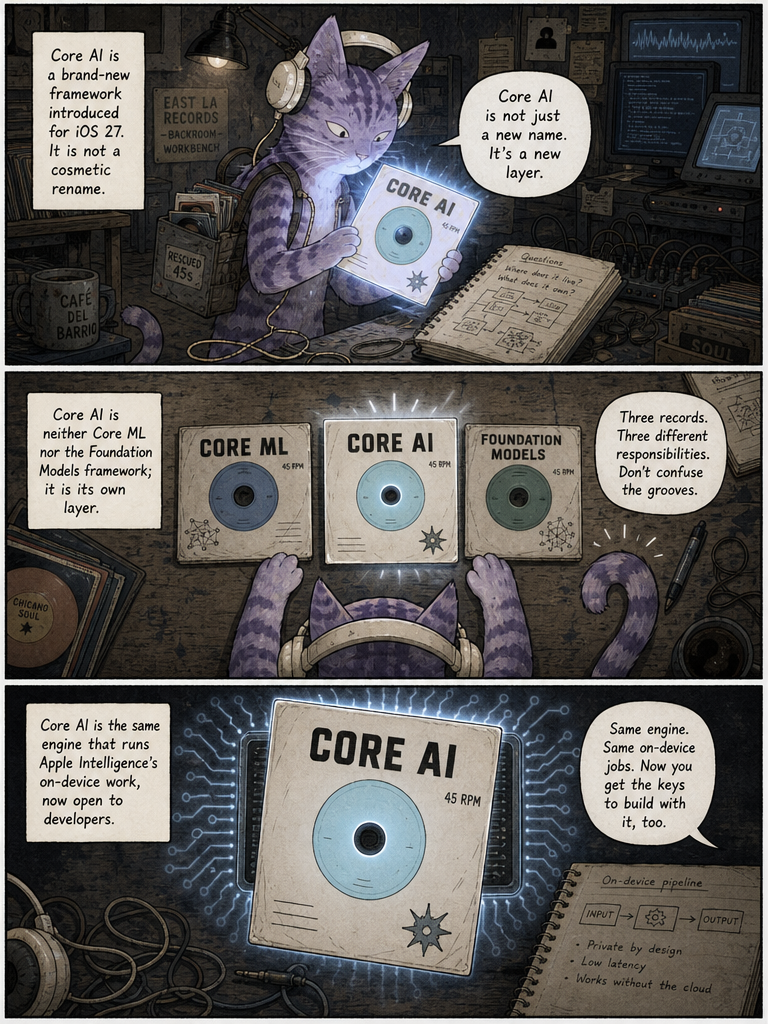
my take on page 2
key idea
Core AI is a distinct new framework, not a renamed Core ML.
flip ↺
why this matters
Knowing what layer you're on prevents choosing the wrong tool for a model.
flip ↺
p. 2 · 21
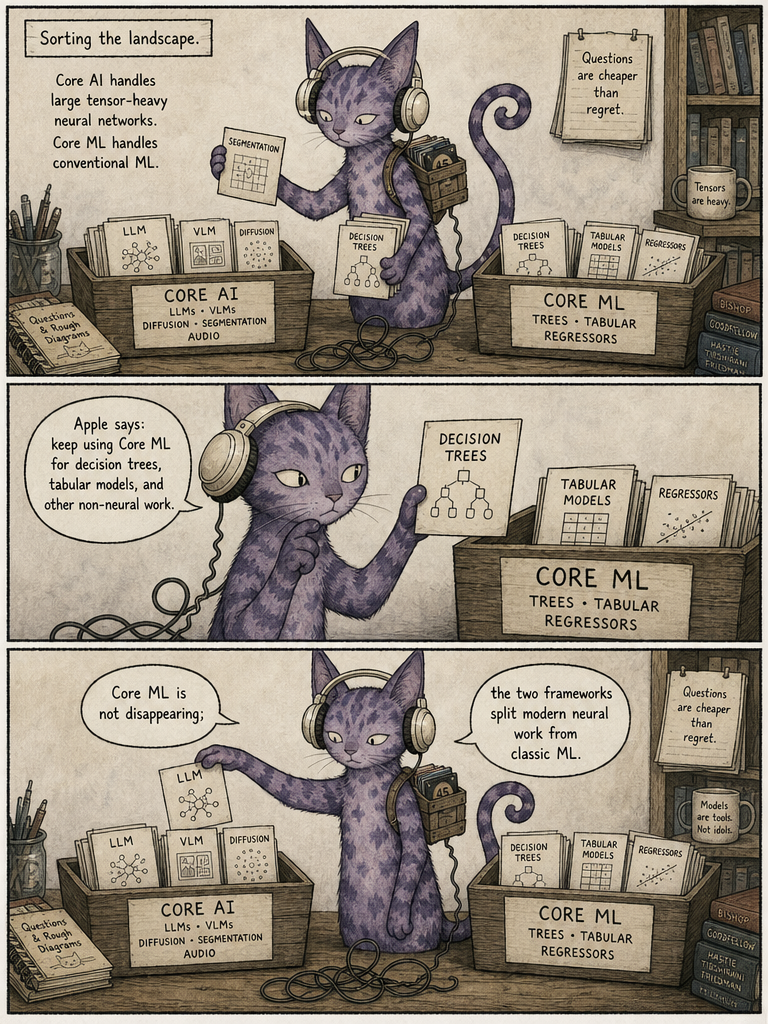
my take on page 3
key idea
Use Core AI for neural networks and Core ML for traditional ML.
flip ↺
why this matters
Picking the wrong framework wastes optimization effort and hardware acceleration.
flip ↺
p. 3 · 21
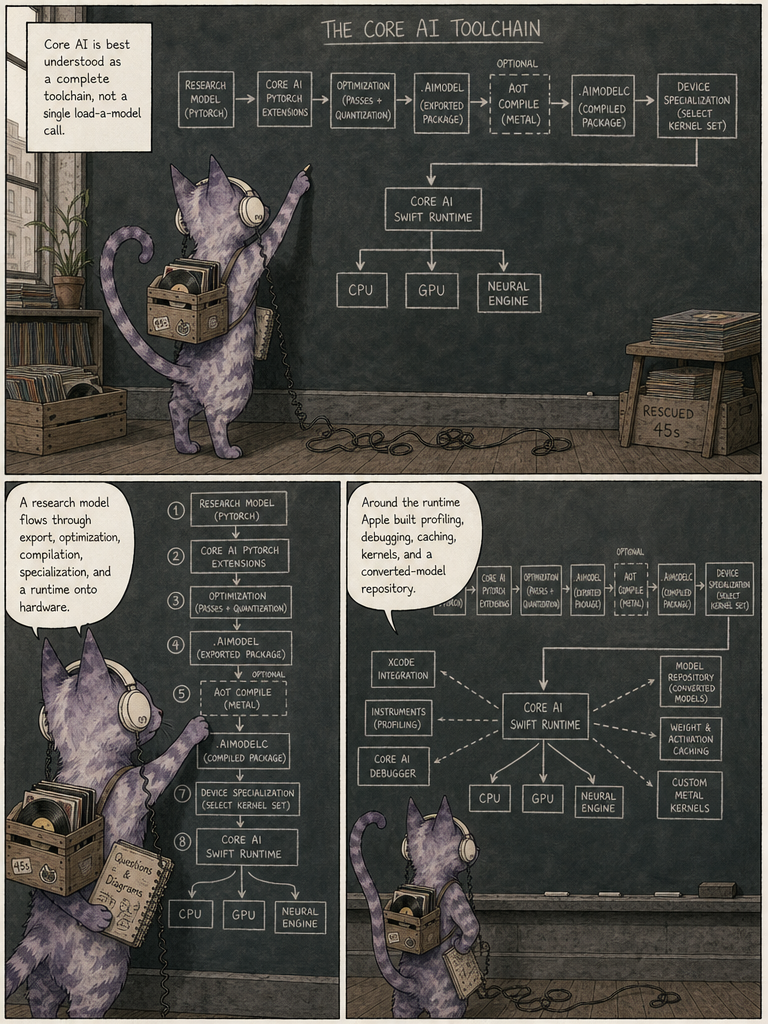
my take on page 4
key idea
Core AI is a production inference platform, not just an API.
flip ↺
why this matters
Treating it as a pipeline reveals every stage you can optimize and profile.
flip ↺
p. 4 · 21
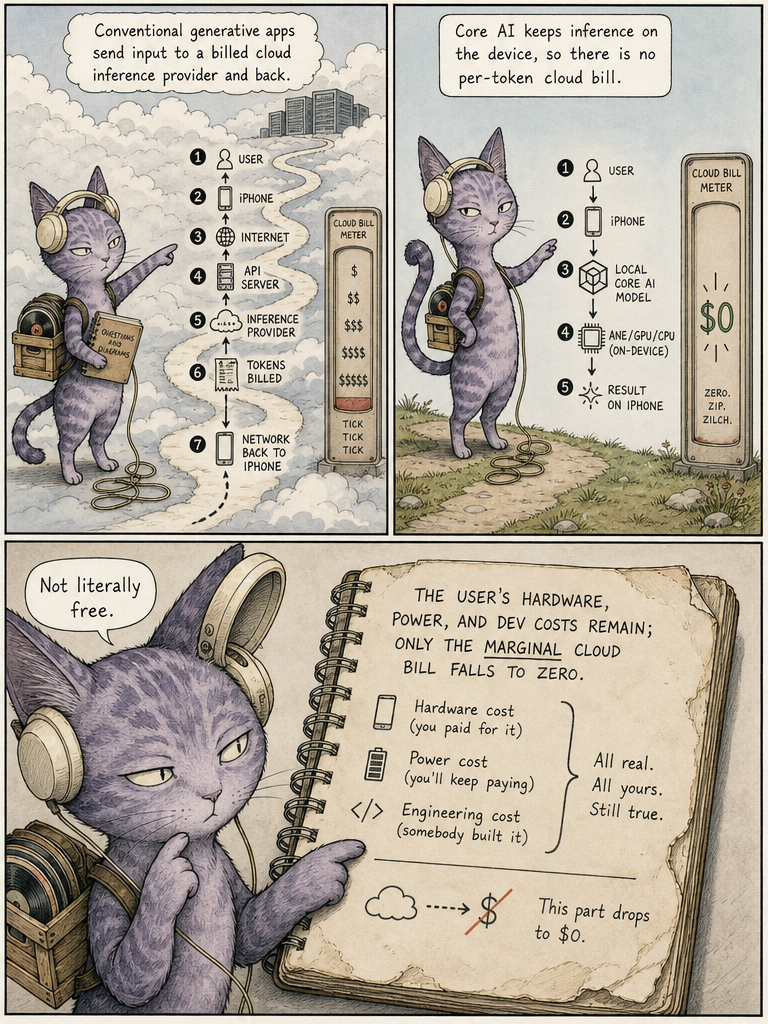
my take on page 5
key idea
On-device inference removes the per-token cloud bill.
flip ↺
why this matters
Moving a feature on-device can eliminate a scaling cost that grows with every request.
flip ↺
p. 5 · 21
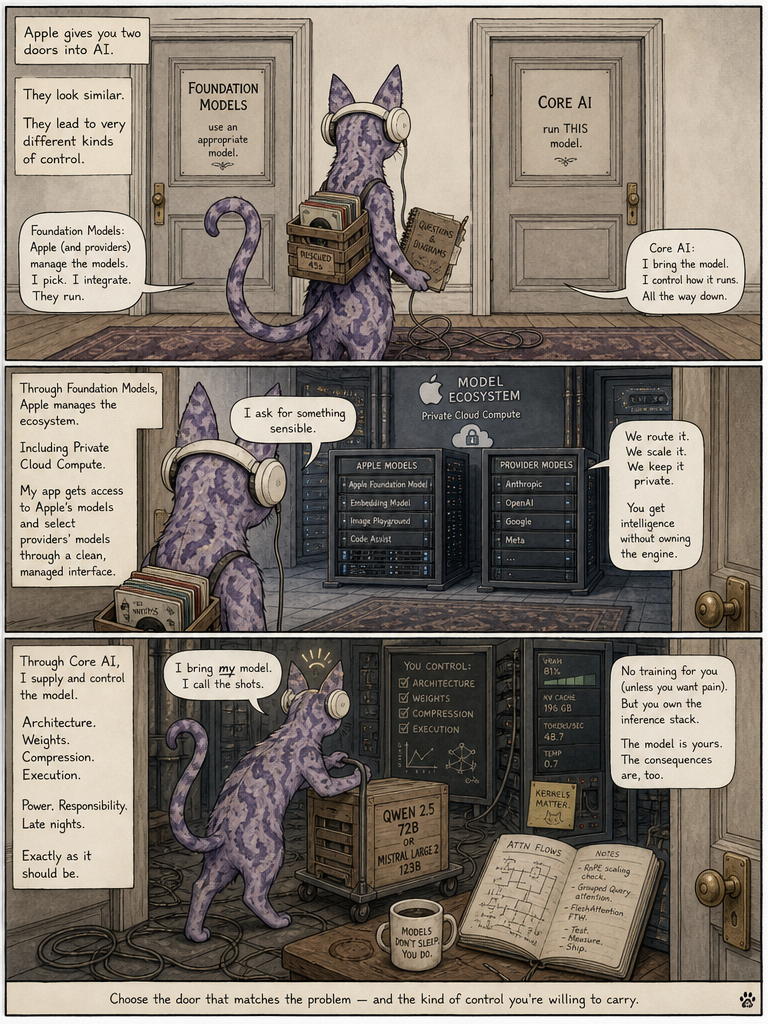
my take on page 6
key idea
Foundation Models is managed; Core AI is developer-controlled.
flip ↺
why this matters
Choosing the right level decides how much control and responsibility you take on.
flip ↺
p. 6 · 21
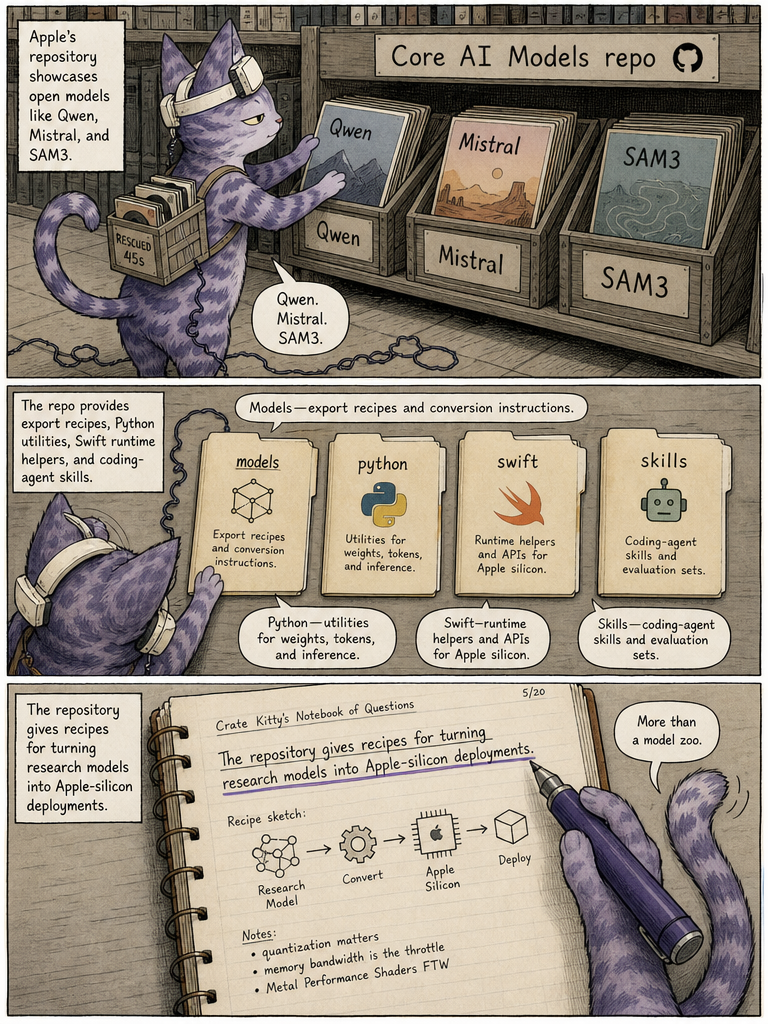
my take on page 7
key idea
Apple provides recipes to productionize open models, not just a model list.
flip ↺
why this matters
Ready recipes cut the effort of getting research models onto Apple silicon.
flip ↺
p. 7 · 21
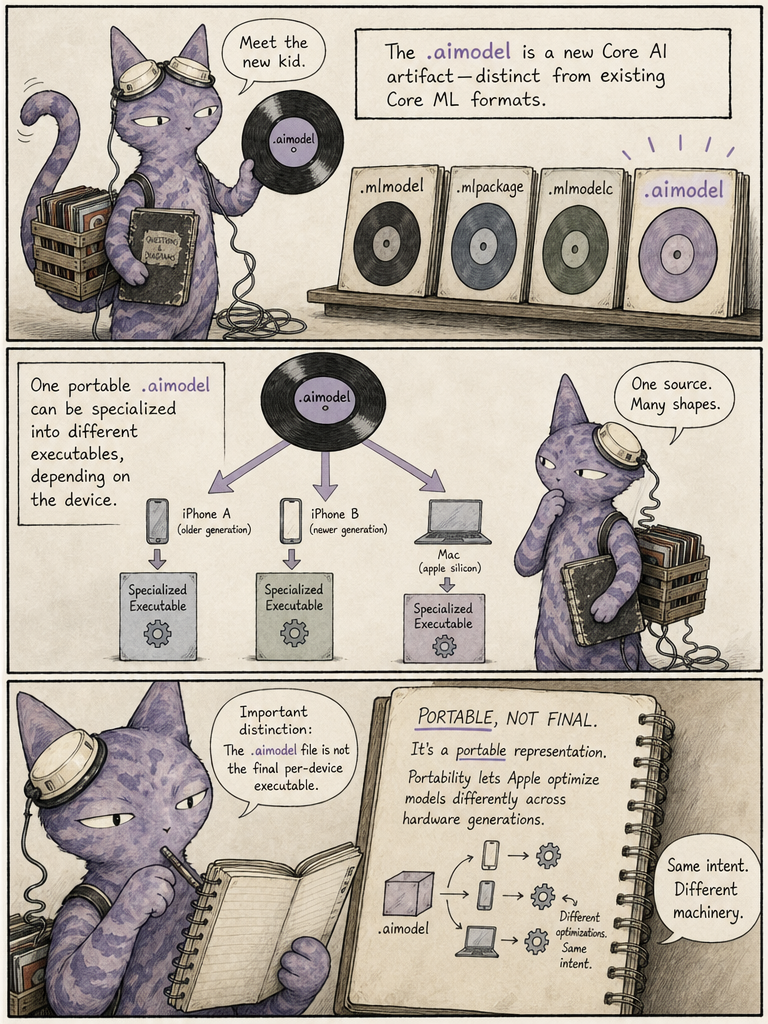
my take on page 8
key idea
One portable model file targets many hardware configurations.
flip ↺
why this matters
Portability lets a single artifact ship efficiently across future devices.
flip ↺
p. 8 · 21
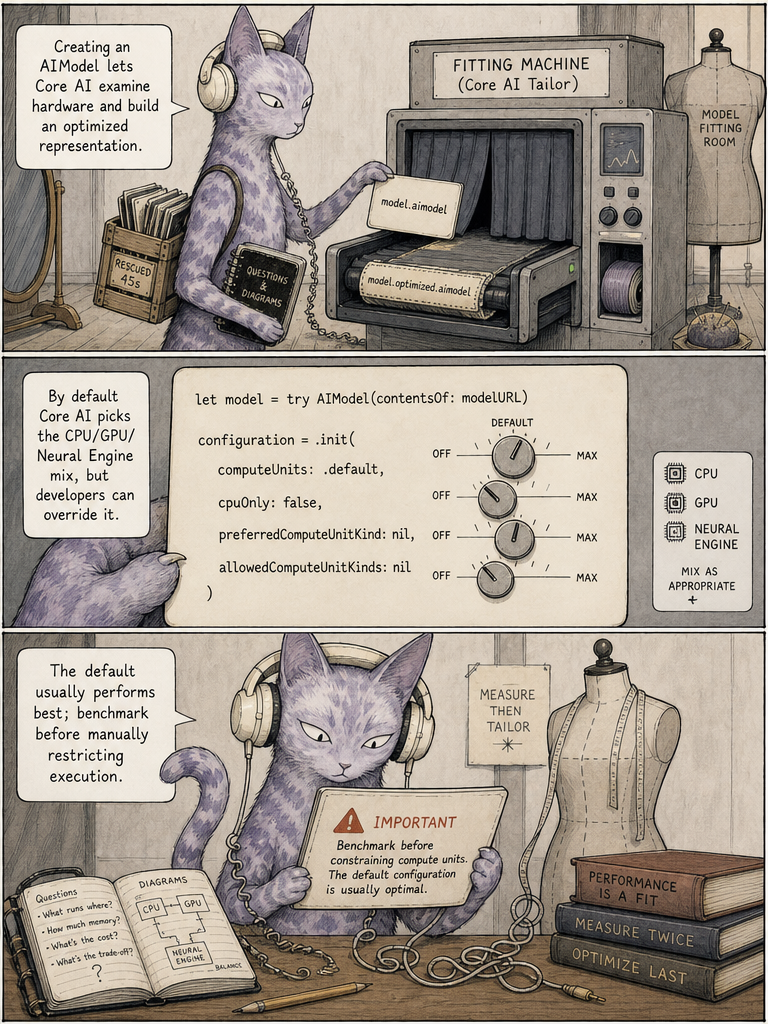
my take on page 9
key idea
Describe the model and let Core AI specialize it for the device.
flip ↺
why this matters
Automatic specialization saves you from hardcoding fragile per-device layer placement.
flip ↺
p. 9 · 21
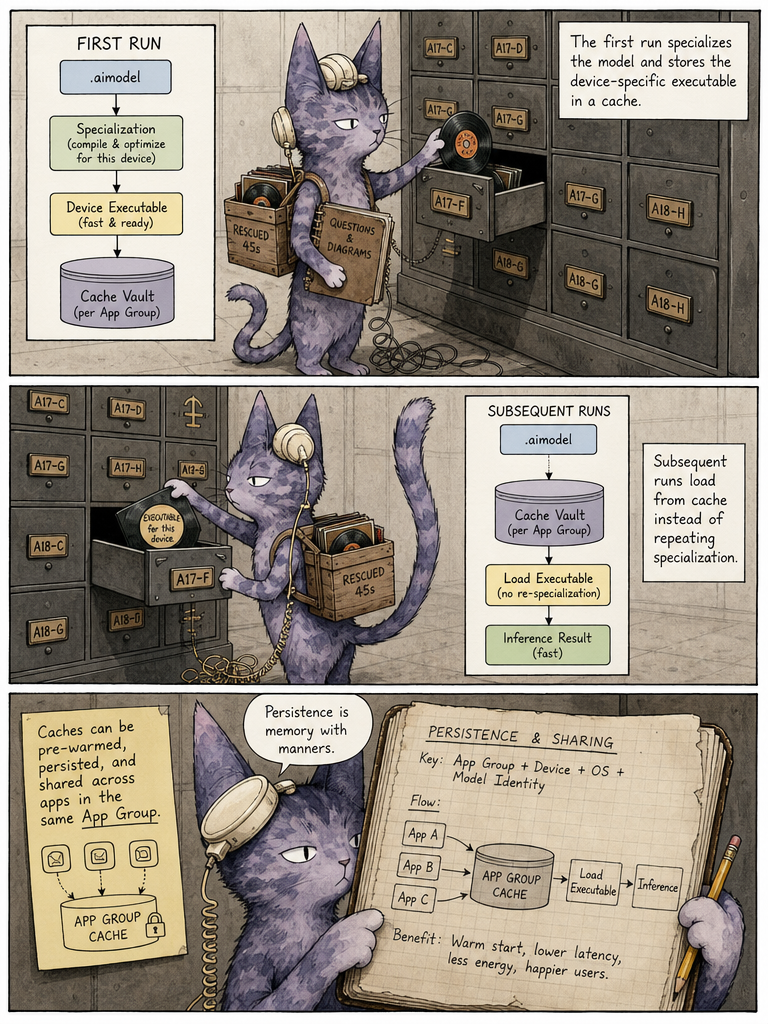
my take on page 10
key idea
Caching avoids repeating expensive specialization on every launch.
flip ↺
why this matters
For multi-gigabyte models, caching prevents brutal first-launch delays.
flip ↺
p. 10 · 21
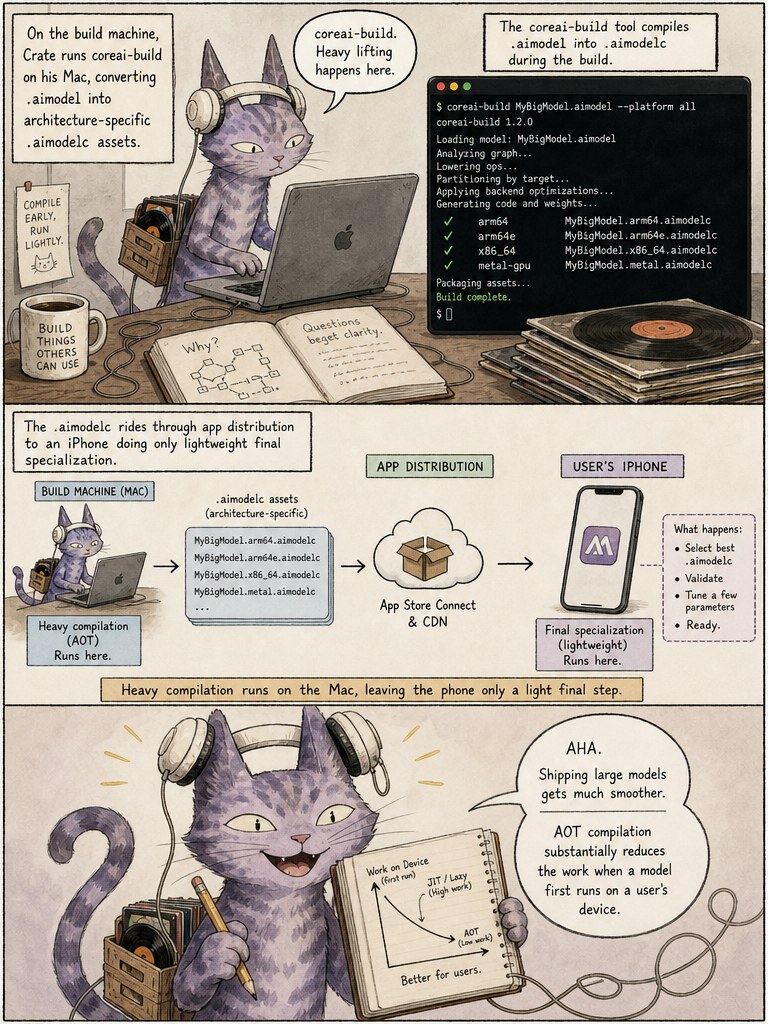
my take on page 11
key idea
Compile on the Mac so the phone barely works at first run.
flip ↺
why this matters
It turns a painful first-launch compile into a quick startup for shipped models.
flip ↺
p. 11 · 21
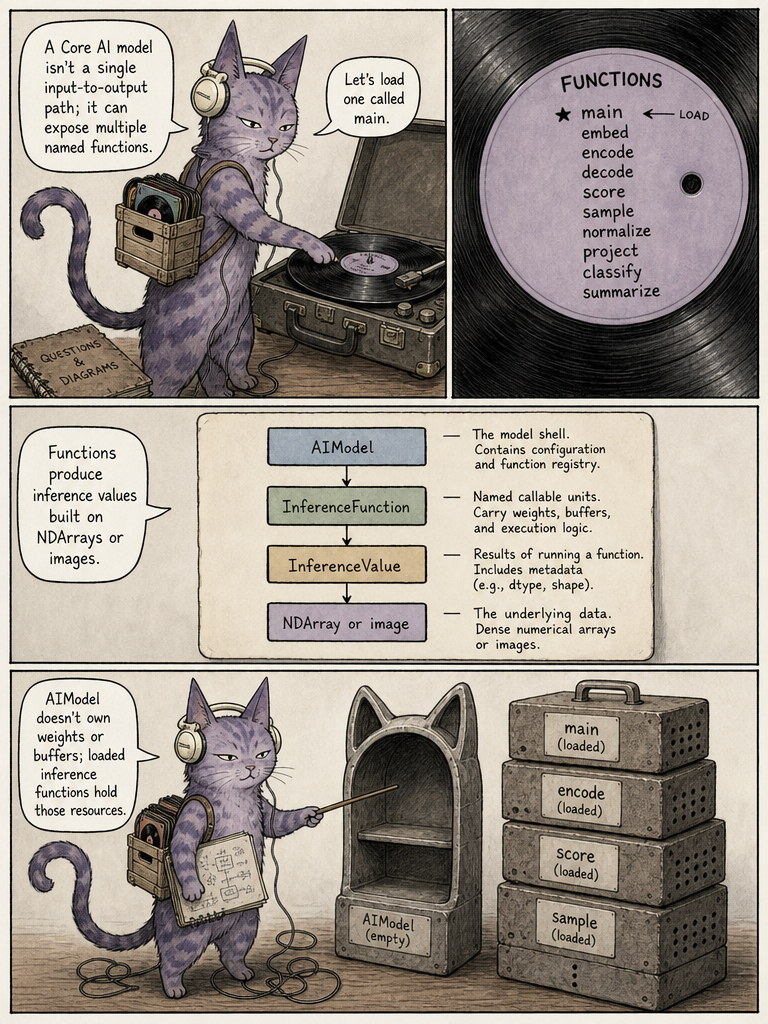
my take on page 12
key idea
Weights live in loaded functions, not in the model object.
flip ↺
why this matters
Separating weights from the model gives finer control over memory for huge networks.
flip ↺
p. 12 · 21
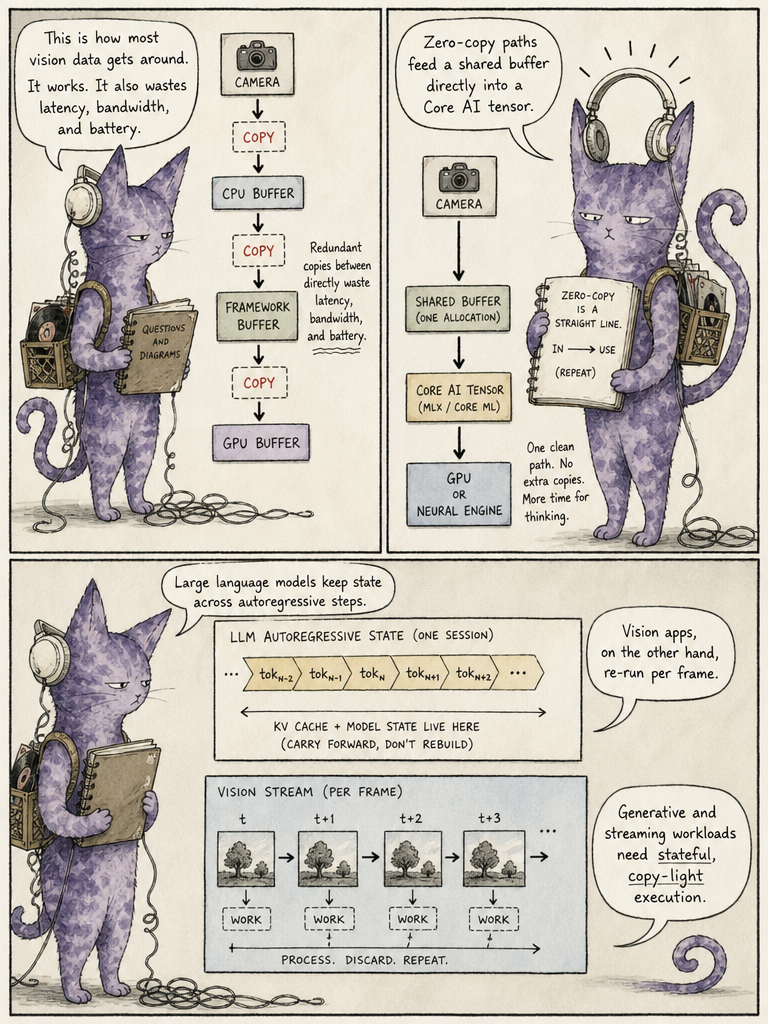
my take on page 13
key idea
Avoiding redundant copies saves latency, bandwidth, and battery.
flip ↺
why this matters
For big generative and streaming models, memory behavior often decides real performance.
flip ↺
p. 13 · 21
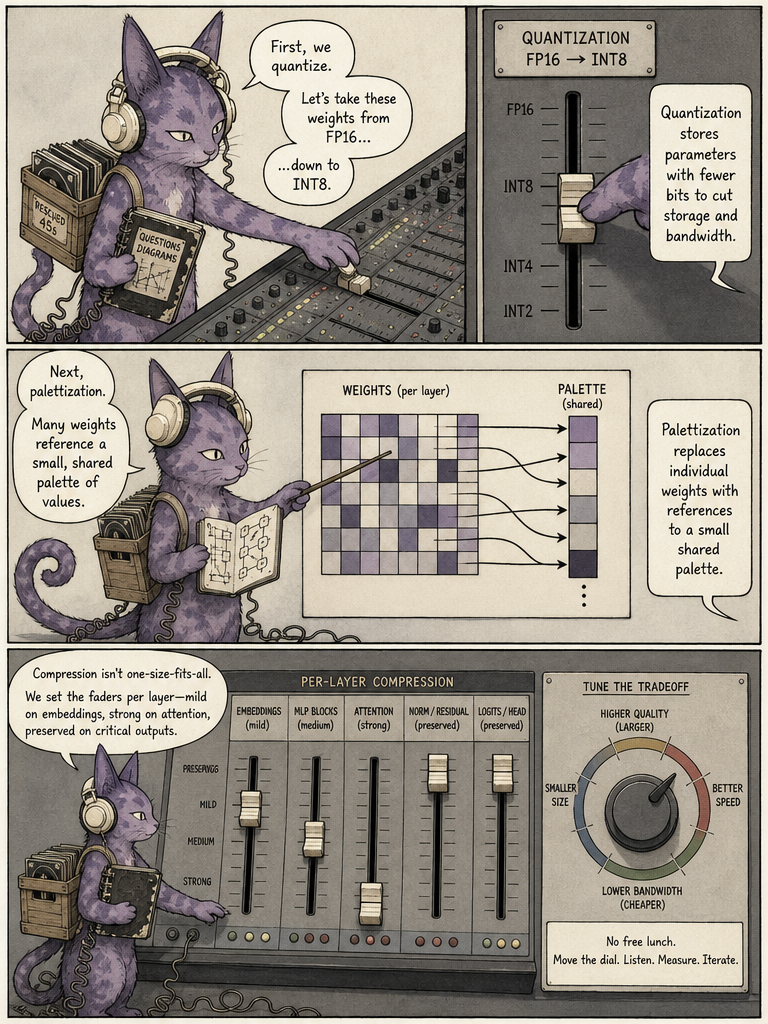
my take on page 14
key idea
Compress models per layer to trade accuracy for size and speed.
flip ↺
why this matters
Smart compression is what makes large models fit and run fast on a phone.
flip ↺
p. 14 · 21
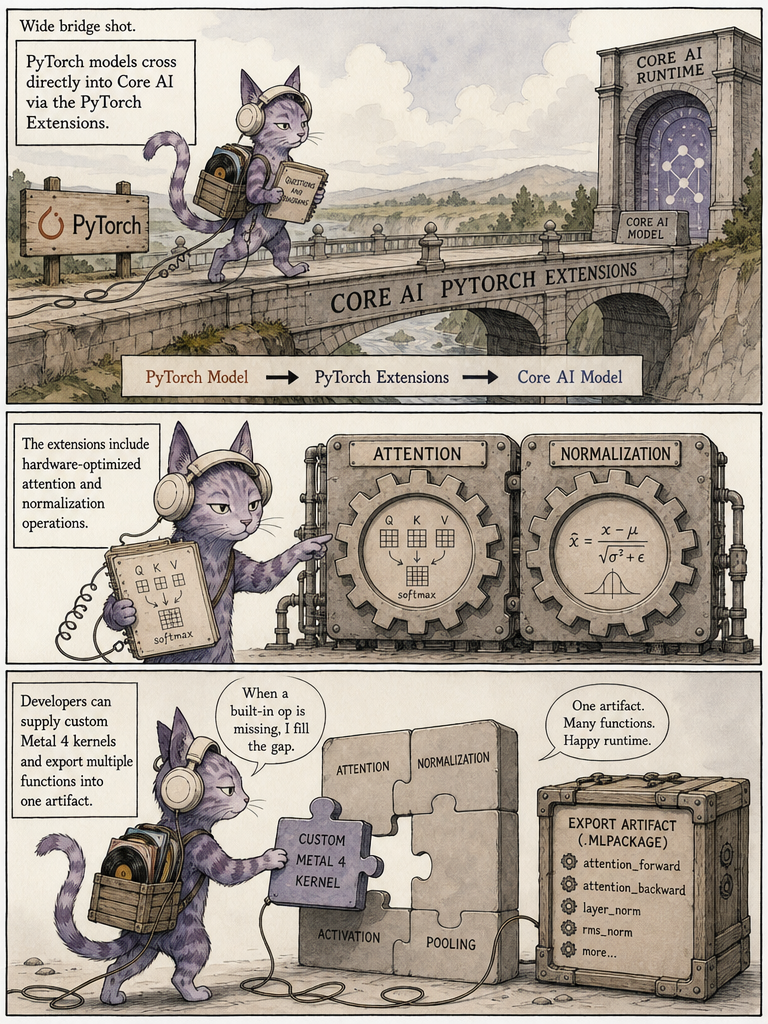
my take on page 15
key idea
PyTorch models export straight into Core AI, extensible with custom kernels.
flip ↺
why this matters
A direct PyTorch path shortens the leap from research to shipped on-device model.
flip ↺
p. 15 · 21
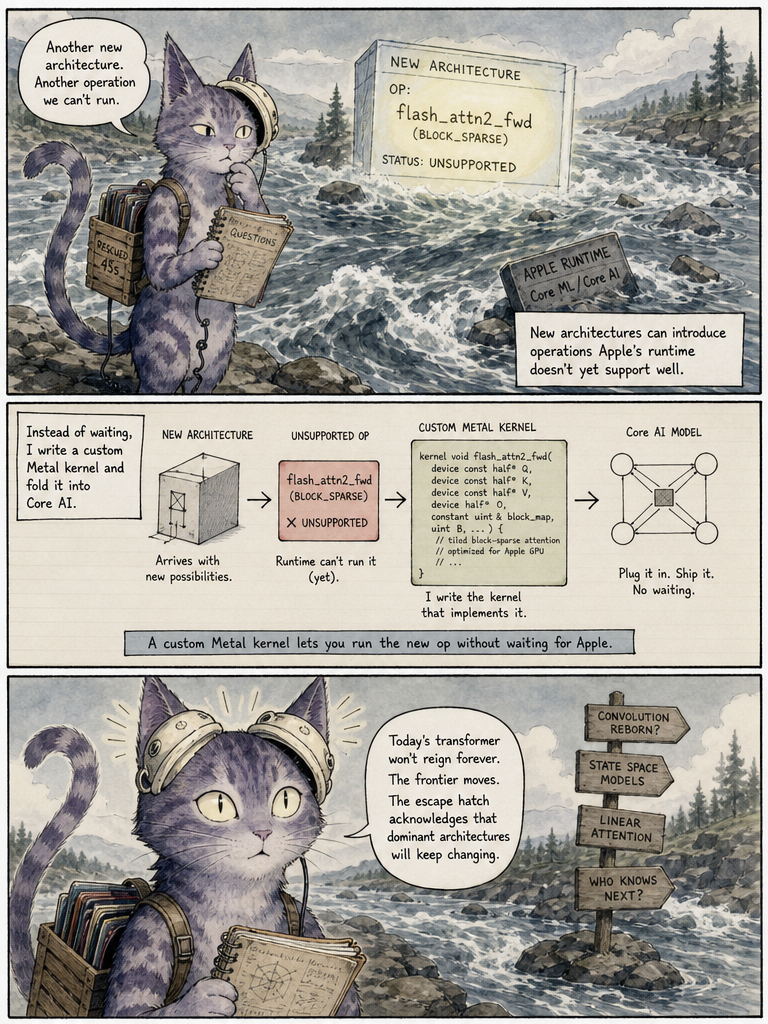
my take on page 16
key idea
Custom kernels keep Core AI current with fast-moving research.
flip ↺
why this matters
You can adopt a brand-new architecture without waiting for an OS update.
flip ↺
p. 16 · 21
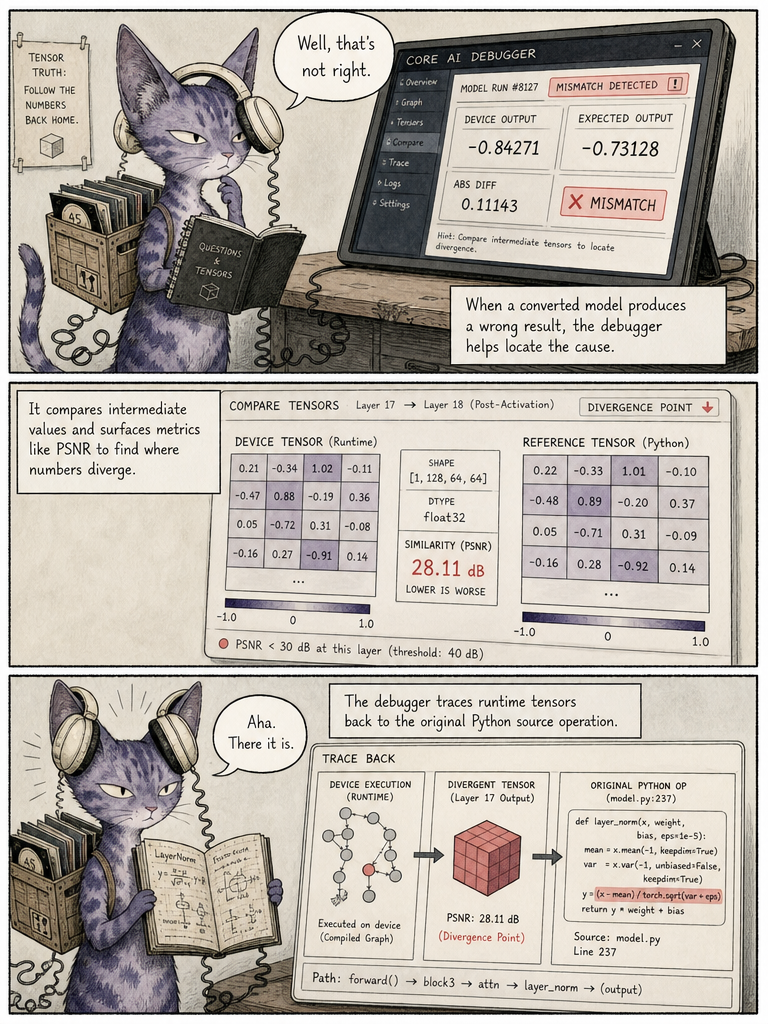
my take on page 17
key idea
Trace numerical errors from device output back to Python source.
flip ↺
why this matters
Finding where a conversion went numerically wrong is normally one of the hardest tasks.
flip ↺
p. 17 · 21
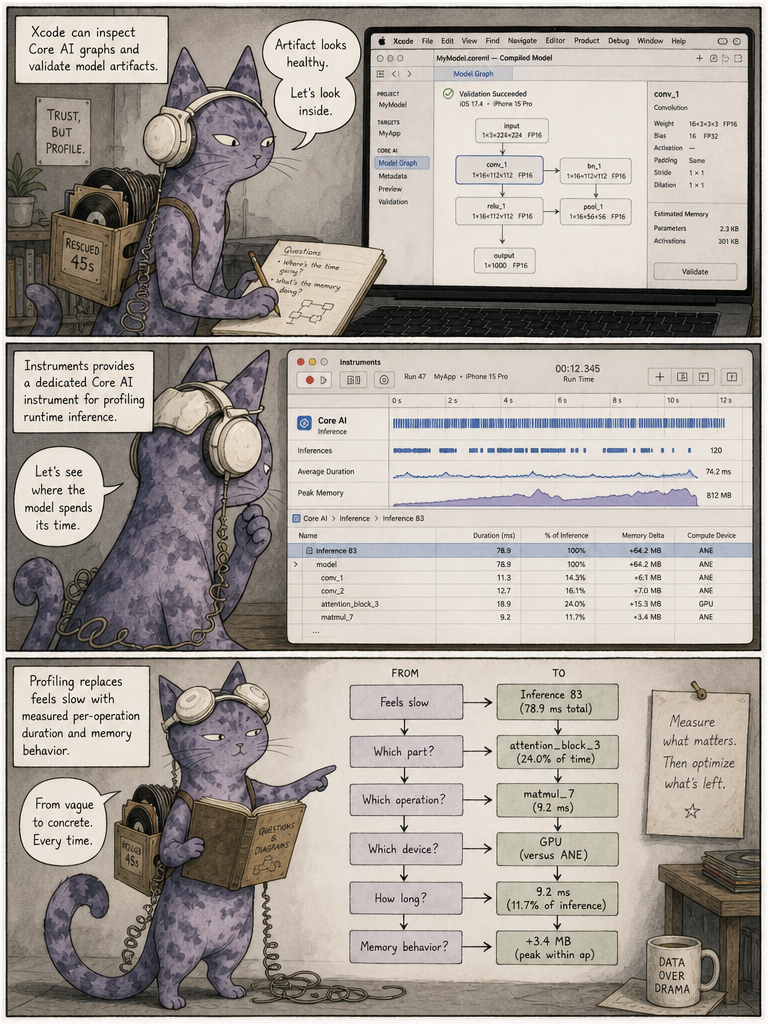
my take on page 18
key idea
Profile inference per operation instead of guessing it feels slow.
flip ↺
why this matters
Architecture alone doesn't determine app performance; measurement does.
flip ↺
p. 18 · 21
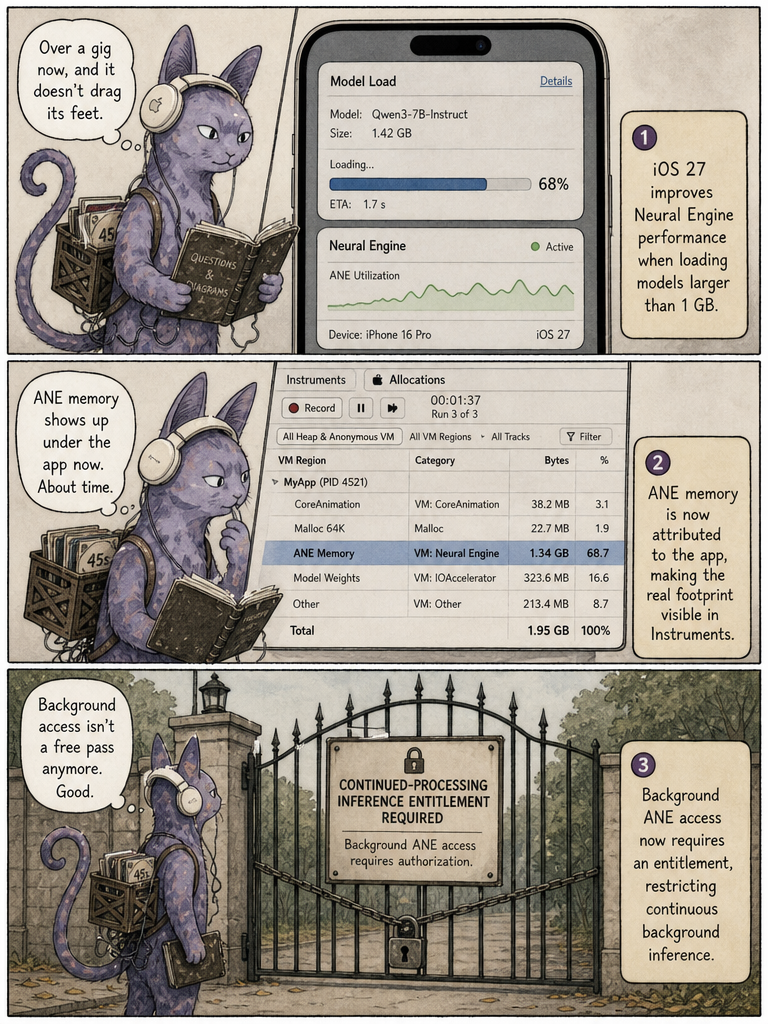
my take on page 19
key idea
OS changes make ANE memory visible and gate background inference.
flip ↺
why this matters
You must watch real memory use and can't assume free continuous background inference.
flip ↺
p. 19 · 21
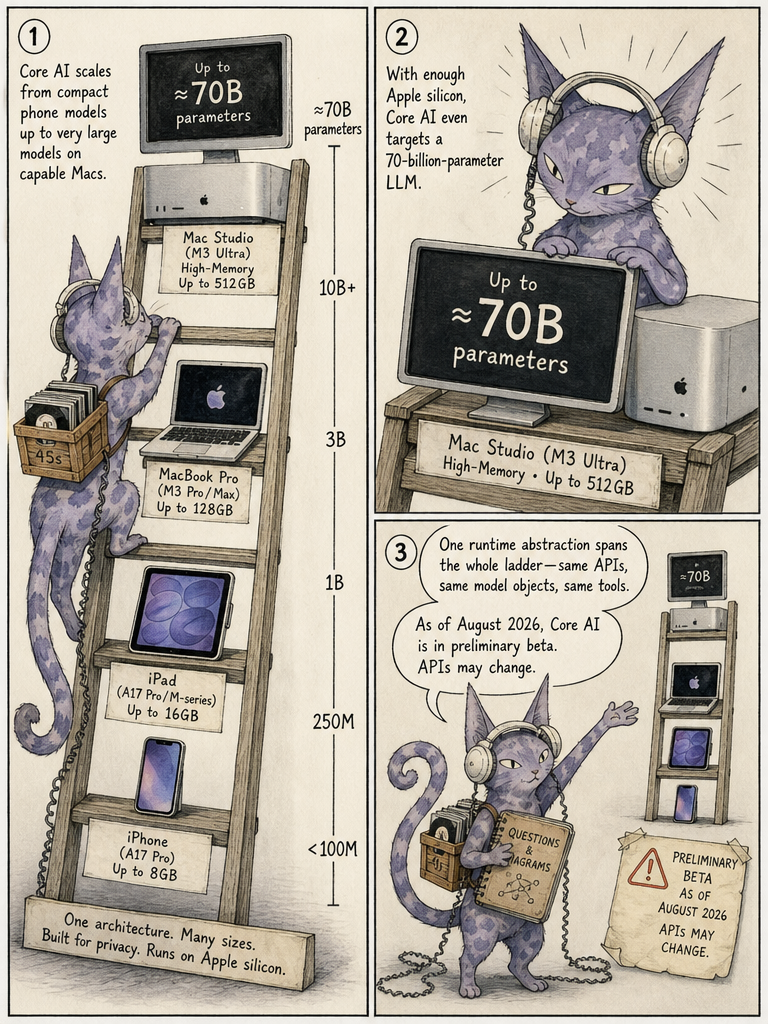
my take on page 20
key idea
One Core AI runtime scales across every Apple silicon class.
flip ↺
why this matters
A common abstraction lets you target many devices without rewriting the deployment path.
flip ↺
p. 20 · 21
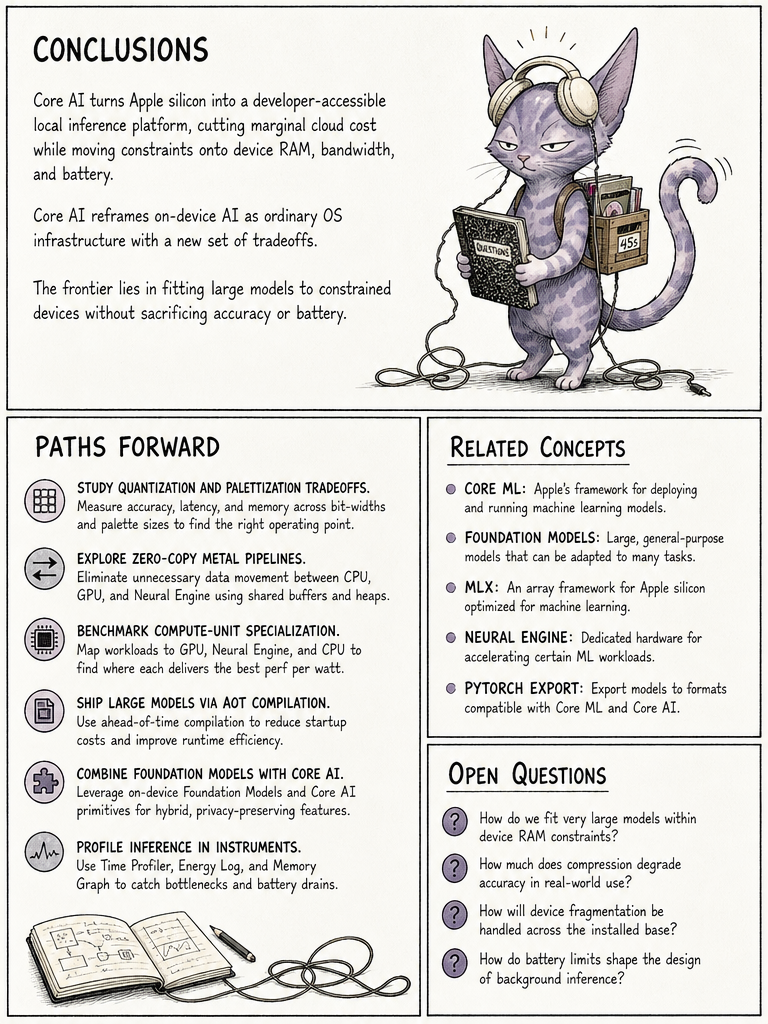
my take on page 21
key idea
Local AI becomes normal OS capability with device-side constraints.
flip ↺
why this matters
Understanding the shifted constraints decides whether an on-device feature is actually viable.
flip ↺
p. 21 · 21
flashcards · all 21
key idea
Core AI is a full on-device inference platform, not just a new API.
click to flip ↺
why this matters
It changes the economics, privacy, and architecture of building AI features into apps.
click to flip ↺
card 1 · 21
one card per page — cycle through before you close the book.
index of key ideas
1Core AI is a full on-device inference platform, not just a new API.
2Core AI is a distinct new framework, not a renamed Core ML.
3Use Core AI for neural networks and Core ML for traditional ML.
4Core AI is a production inference platform, not just an API.
5On-device inference removes the per-token cloud bill.
6Foundation Models is managed; Core AI is developer-controlled.
7Apple provides recipes to productionize open models, not just a model list.
8One portable model file targets many hardware configurations.
9Describe the model and let Core AI specialize it for the device.
10Caching avoids repeating expensive specialization on every launch.
11Compile on the Mac so the phone barely works at first run.
12Weights live in loaded functions, not in the model object.
13Avoiding redundant copies saves latency, bandwidth, and battery.
14Compress models per layer to trade accuracy for size and speed.
15PyTorch models export straight into Core AI, extensible with custom kernels.
16Custom kernels keep Core AI current with fast-moving research.
17Trace numerical errors from device output back to Python source.
18Profile inference per operation instead of guessing it feels slow.
19OS changes make ANE memory visible and gate background inference.
20One Core AI runtime scales across every Apple silicon class.
21Local AI becomes normal OS capability with device-side constraints.
comicexplain
paste a paper, get an annotated comic — pages appear in seconds.
front cover