
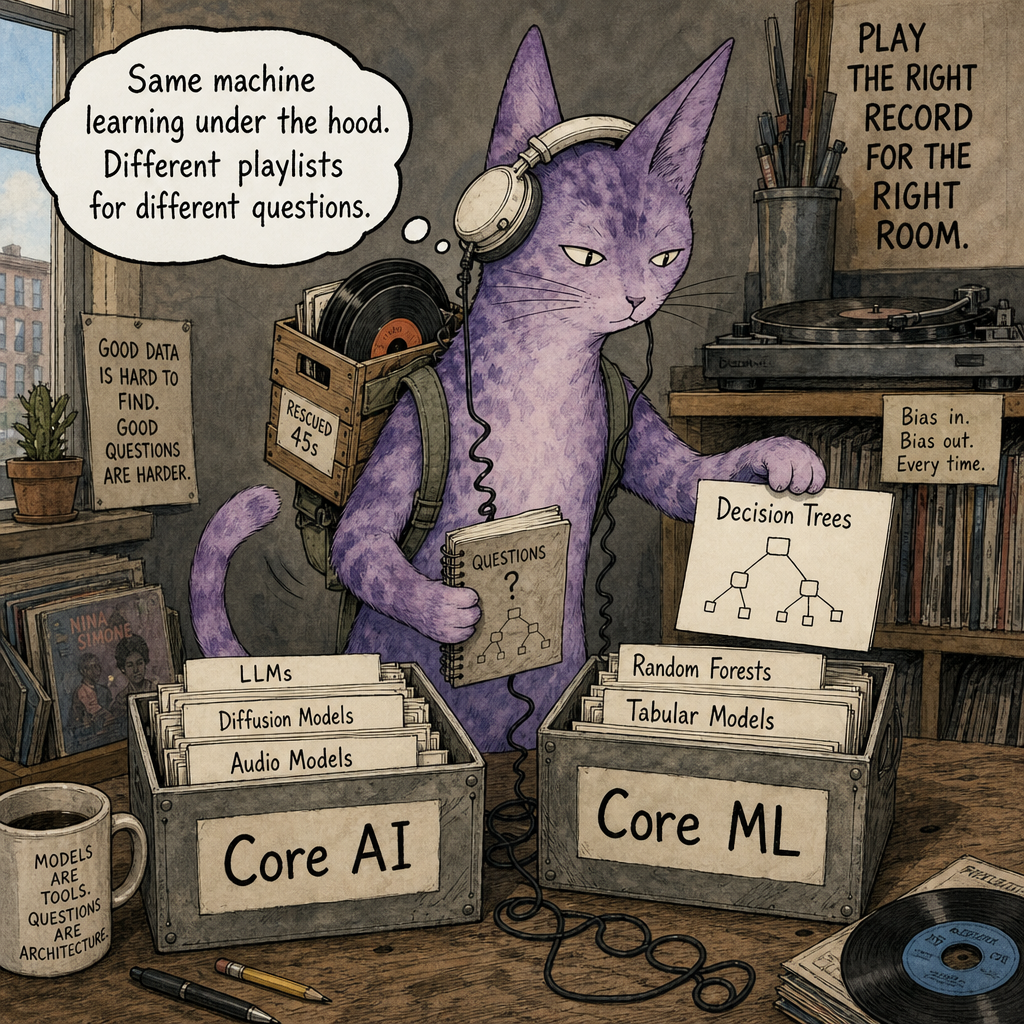

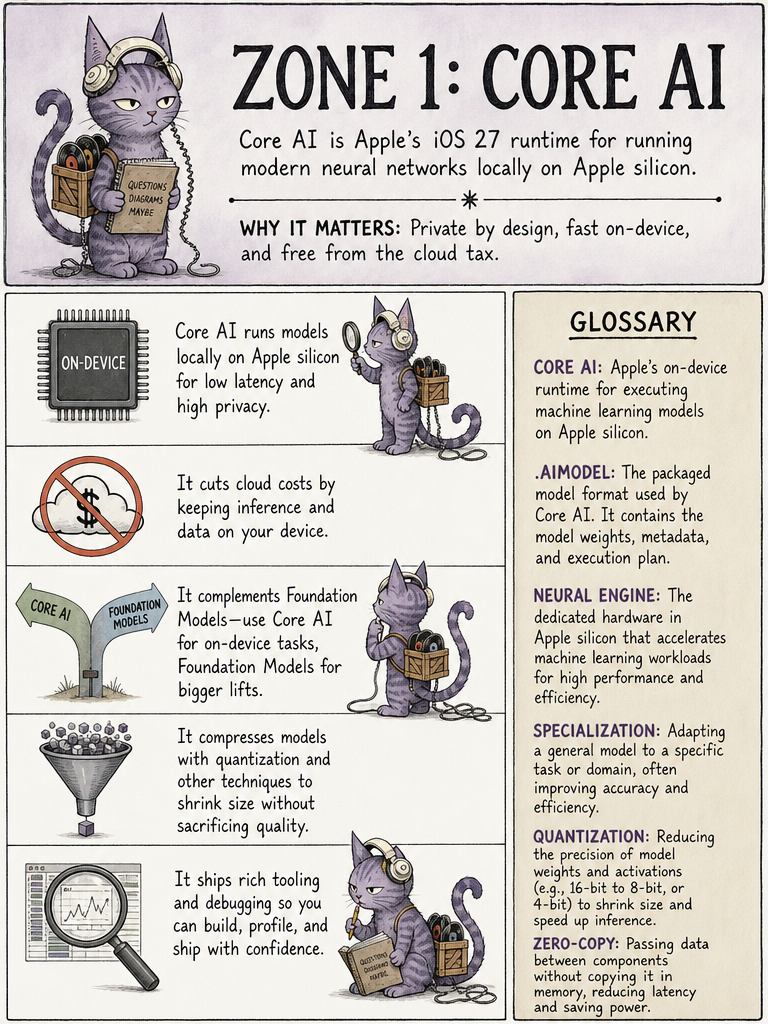
Core AI is a full on-device inference platform, not just a new API.
Key idea & notes ▾
WHY THIS MATTERSIt changes the economics, privacy, and architecture of building AI features into apps.
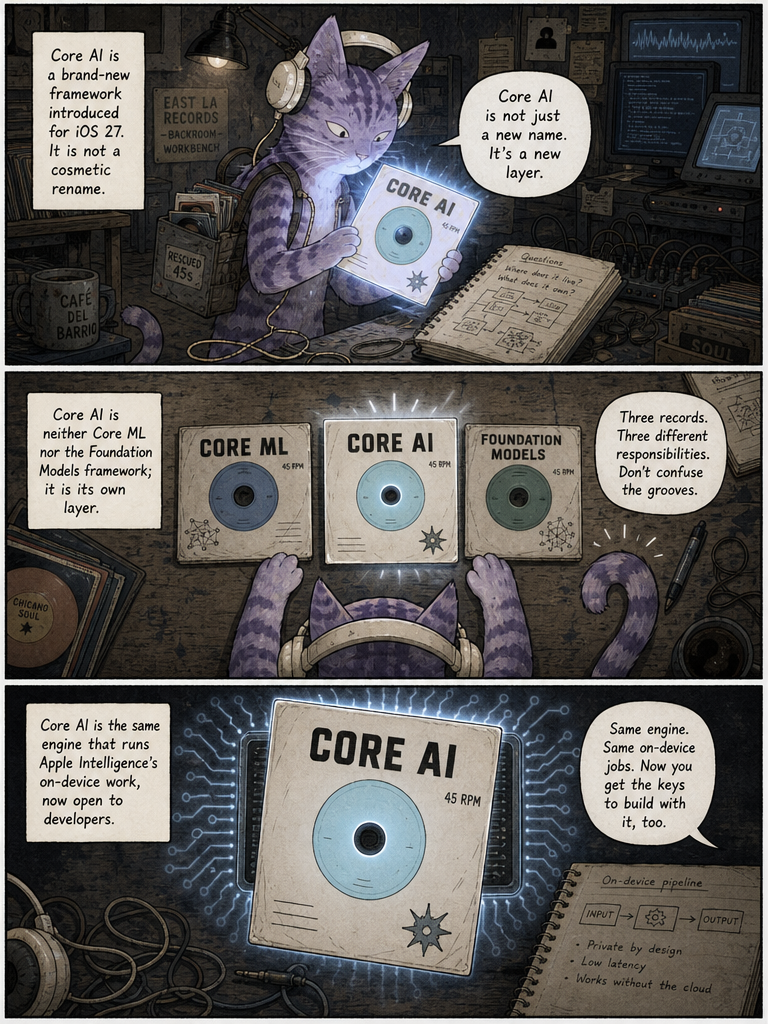
Core AI is a distinct new framework, not a renamed Core ML.
Key idea & notes ▾
WHY THIS MATTERSKnowing what layer you're on prevents choosing the wrong tool for a model.

Use Core AI for neural networks and Core ML for traditional ML.
Key idea & notes ▾
WHY THIS MATTERSPicking the wrong framework wastes optimization effort and hardware acceleration.
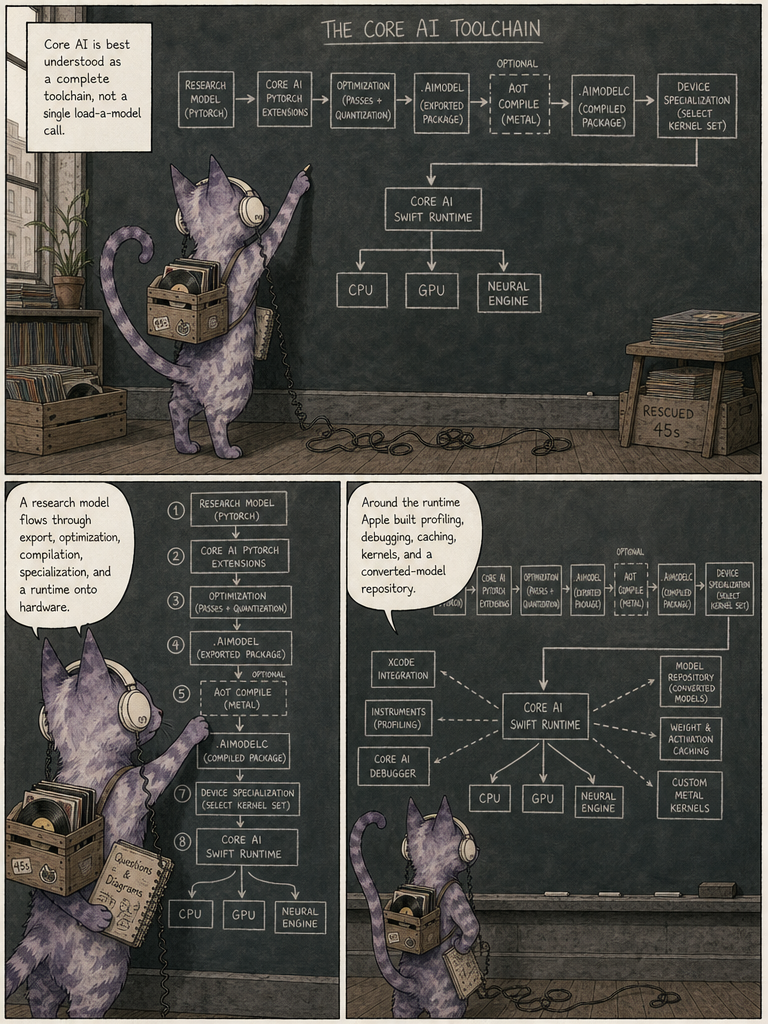
Core AI is a production inference platform, not just an API.
Key idea & notes ▾
WHY THIS MATTERSTreating it as a pipeline reveals every stage you can optimize and profile.

On-device inference removes the per-token cloud bill.
Key idea & notes ▾
WHY THIS MATTERSMoving a feature on-device can eliminate a scaling cost that grows with every request.
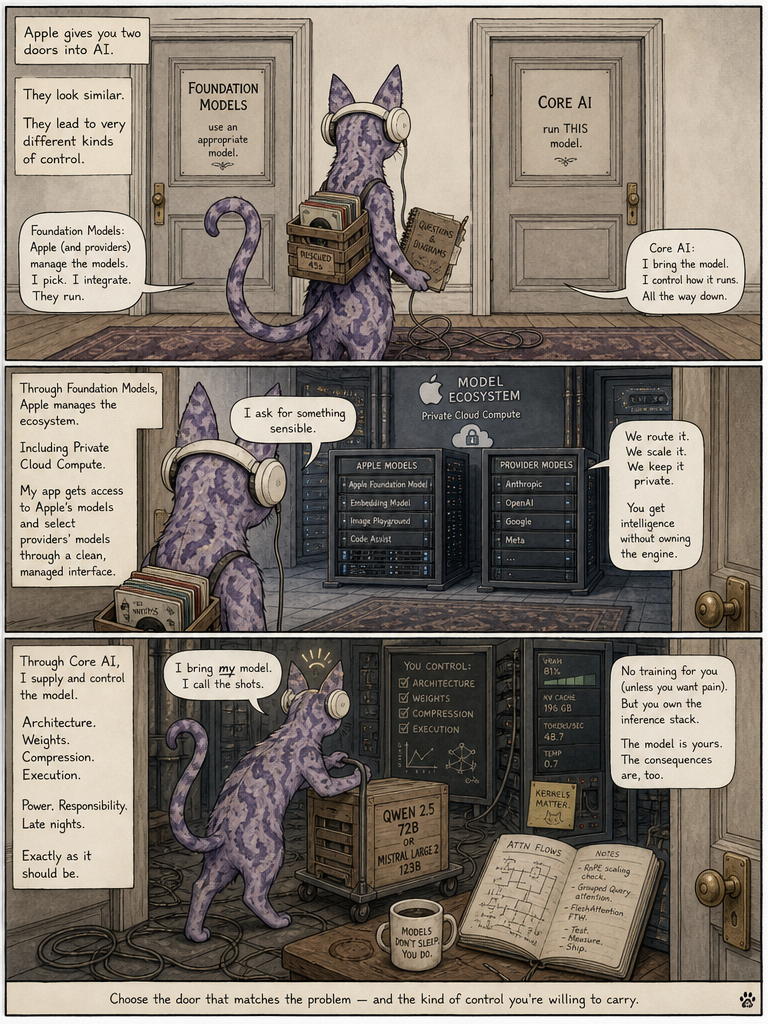
Foundation Models is managed; Core AI is developer-controlled.
Key idea & notes ▾
WHY THIS MATTERSChoosing the right level decides how much control and responsibility you take on.
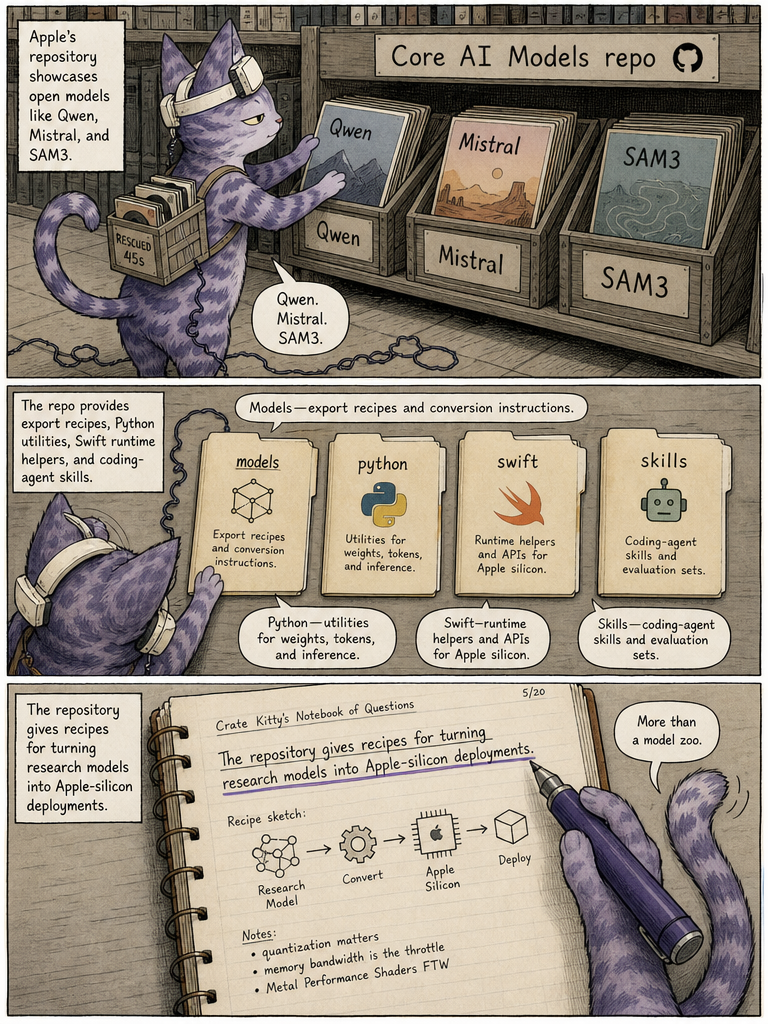
Apple provides recipes to productionize open models, not just a model list.
Key idea & notes ▾
WHY THIS MATTERSReady recipes cut the effort of getting research models onto Apple silicon.
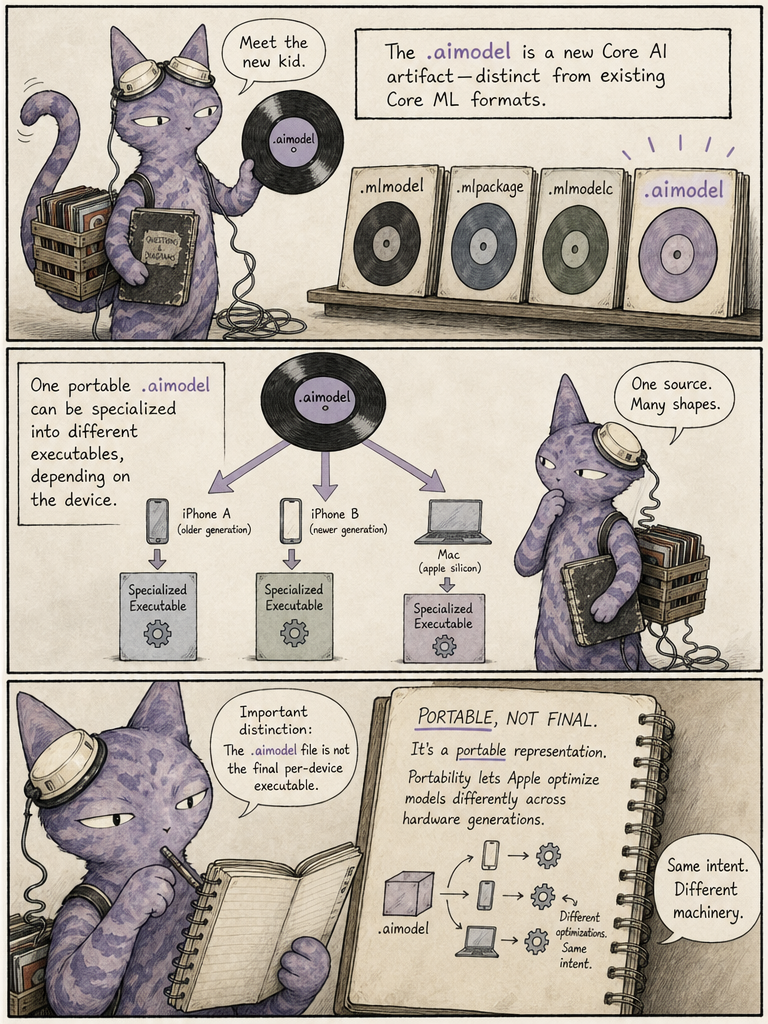
One portable model file targets many hardware configurations.
Key idea & notes ▾
WHY THIS MATTERSPortability lets a single artifact ship efficiently across future devices.
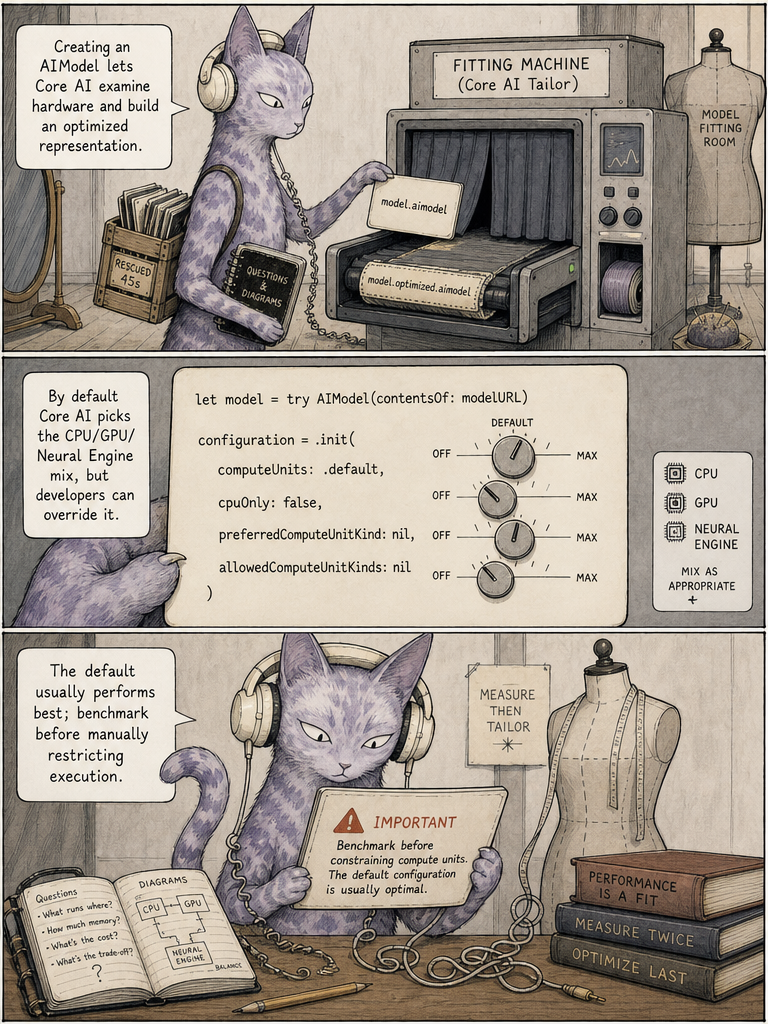
Describe the model and let Core AI specialize it for the device.
Key idea & notes ▾
WHY THIS MATTERSAutomatic specialization saves you from hardcoding fragile per-device layer placement.
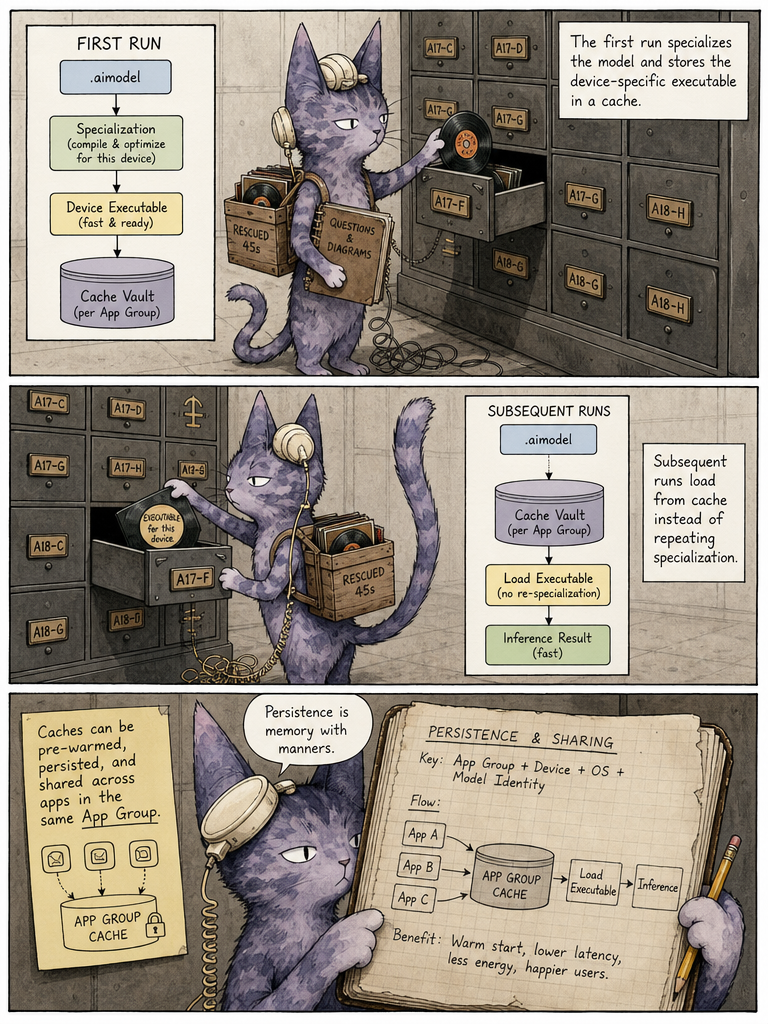
Caching avoids repeating expensive specialization on every launch.
Key idea & notes ▾
WHY THIS MATTERSFor multi-gigabyte models, caching prevents brutal first-launch delays.
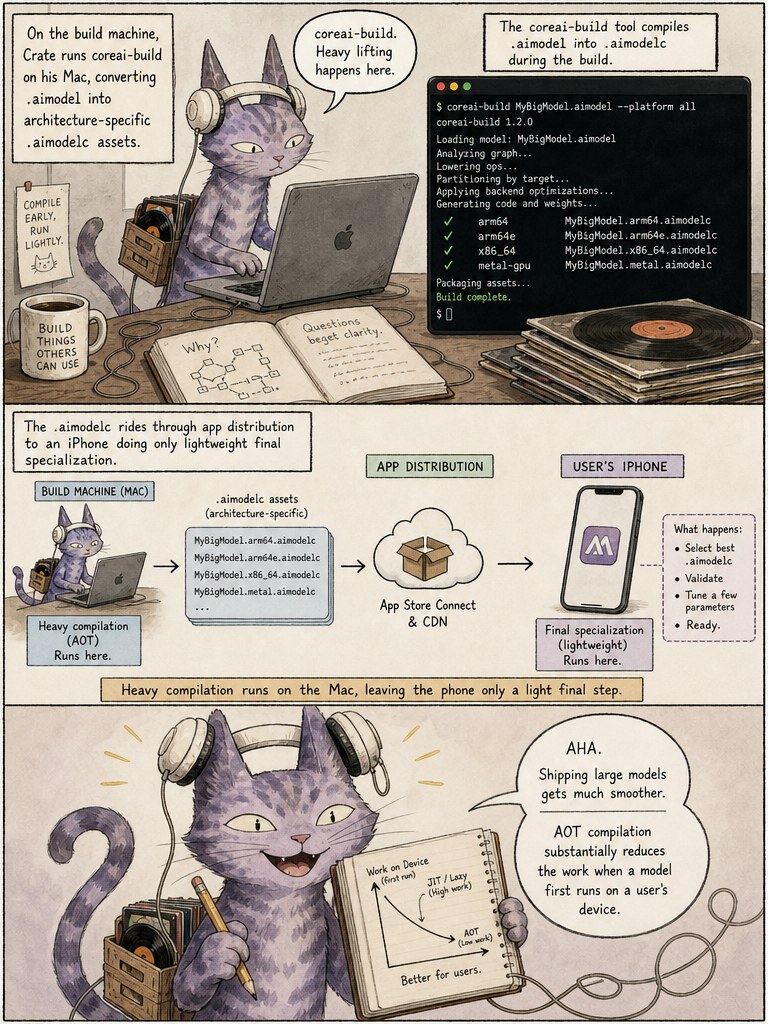
Compile on the Mac so the phone barely works at first run.
Key idea & notes ▾
WHY THIS MATTERSIt turns a painful first-launch compile into a quick startup for shipped models.
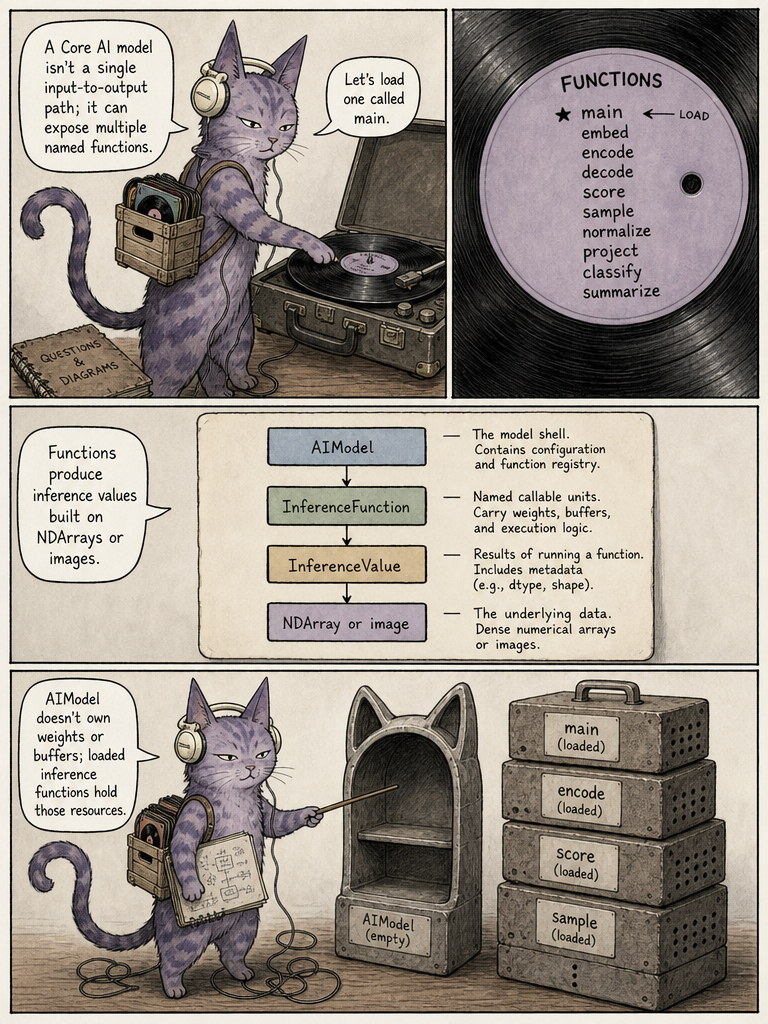
Weights live in loaded functions, not in the model object.
Key idea & notes ▾
WHY THIS MATTERSSeparating weights from the model gives finer control over memory for huge networks.
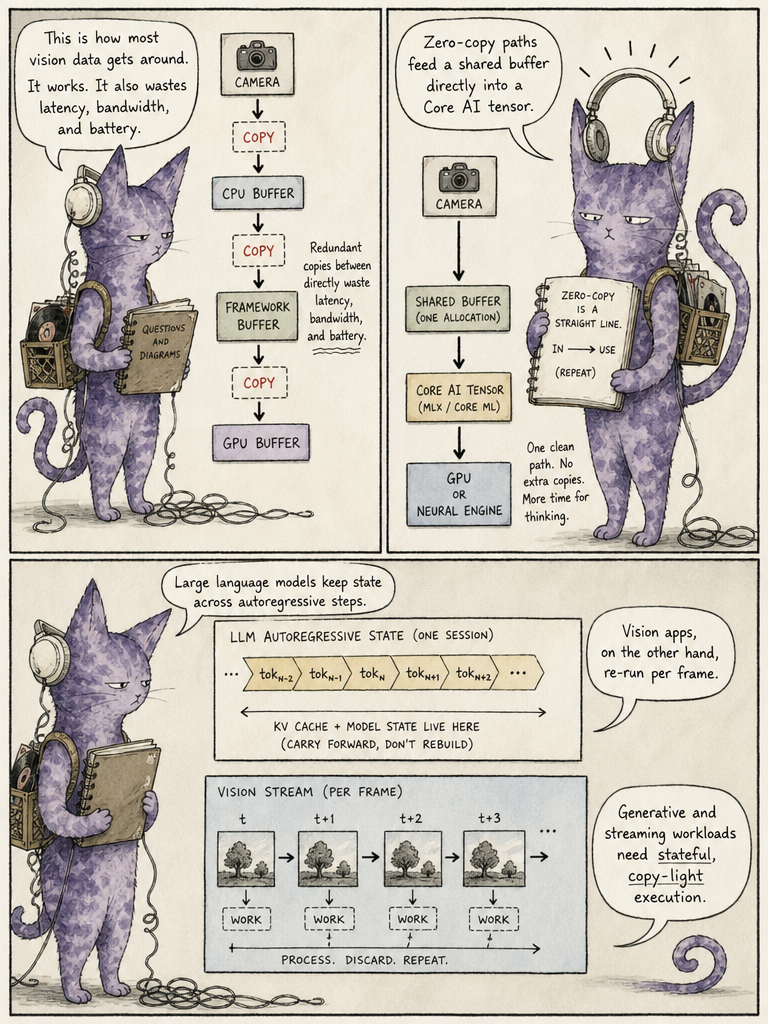
Avoiding redundant copies saves latency, bandwidth, and battery.
Key idea & notes ▾
WHY THIS MATTERSFor big generative and streaming models, memory behavior often decides real performance.
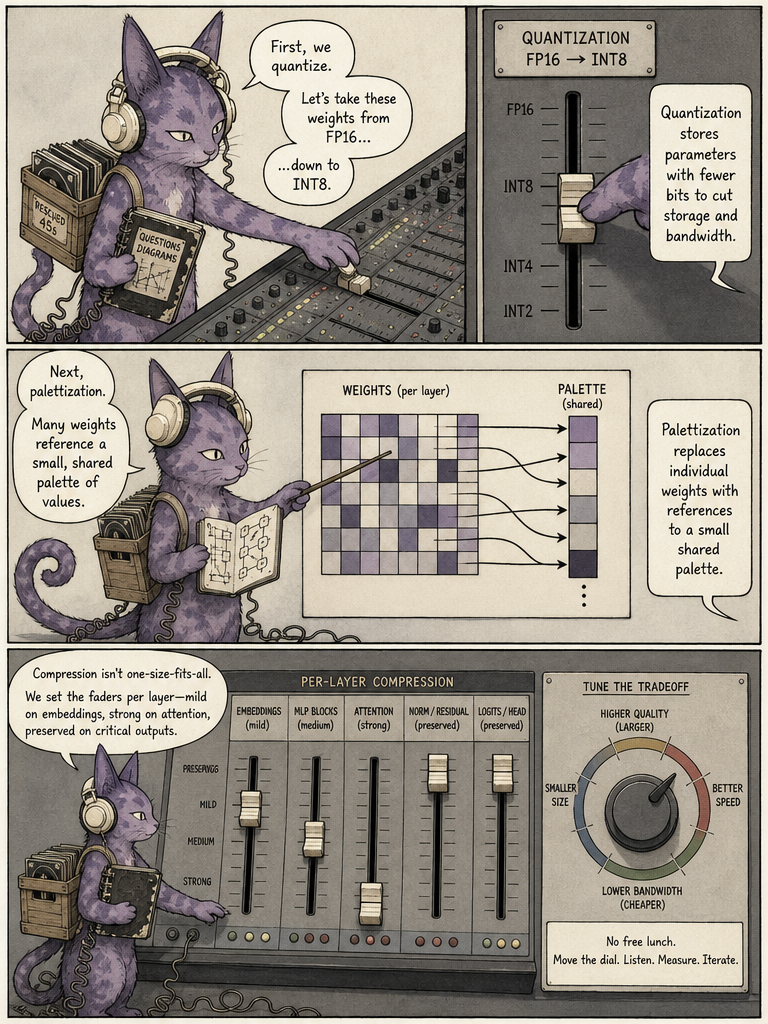
Compress models per layer to trade accuracy for size and speed.
Key idea & notes ▾
WHY THIS MATTERSSmart compression is what makes large models fit and run fast on a phone.
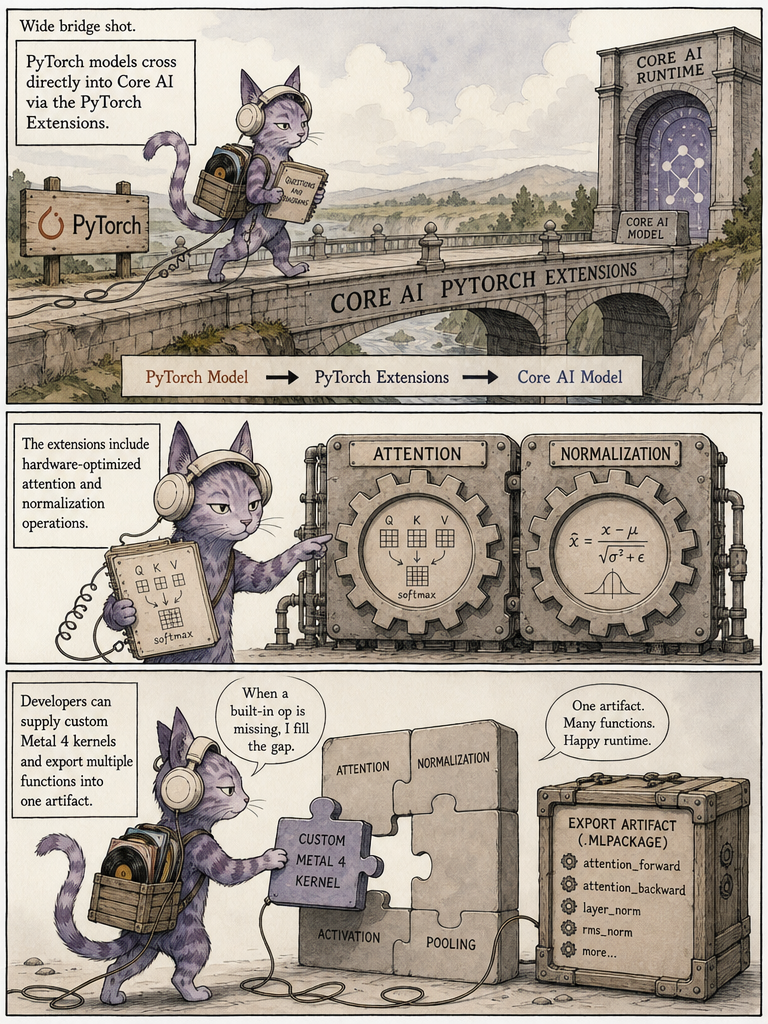
PyTorch models export straight into Core AI, extensible with custom kernels.
Key idea & notes ▾
WHY THIS MATTERSA direct PyTorch path shortens the leap from research to shipped on-device model.
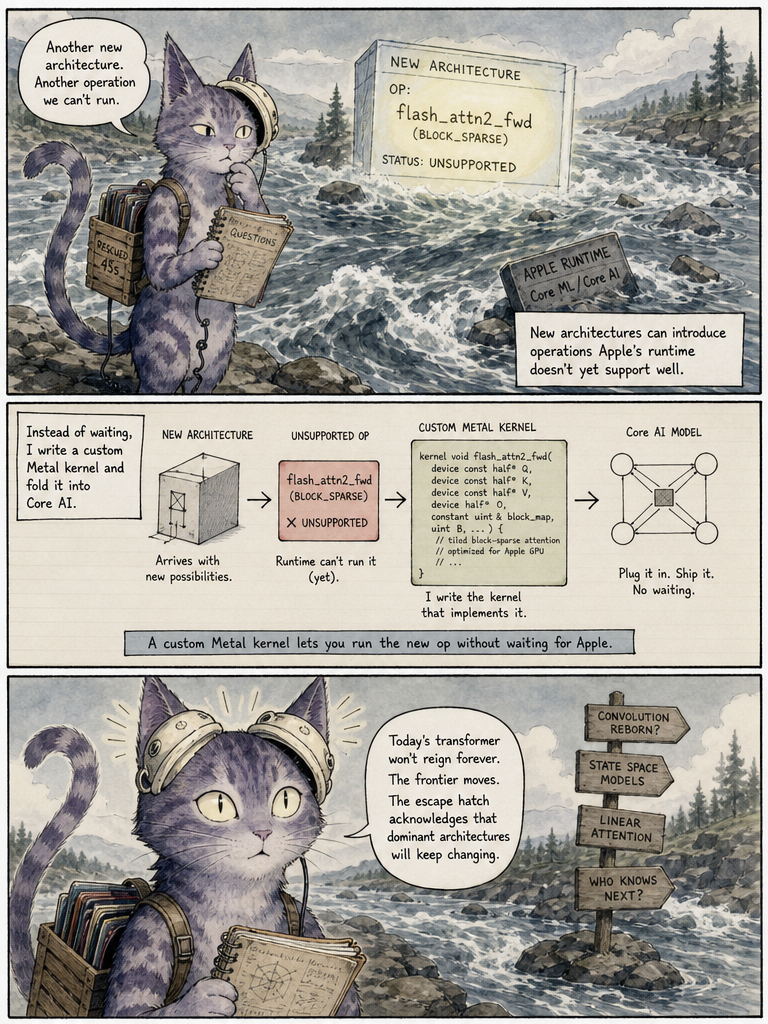
Custom kernels keep Core AI current with fast-moving research.
Key idea & notes ▾
WHY THIS MATTERSYou can adopt a brand-new architecture without waiting for an OS update.

Trace numerical errors from device output back to Python source.
Key idea & notes ▾
WHY THIS MATTERSFinding where a conversion went numerically wrong is normally one of the hardest tasks.
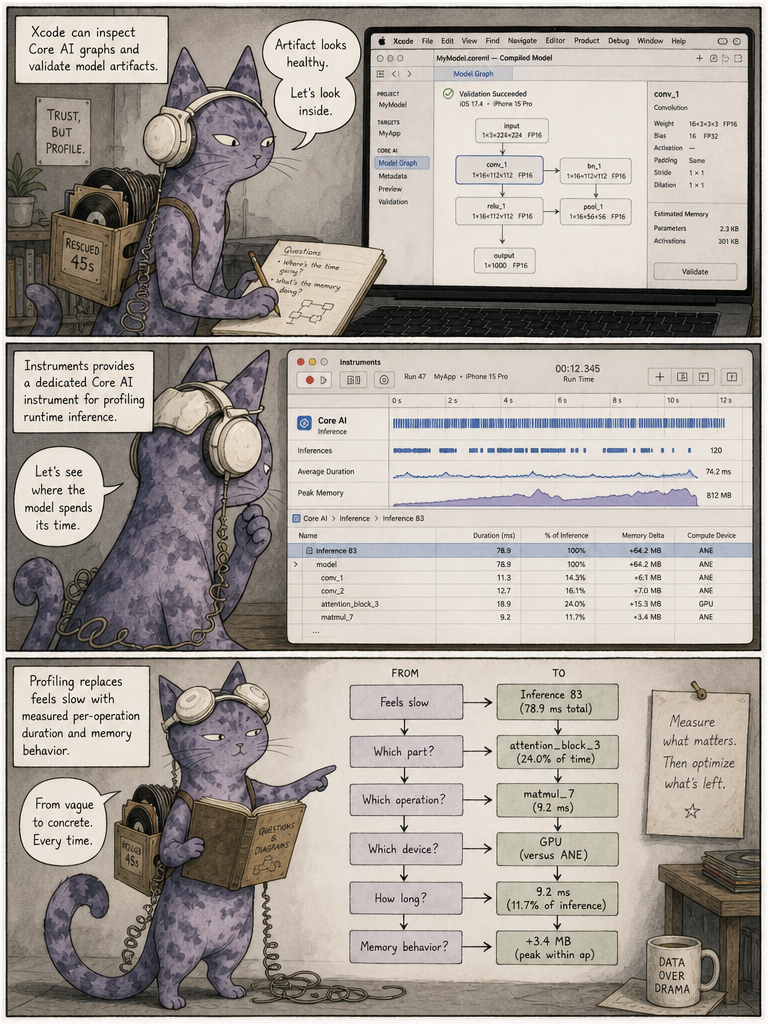
Profile inference per operation instead of guessing it feels slow.
Key idea & notes ▾
WHY THIS MATTERSArchitecture alone doesn't determine app performance; measurement does.

OS changes make ANE memory visible and gate background inference.
Key idea & notes ▾
WHY THIS MATTERSYou must watch real memory use and can't assume free continuous background inference.

One Core AI runtime scales across every Apple silicon class.
Key idea & notes ▾
WHY THIS MATTERSA common abstraction lets you target many devices without rewriting the deployment path.
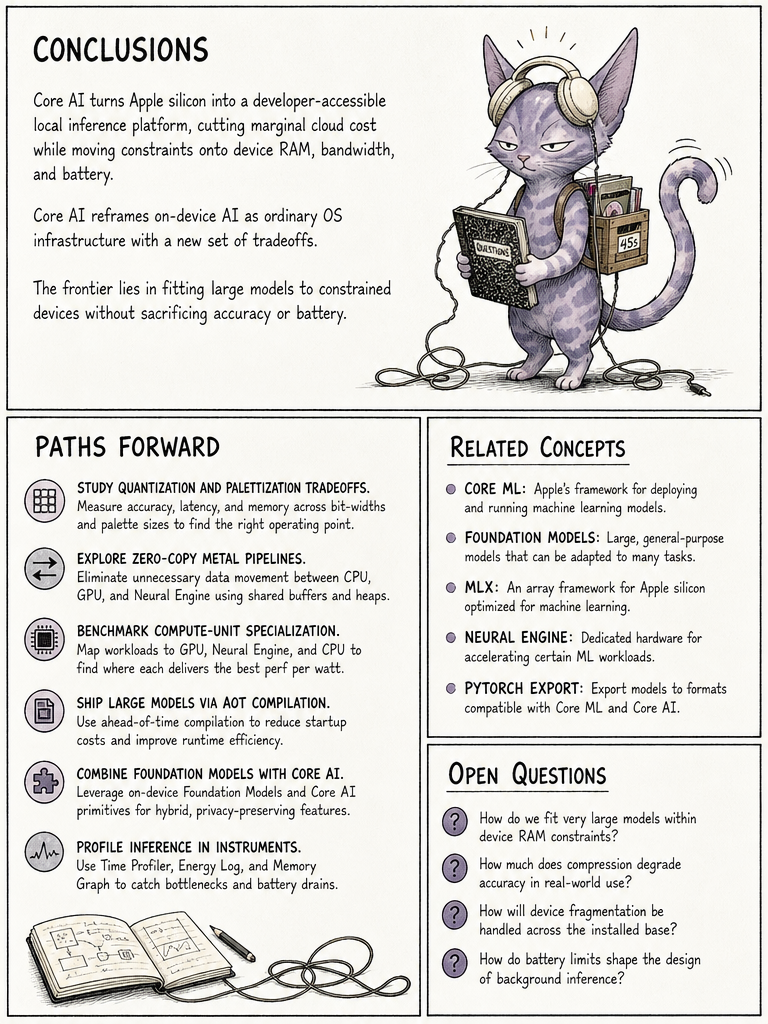
Local AI becomes normal OS capability with device-side constraints.
Key idea & notes ▾
WHY THIS MATTERSUnderstanding the shifted constraints decides whether an on-device feature is actually viable.