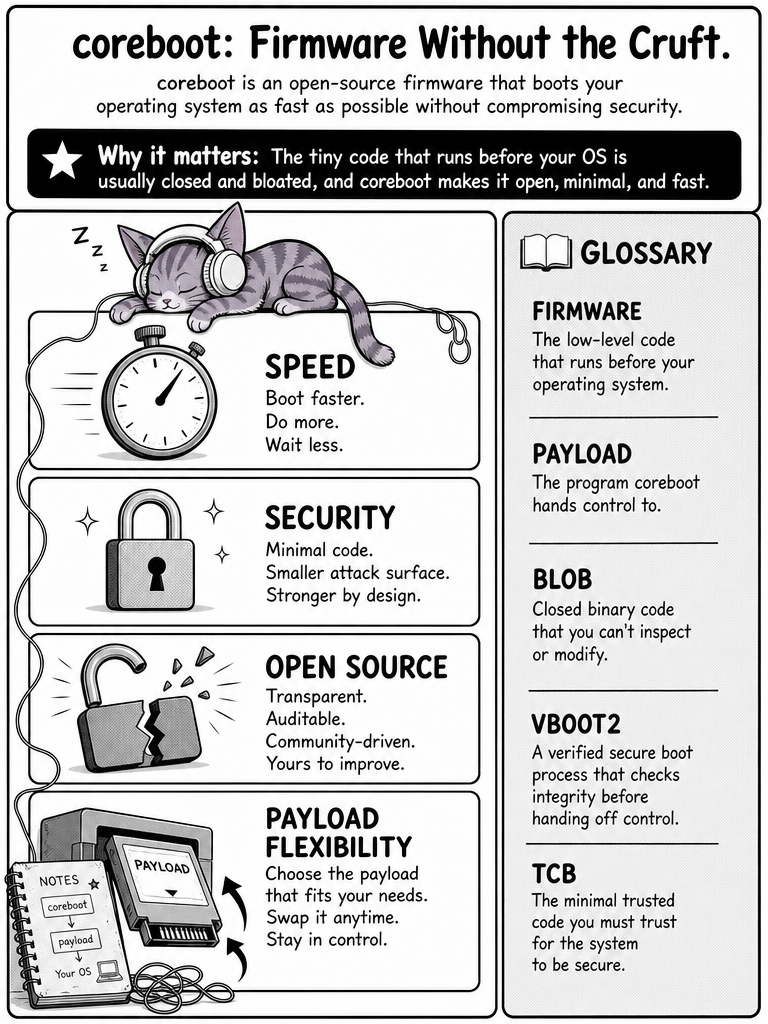
coreboot is an open, minimal, fast firmware that replaces your BIOS or UEFI.
Key idea & notes ▾
WHY THIS MATTERSThe code that runs before your OS is usually closed and bloated, and coreboot makes it transparent.
SOURCE Read the source LEARN MORE doc.coreboot.org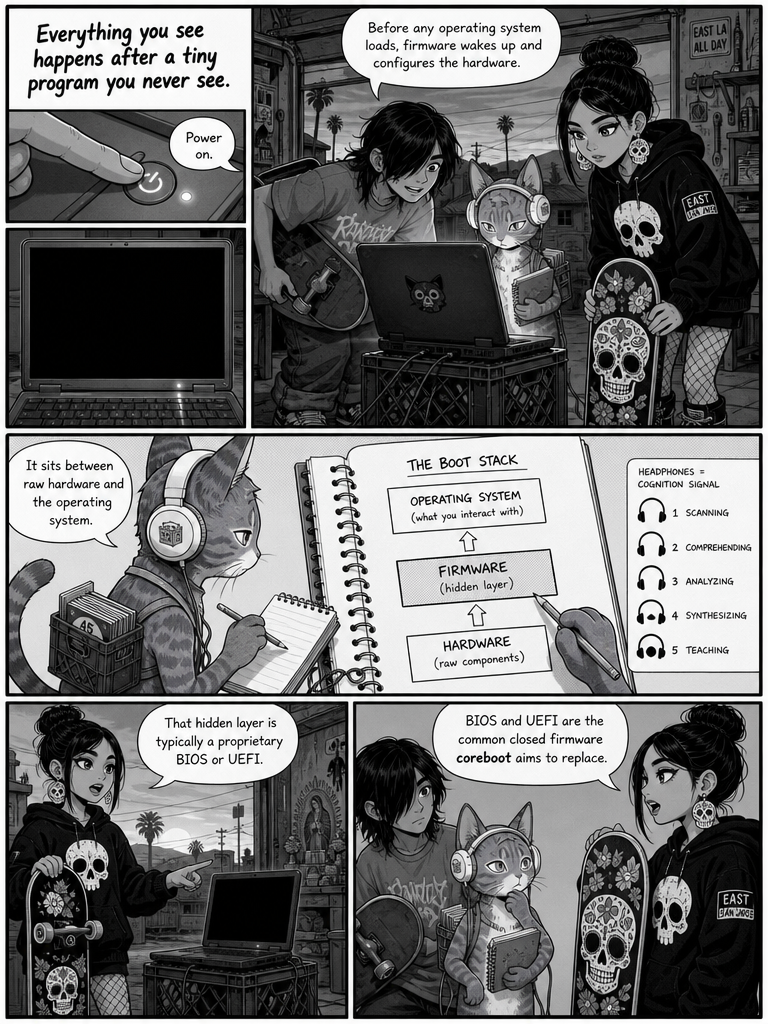
Firmware is the first code that runs, sitting between hardware and the operating system.
Key idea & notes ▾
WHY THIS MATTERSUnderstanding this hidden layer explains why replacing it changes speed, security, and trust.
SOURCE Read the source LEARN MORE doc.coreboot.org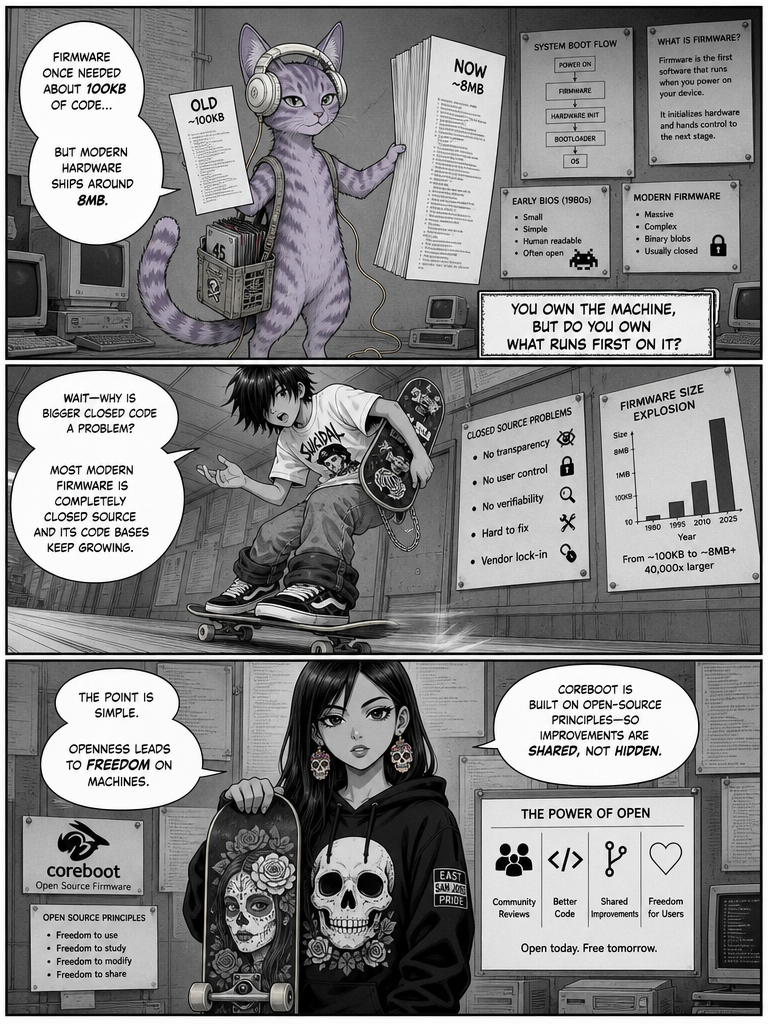
Firmware has grown large and closed, so coreboot pursues openness and user freedom.
Key idea & notes ▾
WHY THIS MATTERSWhoever controls the first code that runs on your machine effectively controls the machine.
SOURCE Read the source LEARN MORE doc.coreboot.org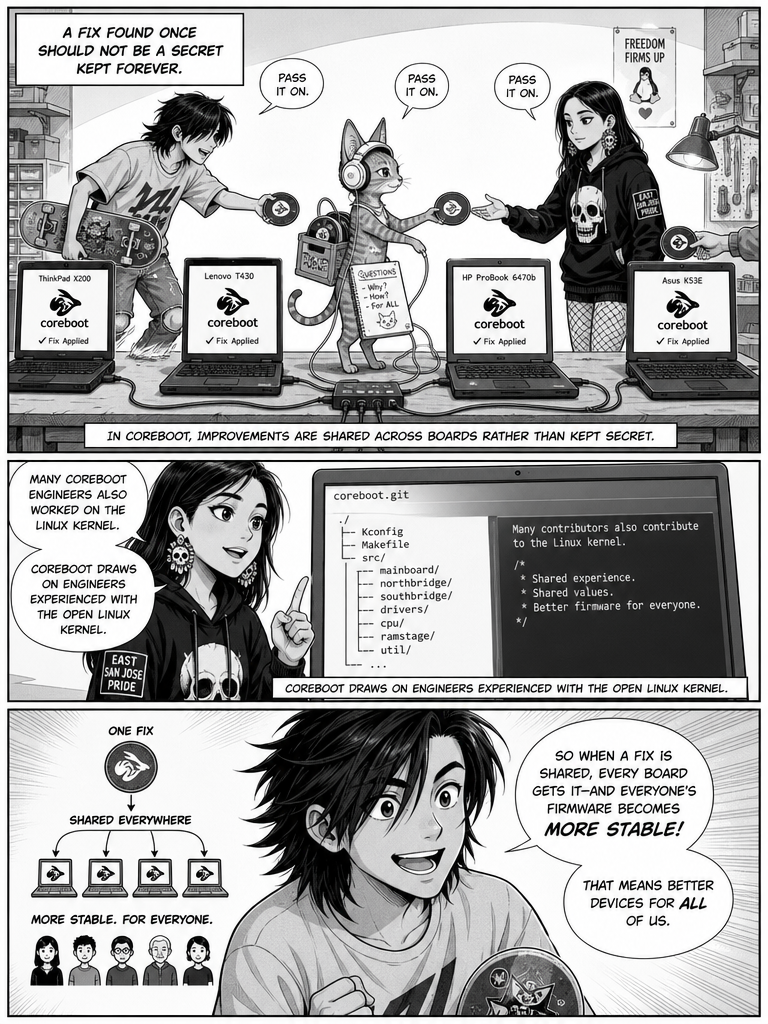
Open collaboration means one vendor's fix improves everyone's firmware.
Key idea & notes ▾
WHY THIS MATTERSShared fixes give end users more stable firmware than isolated closed development can.
SOURCE Read the source LEARN MORE doc.coreboot.org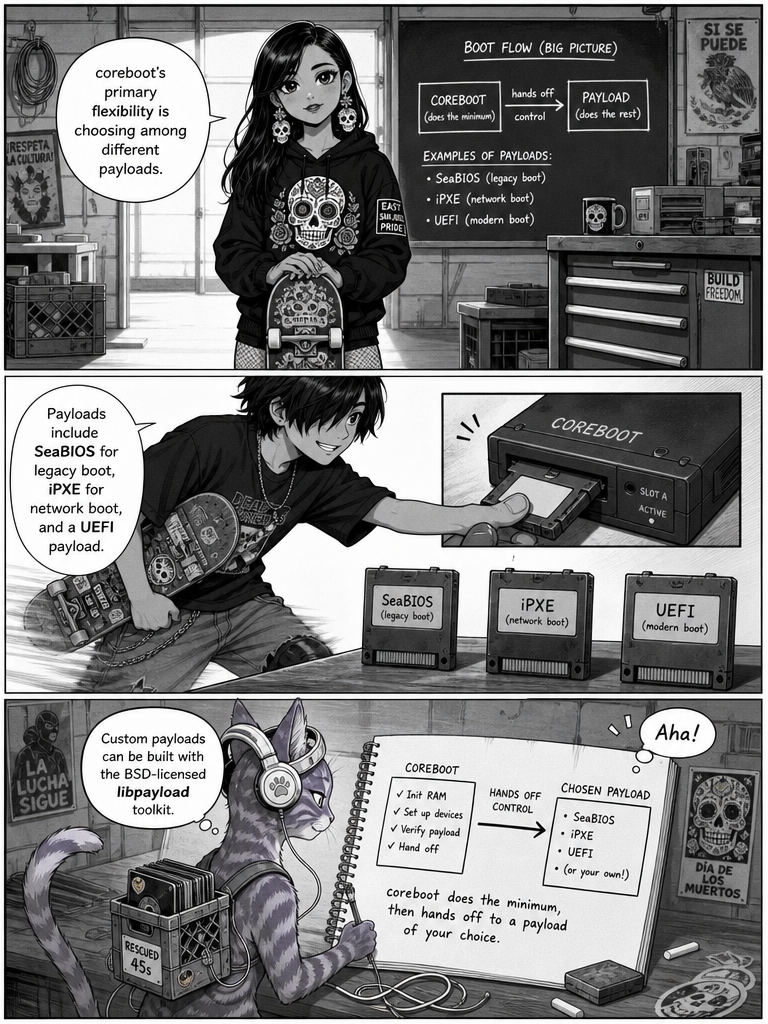
coreboot keeps a minimal core and hands off to a swappable payload you choose.
Key idea & notes ▾
WHY THIS MATTERSPayload choice lets one firmware serve legacy, network, and modern UEFI boot needs.
SOURCE Read the source LEARN MORE doc.coreboot.org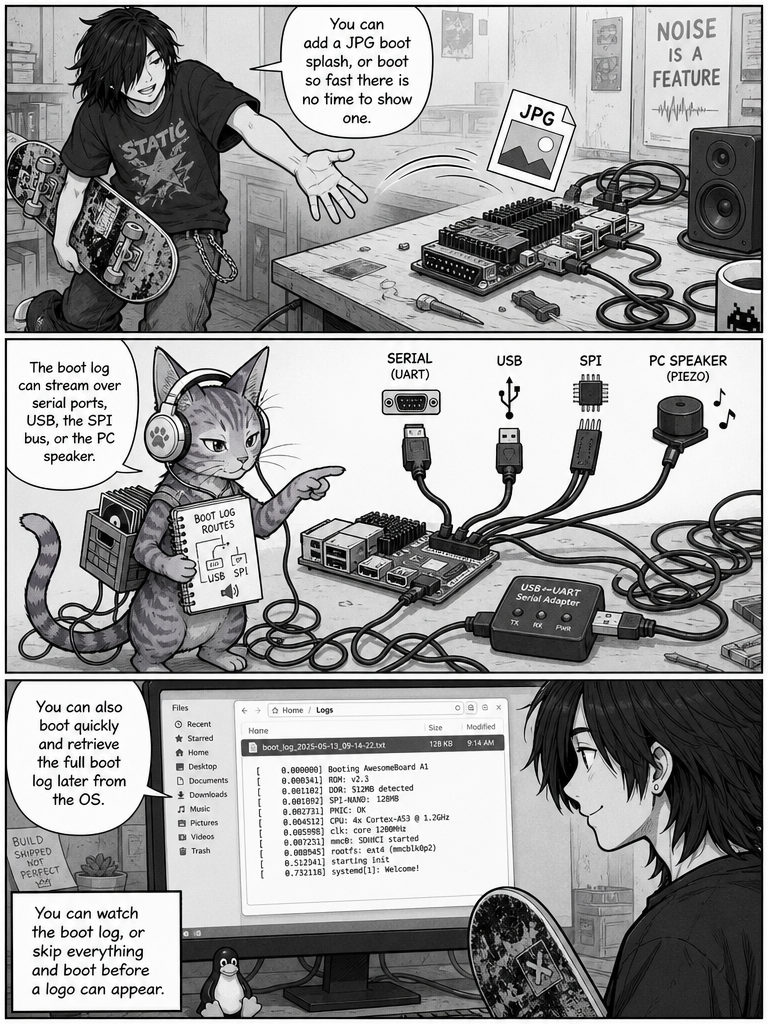
coreboot exposes flexible boot output, from splash images to multi-channel debug logs.
Key idea & notes ▾
WHY THIS MATTERSRich, configurable boot output makes diagnosing and tuning early startup practical.
SOURCE Read the source LEARN MORE doc.coreboot.org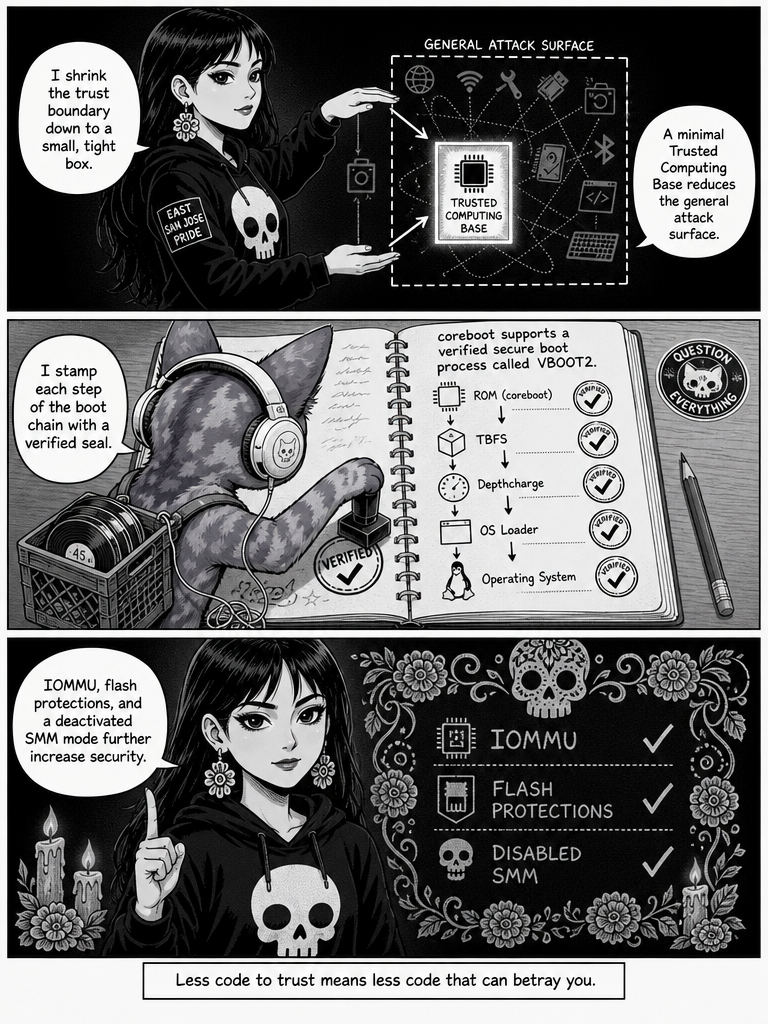
A small trusted base plus verified boot and hardware protections shrinks the attack surface.
Key idea & notes ▾
WHY THIS MATTERSTrusting less code and verifying each boot step makes firmware harder to compromise.
SOURCE Read the source LEARN MORE doc.coreboot.org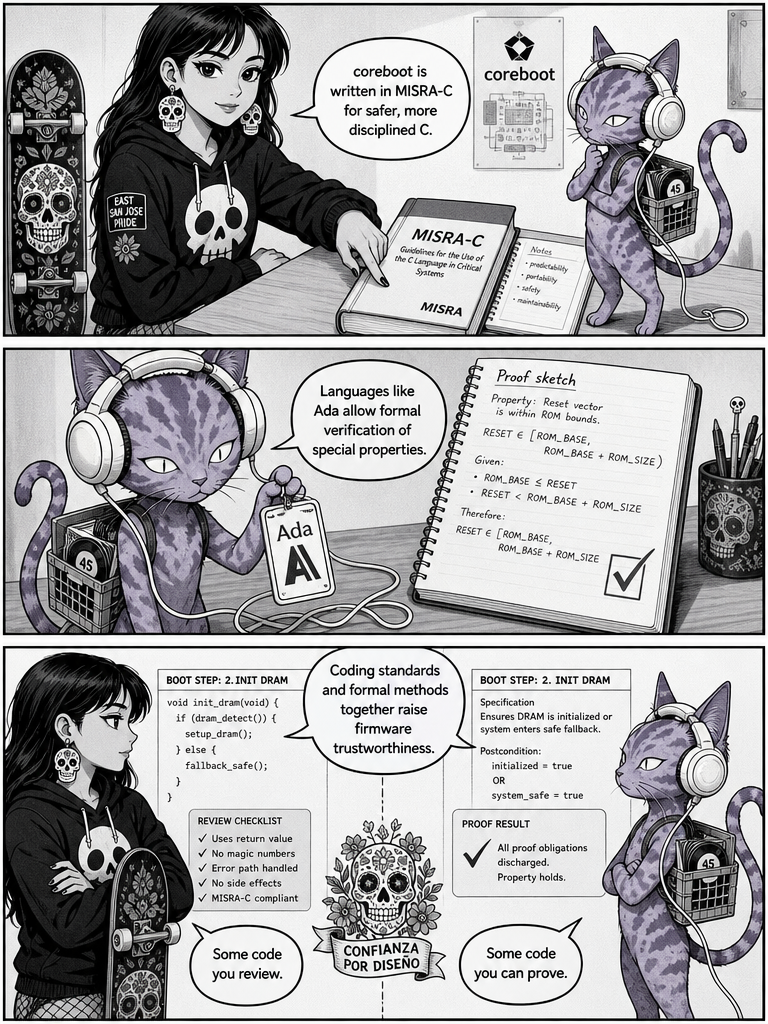
Strict coding standards and optional formal proofs make coreboot more trustworthy.
Key idea & notes ▾
WHY THIS MATTERSProvable and disciplined code reduces the subtle bugs that plague low-level firmware.
SOURCE Read the source LEARN MORE doc.coreboot.org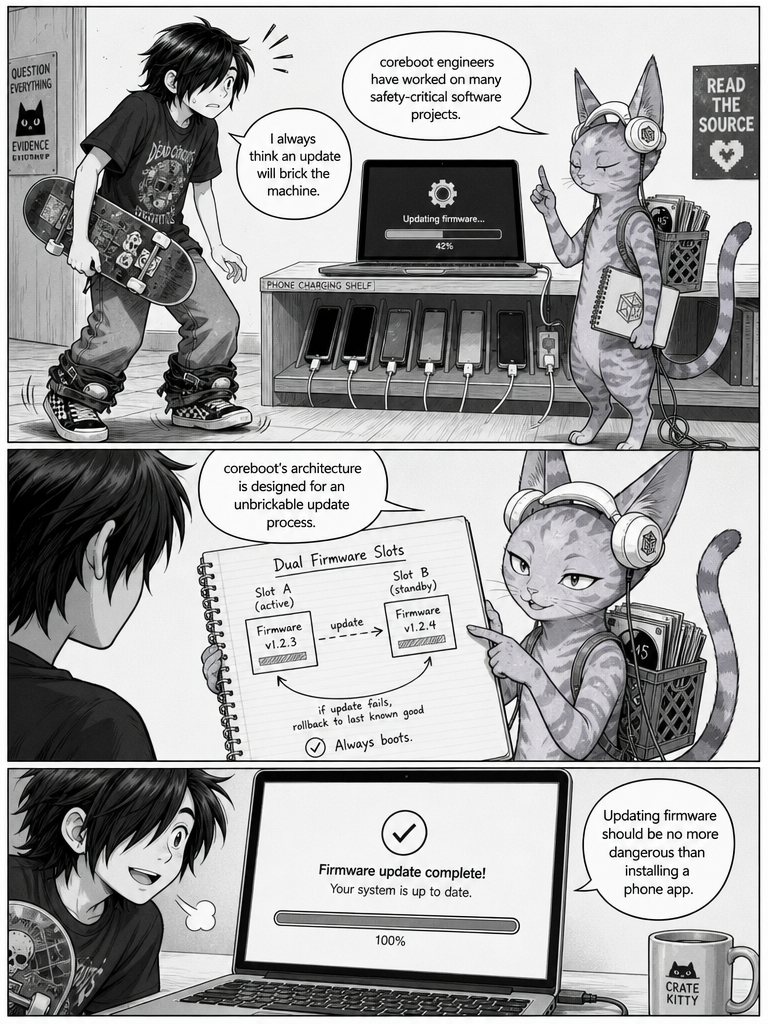
coreboot is built so firmware updates cannot brick the machine.
Key idea & notes ▾
WHY THIS MATTERSSafe, reversible updates remove the fear that keeps firmware dangerously out of date.
SOURCE Read the source LEARN MORE doc.coreboot.org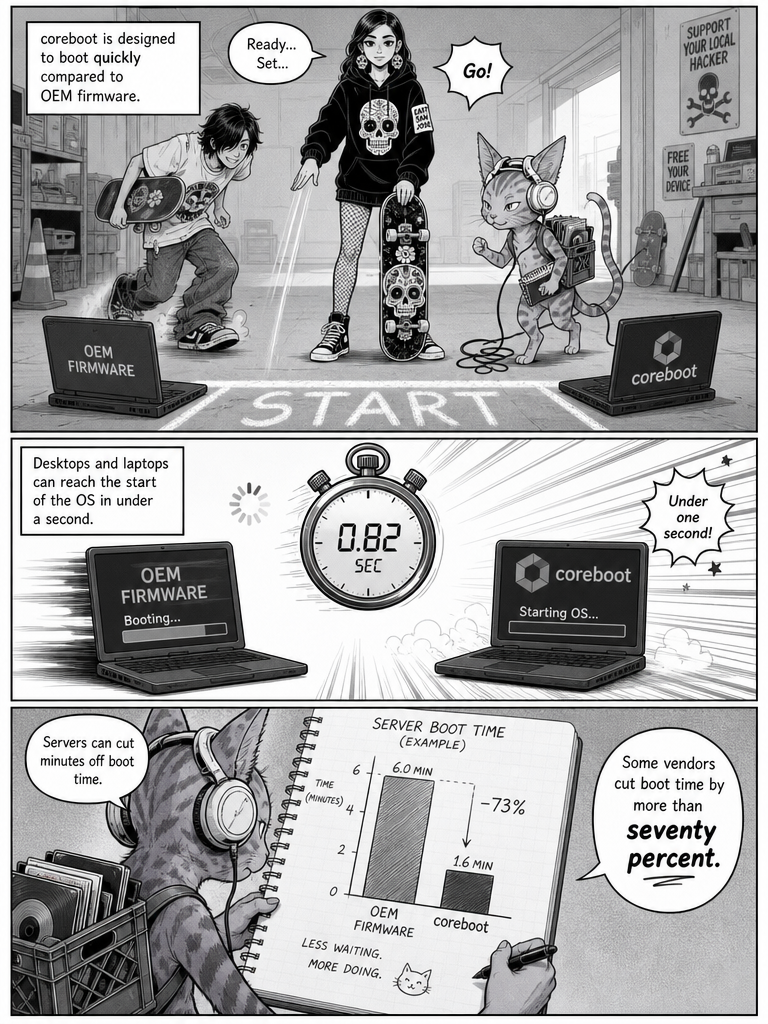
coreboot can boot in under a second on laptops and cut minutes on servers.
Key idea & notes ▾
WHY THIS MATTERSFaster boot saves real time on desktops and meaningful downtime on server fleets.
SOURCE Read the source LEARN MORE doc.coreboot.org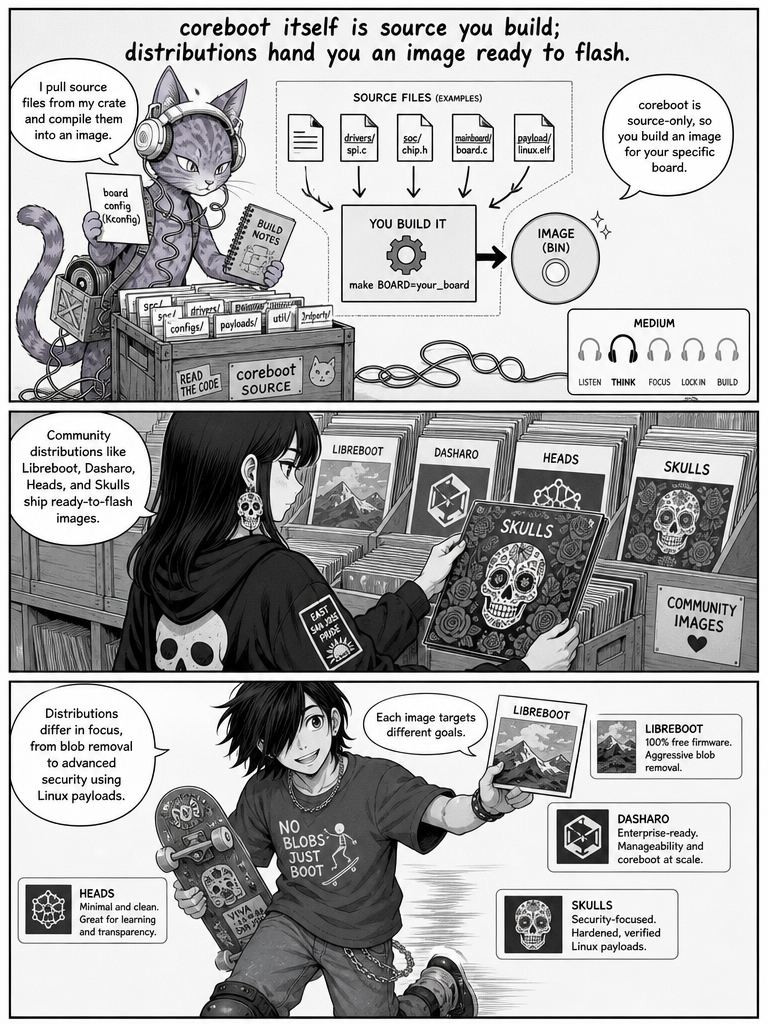
coreboot is built from source, and community distributions offer prebuilt flashable images.
Key idea & notes ▾
WHY THIS MATTERSPrebuilt distributions let non-experts adopt coreboot without compiling from source.
SOURCE Read the source LEARN MORE libreboot.org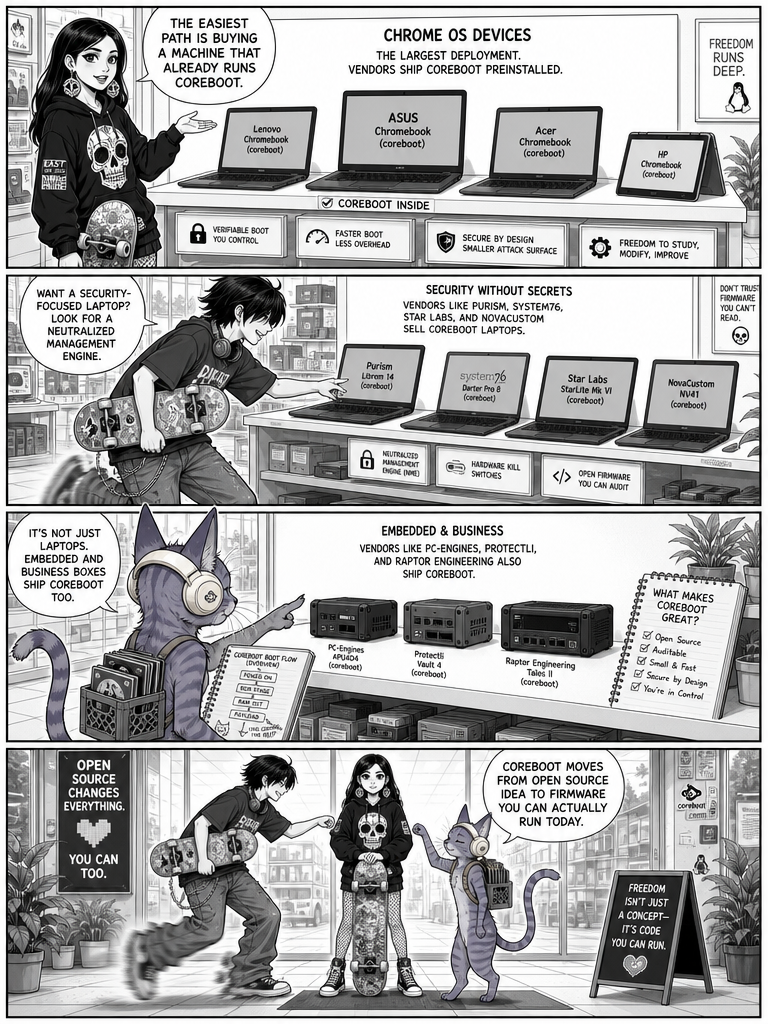
The simplest way to use coreboot is buying hardware with it preinstalled.
Key idea & notes ▾
WHY THIS MATTERSPreinstalled coreboot hardware removes the flashing risk and lets newcomers start immediately.
SOURCE Read the source LEARN MORE puri.sm