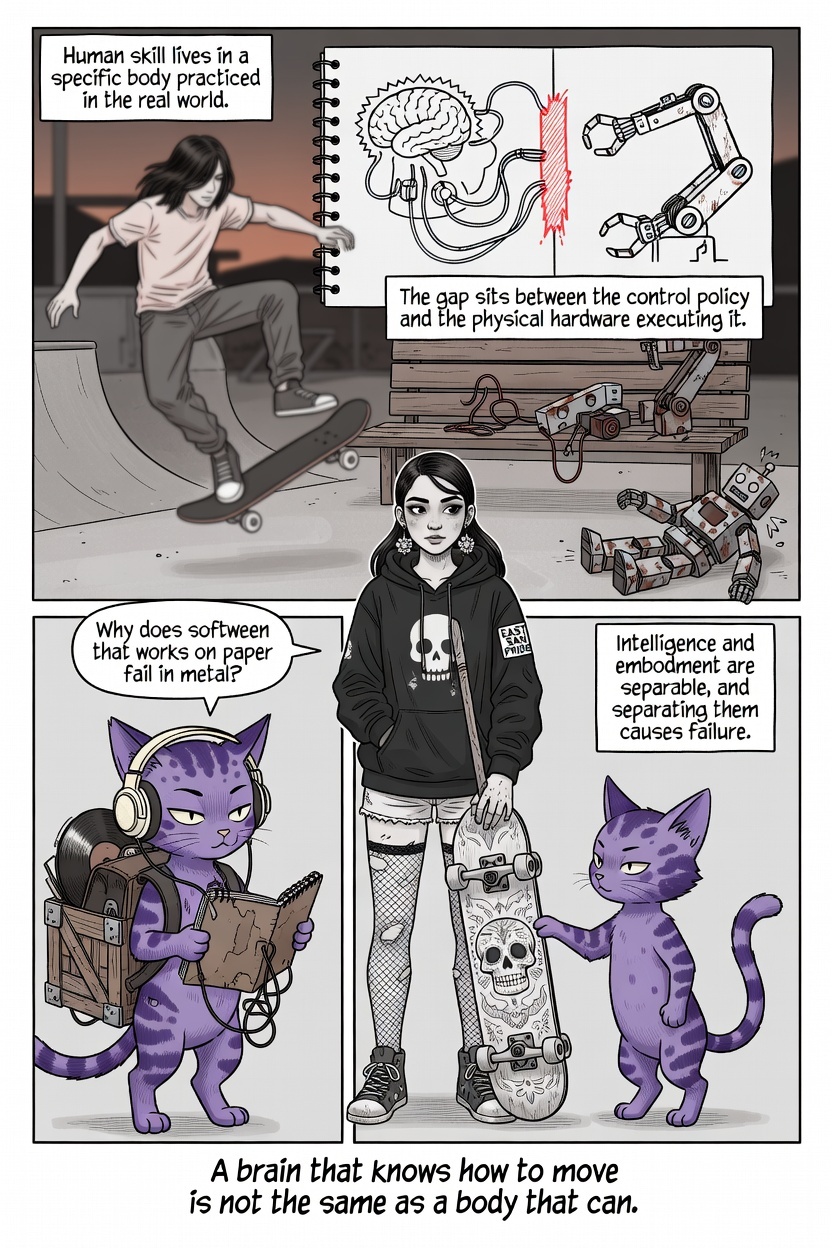
The embodiment gap is the failure that appears when an intelligence learned in one context is placed into a different physical body and real environment.
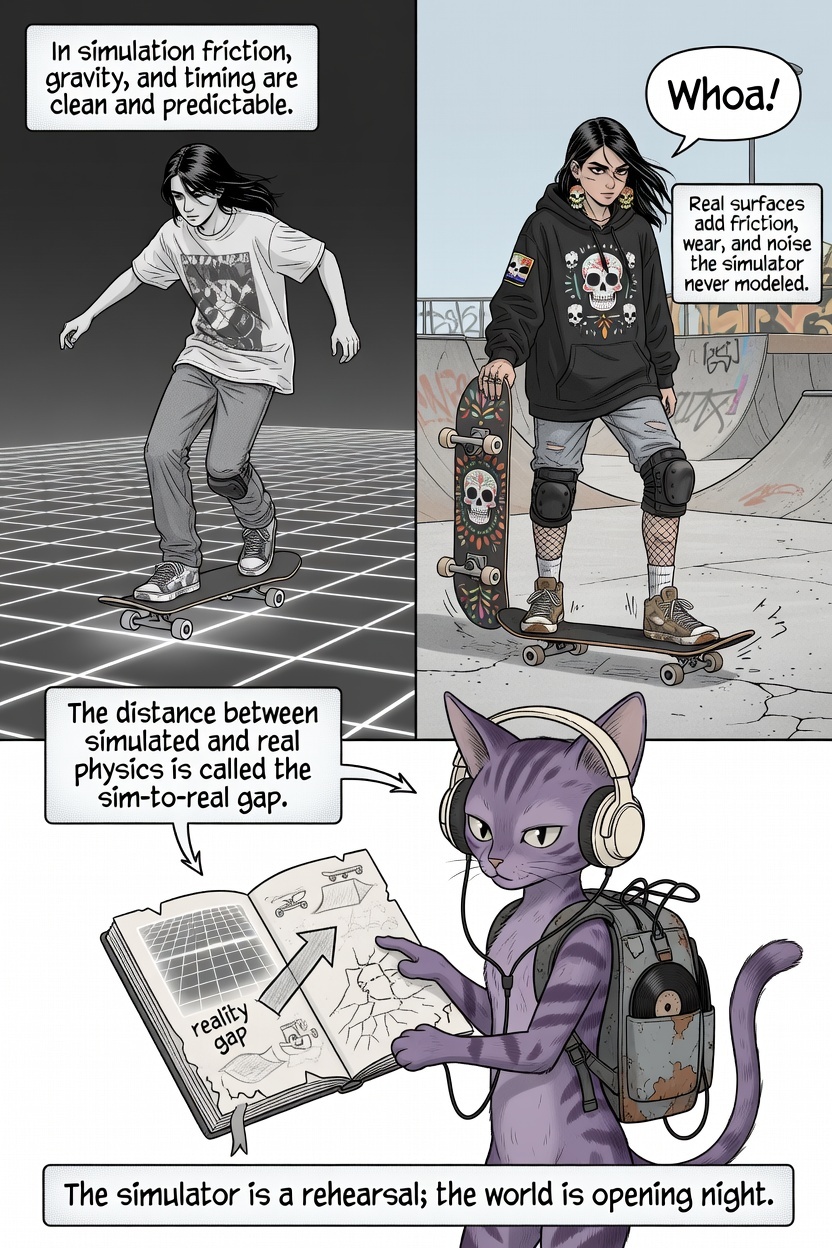
Simulators offer cheap, safe practice but approximate physics imperfectly, so behavior perfected in simulation often breaks the moment it meets real matter.

Even a robot's own hardware deviates from its idealized model through wear, noise, delay, and manufacturing variation, widening the embodiment gap from the inside.
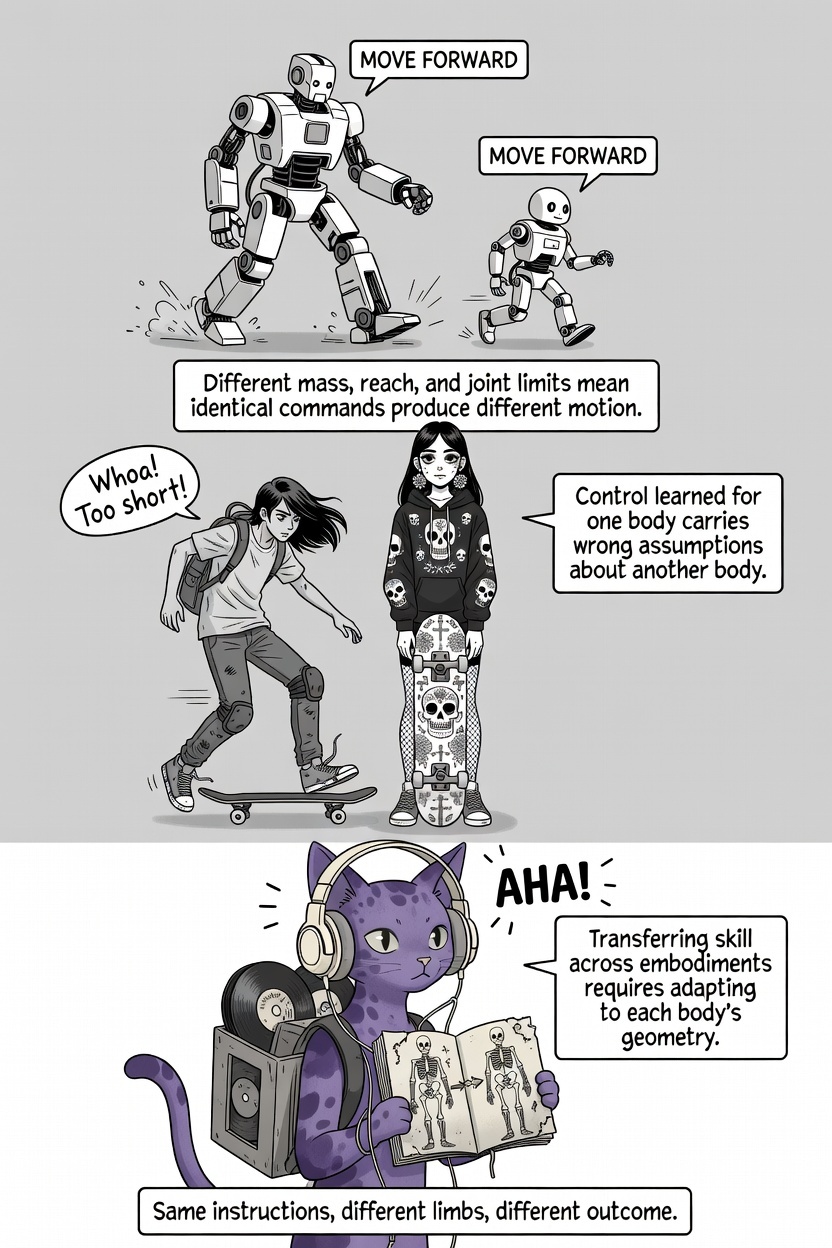
A control policy encodes assumptions about one particular body, so moving it to a robot with different size, weight, or joints usually degrades performance.
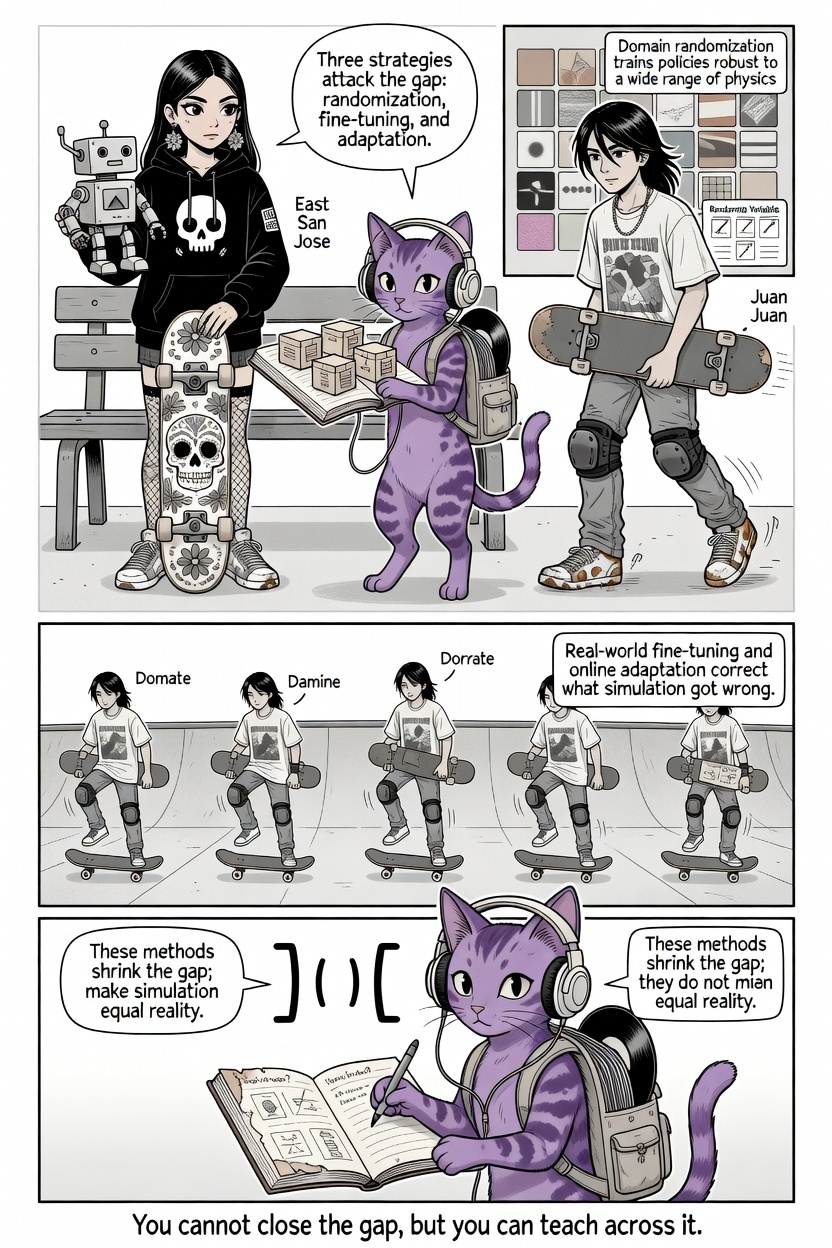
Domain randomization, real-world fine-tuning, and adaptive control let robots cross the embodiment gap, though none of them fully erases the difference between model and reality.

Since every physical body and environment departs from its model, treating the embodiment gap as a lasting constraint produces robots that behave reliably in the real world.