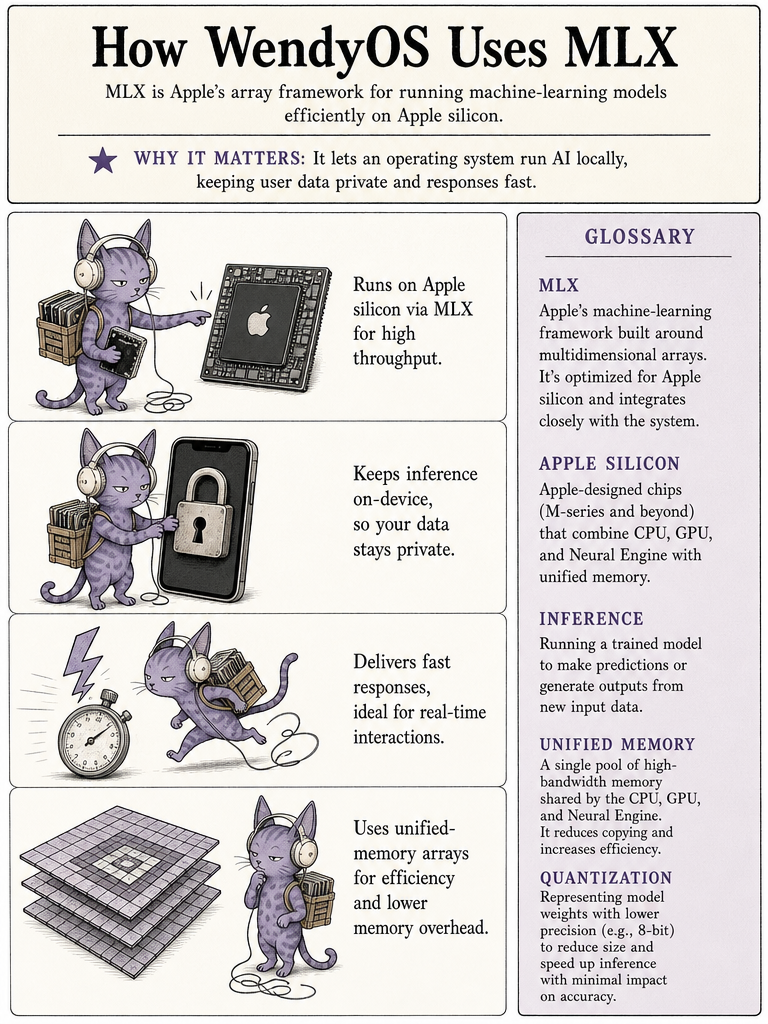
MLX lets an OS run AI models locally on Apple chips for speed and privacy.
Key idea & notes ▾
WHY THIS MATTERSOn-device AI keeps personal data on your machine instead of shipping it to a server.
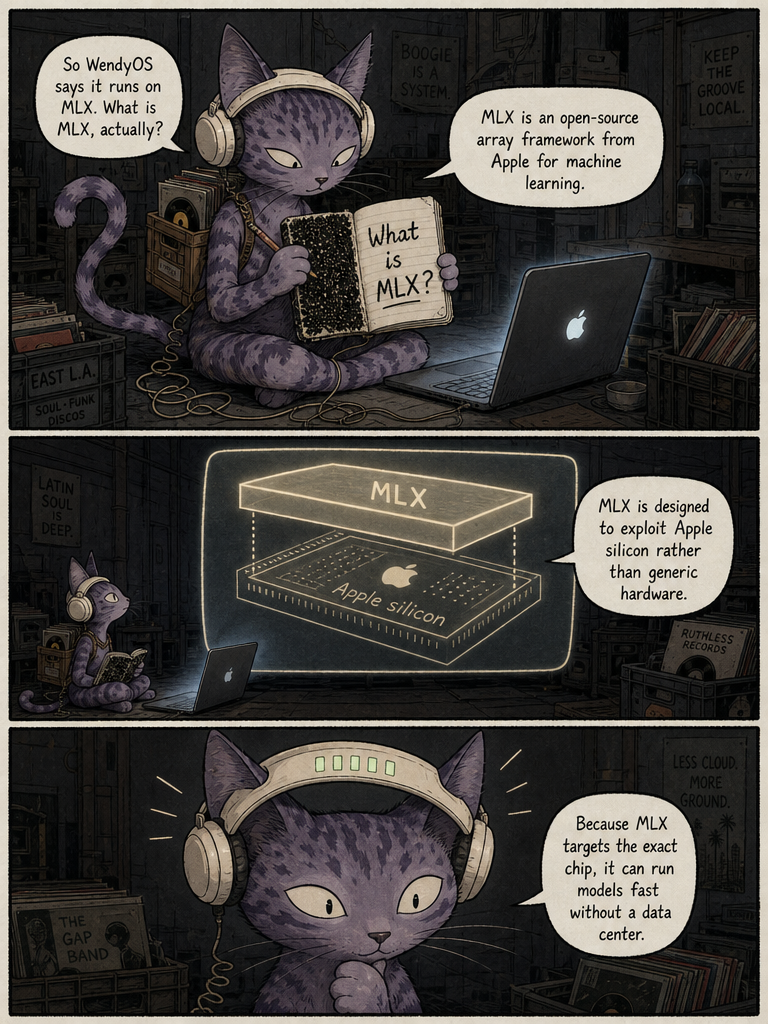
MLX is Apple's array framework built to run ML models efficiently on Apple chips.
Key idea & notes ▾
WHY THIS MATTERSUnderstanding the framework clarifies why WendyOS can do AI work without the cloud.
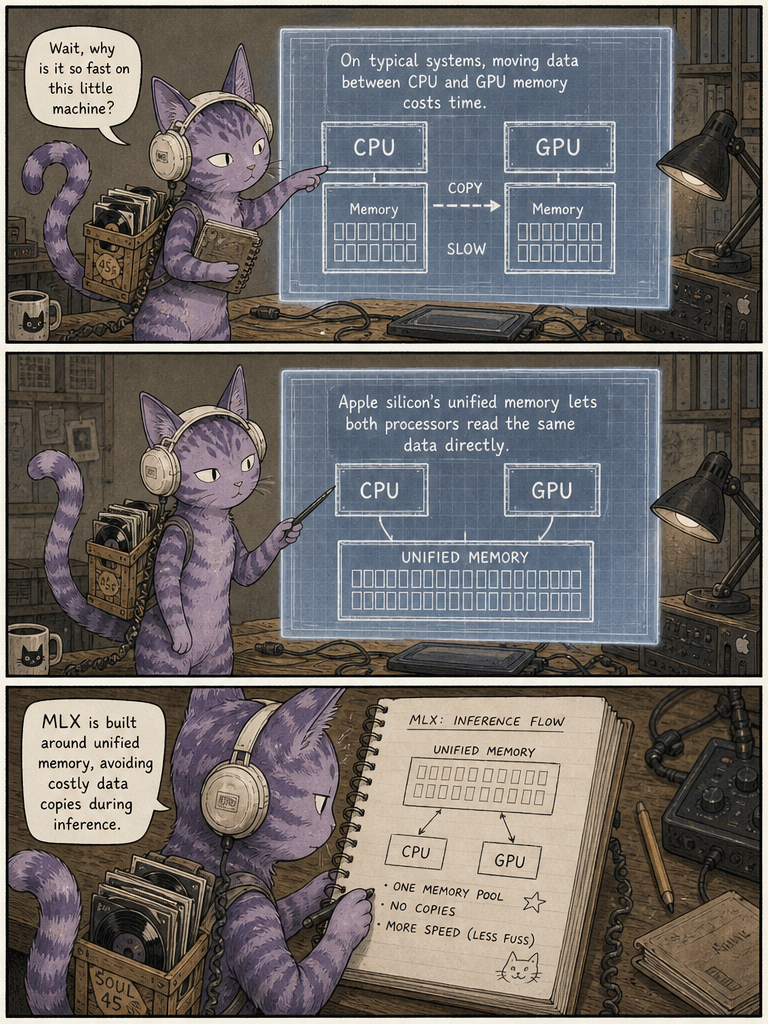
MLX uses Apple's unified memory so CPU and GPU share data without copying.
Key idea & notes ▾
WHY THIS MATTERSAvoiding memory copies is a big reason local models feel responsive on a laptop or phone.

WendyOS runs AI models on the device with MLX rather than in the cloud.
Key idea & notes ▾
WHY THIS MATTERSLocal inference means faster responses and data that never leaves your hardware.

Quantization shrinks model weights so large models fit in device memory.
Key idea & notes ▾
WHY THIS MATTERSIt is why a phone or laptop can run models that would otherwise need a big server.

MLX combines chip, unified memory, and quantization to power WendyOS's local AI.
Key idea & notes ▾
WHY THIS MATTERSIt shows how modern assistants can be both capable and private on everyday hardware.
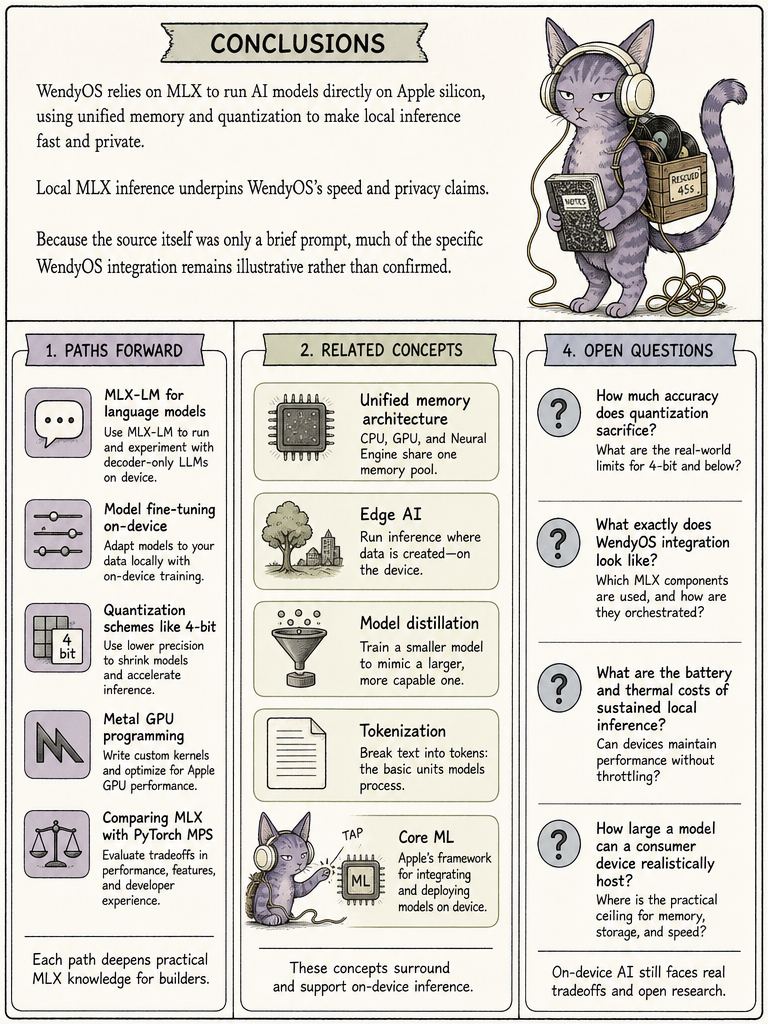
Local MLX inference is powerful but still faces accuracy, battery, and capacity tradeoffs.
Key idea & notes ▾
WHY THIS MATTERSKnowing the open questions helps readers judge on-device AI claims critically.